
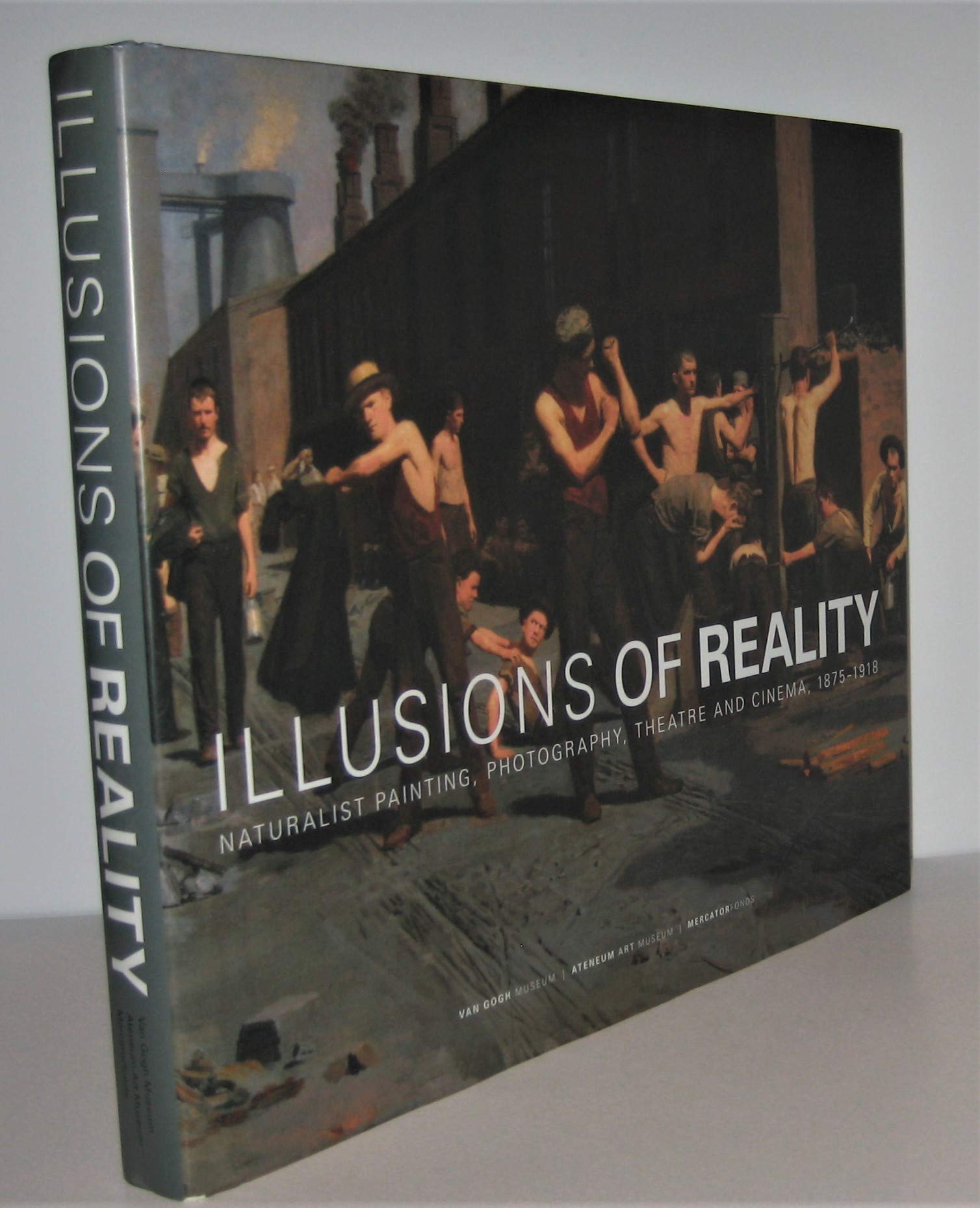
Title
Illusions of Reality: Naturalist Painting, Photography, Theatre and Cinema, 18751918,Used
Sold by Ergodebooks, an authorized reseller.
Returns accepted within 30 days | support@ergodebooks.com
Shipping Information
- Free Standard Shipping — United States only
- Processing Time: 3–5 business days
- Estimated Delivery: 6–10 business days after dispatch
- Double-boxed, fully insured & discreetly packaged
- Tracking number sent via email once dispatched
Returns & Refund
Returns accepted within 30 days of delivery.
Damaged or Defective Item
Free return shipping + replacement or full refund
Wrong Item Received
Free return shipping + replacement or full refund
Change of Mind
Return shipping at customer's expense · 25% restocking fee applies
Payment Option

Capturing realistic images on canvas has been a staple aspiration of western art since the Renaissance development of scientific perspective. At the end of the nineteenth century, however, animated by the invention of photography and cinema, artists began attempting not only to paint realistically but also to create images that projected the ethical content of the world around them. Illusions of Reality: Naturalist Painting, Photography and Cinema, 18751918 traces the development of Naturalism within painting, literature, theater, photography and film, and the relationship among these art forms, paying attention to the way painters such as Jules Adler, Thomas Anshutz, Jules BastienLepage, Emile Claus, Thomas Eakins, Christian Krohg, Gari Melchers, JulesAlexis Muenier, Fernand Pelez, JeanAndr Rixens and Anders Zorn, filmmakers such as Andr Antoine, Albert Capellani and Lon Lhermitte and photographers such as Peter Henry Emerson, used Naturalism as a vehicle for understanding the lives of ordinary people at a time of great social transformation. Practitioners of Naturalism frequently concerned themselves with the social ills created by industrialization, as well as the social responses to these problems in both public education and religion. Likewise, the transformation brought about by industrialization led many artists to focus on the loss of traditional agrarian culture as well as the political upheaval caused by working conditions in the factories. Technological advances in art, from the development of photography in the first half of the nineteenth century to the emergence of film toward the end of the century, contributed to the interaction among art forms and the attention toward social conditions. Edited by Gabriel P. Weisberg, Professor of Art History at the University of Minnesota, with essays by Weisberg, David Jackson, Willa Silverman and Maartje de Haan, Illusions of Reality offers a fresh interpretation of how Naturalist artists, and the aesthetic they espoused, attempted to understand and explain the rapid and profound changes of their time.
⚠️ WARNING (California Proposition 65):
This product may contain chemicals known to the State of California to cause cancer, birth defects, or other reproductive harm.
For more information, please visit www.P65Warnings.ca.gov.