
Title
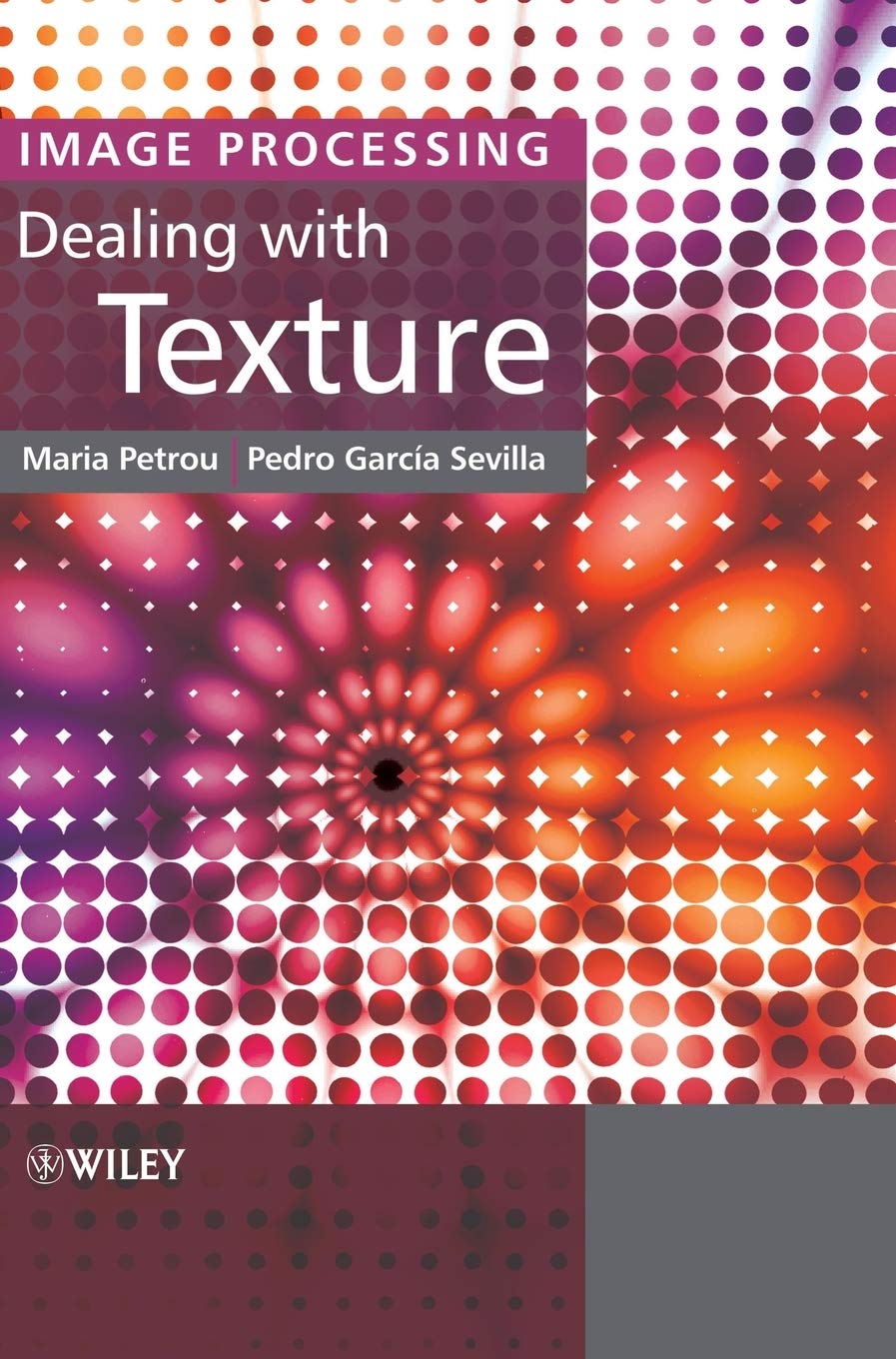
Image Processing: Dealing with Texture,New
Sold by Ergodebooks, an authorized reseller.
Returns accepted within 30 days | support@ergodebooks.com
Shipping Information
- Free Standard Shipping — United States only
- Processing Time: 3–5 business days
- Estimated Delivery: 6–10 business days after dispatch
- Double-boxed, fully insured & discreetly packaged
- Tracking number sent via email once dispatched
Returns & Refund
Returns accepted within 30 days of delivery.
Damaged or Defective Item
Free return shipping + replacement or full refund
Wrong Item Received
Free return shipping + replacement or full refund
Change of Mind
Return shipping at customer's expense · 25% restocking fee applies
Payment Option

Selfcontained text covering practical image processing methods and theory for image texture analysis.Techniques for the analysis of texture in digital images are essential to a range of applications in areas as diverse as robotics, defence, medicine and the geosciences. In biological vision, texture is an important cue allowing humans to discriminate objects. This is because the brain is able to decipher important variations in data at scales smaller than those of the viewed objects. In order to deal with texture in digital data, many techniques have been developed by image processing researchers.With a wholly practical approach and many worked examples, Image Processing: Dealing with Texture is a comprehensive guide to these techniques, including chapters on mathematical morphology, fractals, Markov random fields, Gabor functions and wavelets. Structured around a series of questions and answers, enabling readers to easily locate information on specific problems, this book also: provides detailed descriptions of methods used to analyse binary as well as grey texture images presents information on two levels: an easytofollow narrative explaining the basics, and an advanced, indepth study of mathematical theorems and concepts looks at good and bad image processing practice, with wrongly designed algorithms illustrating what not to do includes an accompanying website, setting out all algorithms discussed within the text.An ideal selfteaching aid for senior undergraduate and Masters students taking courses in image processing and pattern recognition, this book is also an ideal reference for PhD students, electrical and biomedical engineers, mathematicians, and informatics researchers designing image processing applications.
⚠️ WARNING (California Proposition 65):
This product may contain chemicals known to the State of California to cause cancer, birth defects, or other reproductive harm.
For more information, please visit www.P65Warnings.ca.gov.