
Title
Images Of Penance, Images Of Mercy: Southwestern Santos In The Late Nineteenth Century,New
Sold by Ergodebooks, an authorized reseller.
Returns accepted within 30 days | support@ergodebooks.com
Shipping Information
- Free Standard Shipping — United States only
- Processing Time: 3–5 business days
- Estimated Delivery: 6–10 business days after dispatch
- Double-boxed, fully insured & discreetly packaged
- Tracking number sent via email once dispatched
Returns & Refund
Returns accepted within 30 days of delivery.
Damaged or Defective Item
Free return shipping + replacement or full refund
Wrong Item Received
Free return shipping + replacement or full refund
Change of Mind
Return shipping at customer's expense · 25% restocking fee applies
Payment Option

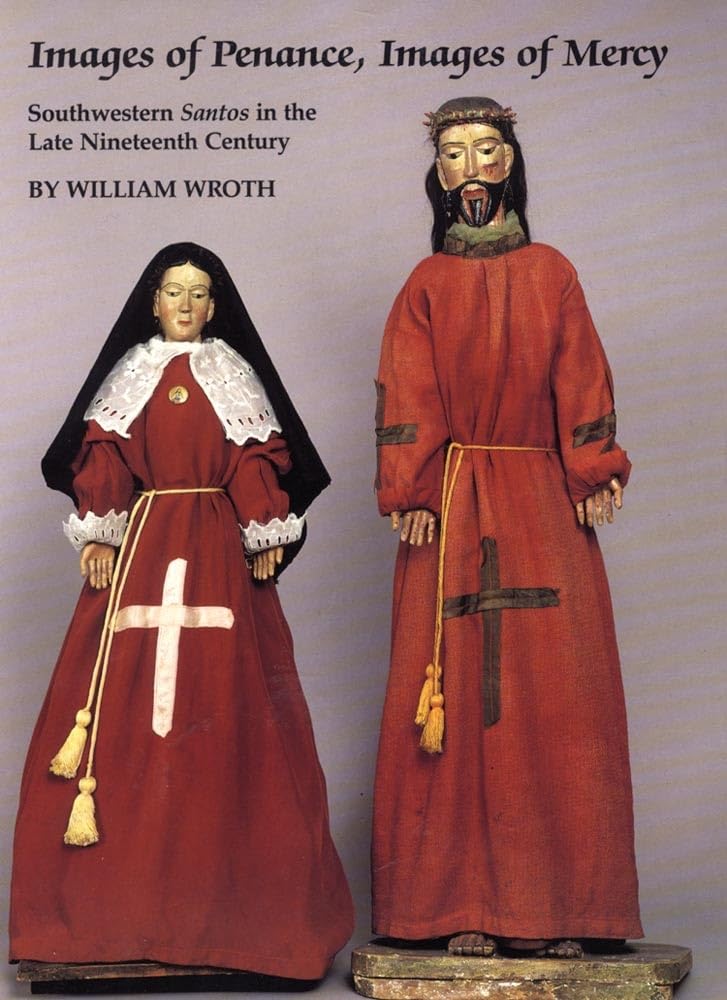
In the late nineteenth century Hispanic religious, or santos, made in New Mexico and Colorado were dominated by depictions of the passion and crucifixion of Christ. The predominance of these images can be traced to the growing importance of an organization known today as the brotherhood of Our Father Jesus Nazarene. The Brotherhood is a Catholic confraternity whose members are decided to living a pious Christian life through fervent devotion to the suffering and crucifixion of Christ. Their devotional actives include ceremonial processions each year during Holy Week in which, amidst prayer and the singing of hymns, statues of Christ and the Holy Virgin are carried.Following the American occupation of 1846, the Brotherhood strongly resisted the process of Americanization by preserving the core values of their Catholic faithpenance and mercyand the ceremonies that expressed these values. For the ceremonies, the stark, powerful, locally made santos, with their articulated limbs, were preferred over the sentimental commercially made plaster statues introduced by the Americans.In part 1 of this study, William Wroth traces the origins and growing importance of penitential practices in the early Christian church, through medieval Spain and colonial Mexico, to New Mexico and Colorado. In part 2 a vivid description of the rituals and social functions of the Brotherhood by Marta Weigle is followed by Wroths catalog of the expressive and moving santos in the Taylor Museum of Southwestern Studies, Colorado Springs Fine Art Center. He provides new information on the artists and their styles, describes particular pieces, and discusses their iconographic sources. Thirty seven blackandwhite and 107 color photographs illustrate the text.This first systematic study of the late nineteenthcentury santos will be welcomed by cultural and art historians and by all readers interested in religious art, Hispanic culture, and the American Southwest.Published for the Taylor Museum of Southwestern Studied, Colorado Springs Fine Art Center, with the support of the National Endowment for the Humanities.
⚠️ WARNING (California Proposition 65):
This product may contain chemicals known to the State of California to cause cancer, birth defects, or other reproductive harm.
For more information, please visit www.P65Warnings.ca.gov.
- Q: What is the page count of the book? A: The book contains two hundred fourteen pages. It provides a comprehensive study of Southwestern santos and their cultural significance.
- Q: What is the binding type of this book? A: This book has a paperback binding. This makes it flexible and easy to handle while reading.
- Q: What are the physical dimensions of the book? A: The book measures nine point zero two inches in length and twelve point zero one inches in height. Its thickness is zero point four four inches.
- Q: What is the genre of this book? A: The book falls under the Performing Arts category. It specifically explores the intersection of religious art and cultural history.
- Q: Who is the author of this book? A: The author is William Wroth. He provides insights into the historical and cultural context of the santos.
- Q: How do I read this book? A: You can read this book as you would any typical paperback. It is suitable for anyone interested in art history or Hispanic culture.
- Q: Is this book suitable for all ages? A: Yes, this book is suitable for a general audience. However, it may be more appreciated by those with an interest in art and cultural studies.
- Q: Can this book be used for academic purposes? A: Yes, this book is an excellent resource for academic research. It provides extensive insights into religious art and cultural heritage.
- Q: How should I store this book? A: Store this book in a cool, dry place, away from direct sunlight. This will help preserve its condition and prevent fading.
- Q: How do I keep this book in good condition? A: To maintain the book's condition, avoid exposing it to moisture and handle it with clean hands. Consider using a book cover for extra protection.
- Q: What should I do if the book arrives damaged? A: If the book arrives damaged, contact the seller immediately for a replacement or refund. Keep all packaging materials for reference.
- Q: Is there a warranty for this book? A: Typically, books do not come with a warranty. However, check with the seller for their specific return and refund policy.
- Q: How do I contact customer support for this book? A: You can contact customer support through the retailer's website. They will provide assistance with any order-related inquiries.
- Q: What makes this book unique? A: This book is unique for its systematic study of late nineteenth-century santos. It offers a detailed exploration of their cultural significance.
- Q: Is there an index or glossary in this book? A: Yes, the book includes an index. This helps readers easily locate specific topics related to the content.