
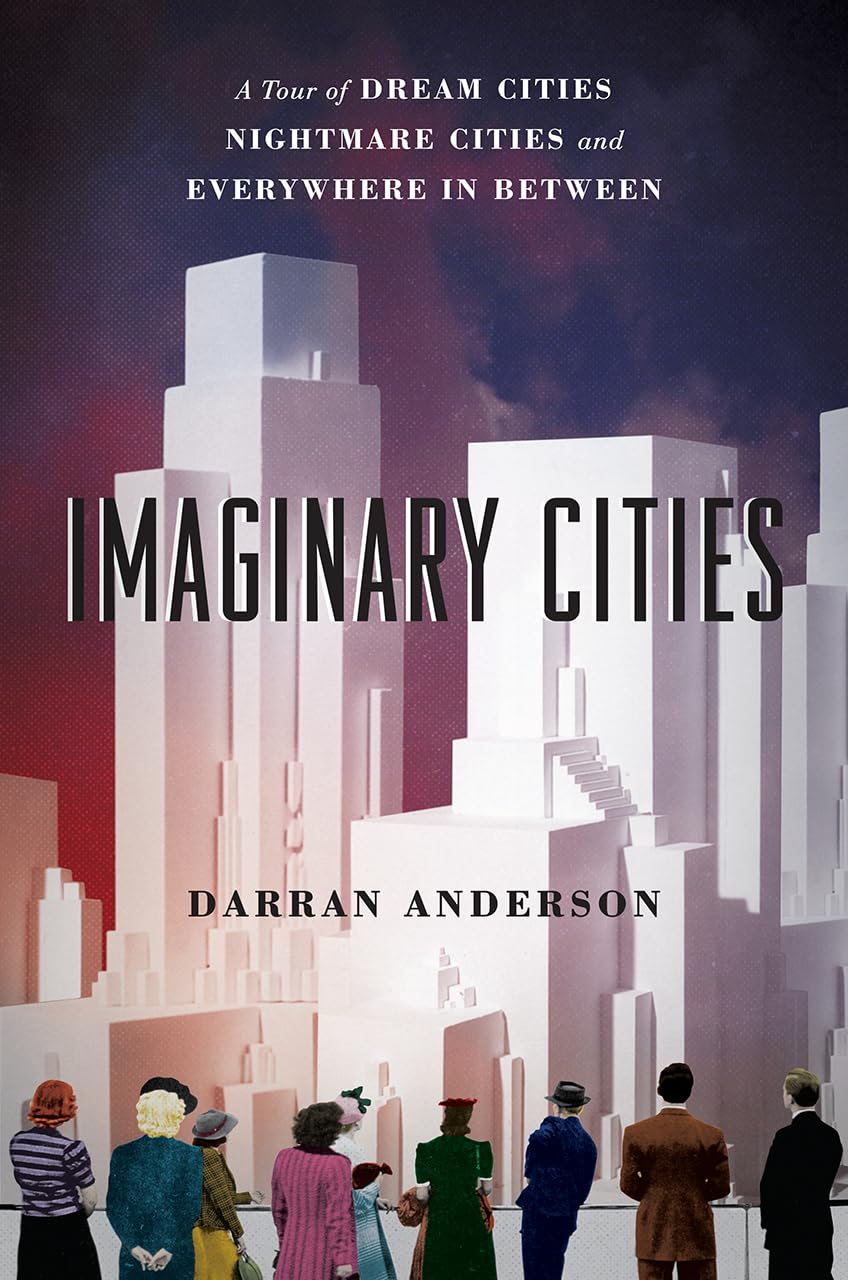
Title
Imaginary Cities: A Tour of Dream Cities, Nightmare Cities, and Everywhere in Between,Used
Sold by Ergodebooks, an authorized reseller.
Returns accepted within 30 days | support@ergodebooks.com
Shipping Information
- Free Standard Shipping — United States only
- Processing Time: 3–5 business days
- Estimated Delivery: 6–10 business days after dispatch
- Double-boxed, fully insured & discreetly packaged
- Tracking number sent via email once dispatched
Returns & Refund
Returns accepted within 30 days of delivery.
Damaged or Defective Item
Free return shipping + replacement or full refund
Wrong Item Received
Free return shipping + replacement or full refund
Change of Mind
Return shipping at customer's expense · 25% restocking fee applies
Payment Option

For as long as humans have gathered in cities, those cities have had their shiningor shadowycounterparts. Imaginary cities, potential cities, future cities, perfect cities. It is as if the city itself, its inescapable gritty reality and elbowtoelbow nature, demands we call into being some alternative, yearnedfor better place.This book is about those cities. Its neither a history of grand plans nor a literary exploration of the utopian impulse, but rather something different, hybrid, idiosyncratic. Its a magpies book, full of characters and incidents and ideas drawn from cities real and imagined around the globe and throughout history. Thomas Mores allegorical island shares space with Soviet megaplanning; Marco Polo links up with James Joyces meticulously imagined Dublin; the medieval land of Cockaigne meets the hopeful future of Star Trek. With Darran Anderson as our guide, we find common themes and recurring dreams, tied to the seemingly ineluctable problems of our actual cities, of poverty and exclusion and waste and destruction. And thats where Imaginary Cities becomes more than a mereif ecstatically entertainingintellectual exercise: for, as Anderson says, If a city can be imagined into being, it can be reimagined. Every architect, philosopher, artist, writer, planner, or citizen who dreams up an imaginary city offers lessons for our real ones; harnessing those flights of hopeful fancy can help us improve the streets where we live.Though it shares DNA with books as disparate as Calvinos Invisible Cities and Jane Jacobss Death and Life of Great American Cities, theres no other book quite like Imaginary Cities. After reading it, youll walk the streets of your cityreal or imaginedwith fresh eyes.
⚠️ WARNING (California Proposition 65):
This product may contain chemicals known to the State of California to cause cancer, birth defects, or other reproductive harm.
For more information, please visit www.P65Warnings.ca.gov.
- Q: What is the main theme of 'Imaginary Cities'? A: 'Imaginary Cities' explores the concept of cities that exist in the imagination, contrasting them with real urban environments. The author, Darran Anderson, delves into the dreams and problems of our actual cities, examining how imagined cities can inspire changes in our real-world urban experiences.
- Q: Who is the author of 'Imaginary Cities'? A: The author of 'Imaginary Cities' is Darran Anderson, who combines various narratives and ideas from both real and fictional cities throughout history.
- Q: How many pages does 'Imaginary Cities' have? A: 'Imaginary Cities' has a total of 572 pages, providing an in-depth exploration of its themes.
- Q: What type of binding does this book have? A: 'Imaginary Cities' is available in a paperback binding, making it a versatile option for readers.
- Q: When was 'Imaginary Cities' published? A: 'Imaginary Cities' was published on April 6, 2017.
- Q: Is 'Imaginary Cities' suitable for academic study? A: Yes, 'Imaginary Cities' is suitable for academic study as it offers a unique perspective on urbanism, blending literary analysis and critical thought, making it valuable for students of architecture, urban studies, and literature.
- Q: What are some key influences mentioned in 'Imaginary Cities'? A: The book references influential works such as Italo Calvino's 'Invisible Cities' and Jane Jacobs's 'Death and Life of Great American Cities', drawing connections between these texts and the themes discussed in Anderson's work.
- Q: Does 'Imaginary Cities' include illustrations or images? A: The product details do not specify whether 'Imaginary Cities' includes illustrations or images, focusing primarily on the text and narrative.
- Q: What can readers expect to gain from 'Imaginary Cities'? A: Readers can expect to gain insights into the relationship between real and imagined cities, along with inspiration on how to envision better urban environments. The book encourages a reimagining of our cities through creative thought.
- Q: Is 'Imaginary Cities' a fiction or non-fiction book? A: 'Imaginary Cities' is a non-fiction book that blends elements of literary criticism, urban studies, and philosophical reflection.