
Title
Imagined Communities: Reflections On The Origin And Spread Of Nationalism, Revised Edition
Sold by Ergodebooks, an authorized reseller.
Returns accepted within 30 days | support@ergodebooks.com
Shipping Information
- Free Standard Shipping — United States only
- Processing Time: 3–5 business days
- Estimated Delivery: 6–10 business days after dispatch
- Double-boxed, fully insured & discreetly packaged
- Tracking number sent via email once dispatched
Returns & Refund
Returns accepted within 30 days of delivery.
Damaged or Defective Item
Free return shipping + replacement or full refund
Wrong Item Received
Free return shipping + replacement or full refund
Change of Mind
Return shipping at customer's expense · 25% restocking fee applies
Payment Option

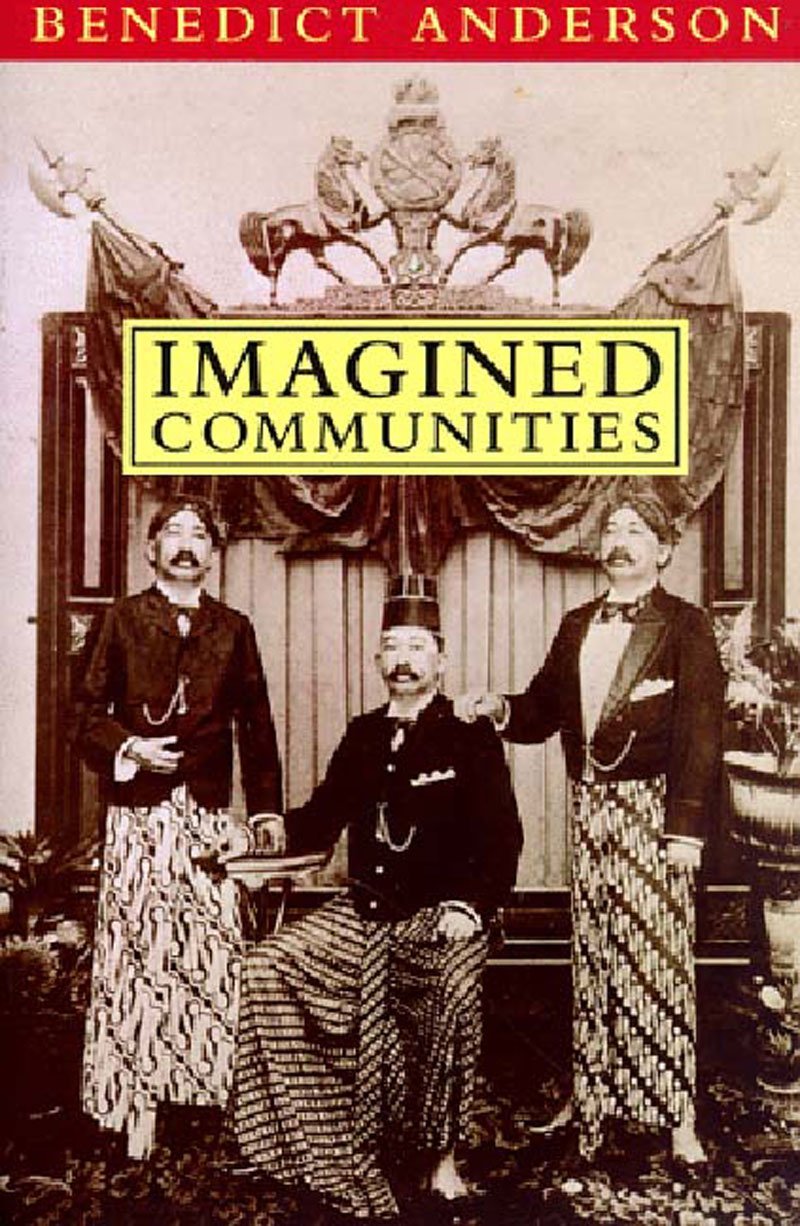
The Worldfamous Work On The Origins And Development Of Nationalismthe Full Magnitude Of Benedict Andersons Intellectual Achievement Is Still Being Appreciated And Debated. Imagined Communities Remains The Most Influential Book On The Origins Of Nationalism, Filling The Vacuum That Previously Existed In The Traditions Of Western Thought. Cited More Often Than Any Other Single Englishlanguage Work In The Human Sciences, It Is Read Around The World In More Than Thirty Translations.Written With Exemplary Clarity, This Illuminating Study Traces The Emergence Of Community As An Idea To South America, Rather Than To Nineteenthcentury Europe. Later, This Sense Of Belonging Was Formed And Reformulated At Every Level, From High Politics To Popular Culture, Through Print, Literature, Maps And Museums. Following The Rise And Conflict Of Nations And The Decline Of Empires, Anderson Draws On Examples From South East Asia, Latin America And Europes Recent Past To Show How Nationalism Shaped The Modern World.
⚠️ WARNING (California Proposition 65):
This product may contain chemicals known to the State of California to cause cancer, birth defects, or other reproductive harm.
For more information, please visit www.P65Warnings.ca.gov.
- Q: How many pages does the book have? A: This book has two hundred forty pages. It provides an in-depth exploration of nationalism and its impact across different regions.
- Q: What is the binding type of this book? A: The binding type is paperback. This makes it lightweight and portable, ideal for reading on the go.
- Q: What are the dimensions of the book? A: The dimensions are five point five one inches in length, zero point seven five inches in width, and eight point two three inches in height. These dimensions make it easy to handle.
- Q: Who is the author of this book? A: The author is Benedict Anderson. He is renowned for his contributions to the study of nationalism and has influenced many scholars in the field.
- Q: What is the main subject of 'Imagined Communities'? A: The main subject is the origins and spread of nationalism. Anderson examines how communities are formed and understood across different cultures.
- Q: Is this book suitable for academic study? A: Yes, this book is highly suitable for academic study. It is widely cited in human sciences and used in various educational settings.
- Q: How can I apply the concepts from this book? A: You can apply the concepts by analyzing contemporary nationalism in various contexts. The book provides a foundation for understanding community formation.
- Q: Is there a specific reading level for this book? A: The book is suitable for college-level readers and above. Its themes require a basic understanding of social sciences.
- Q: Where should I store this book to keep it in good condition? A: Store the book in a cool, dry place away from direct sunlight. This helps preserve its quality and prevents wear.
- Q: Can I lend this book to others? A: Yes, you can lend this book to others. Just ensure that it's returned in good condition to maintain its quality.
- Q: What if the book arrives damaged? A: If the book arrives damaged, you should contact the retailer for a return or exchange. Most retailers have policies for damaged goods.
- Q: Is this book available in other languages? A: Yes, 'Imagined Communities' is available in more than thirty translations. This makes it accessible to a global audience.
- Q: What makes this book influential? A: This book is influential due to its comprehensive analysis of nationalism, which has shaped scholarly discussions for decades.
- Q: How does this book compare to other studies on nationalism? A: This book is considered more foundational than many others. It fills a gap in the understanding of nationalism from a global perspective.
- Q: Is there a specific audience for this book? A: The primary audience includes students, academics, and anyone interested in political science and history. It appeals to a broad range of readers.
- Q: What if I have more questions about the book? A: If you have more questions, you can usually find additional resources online or contact the publisher for more information.