
Title
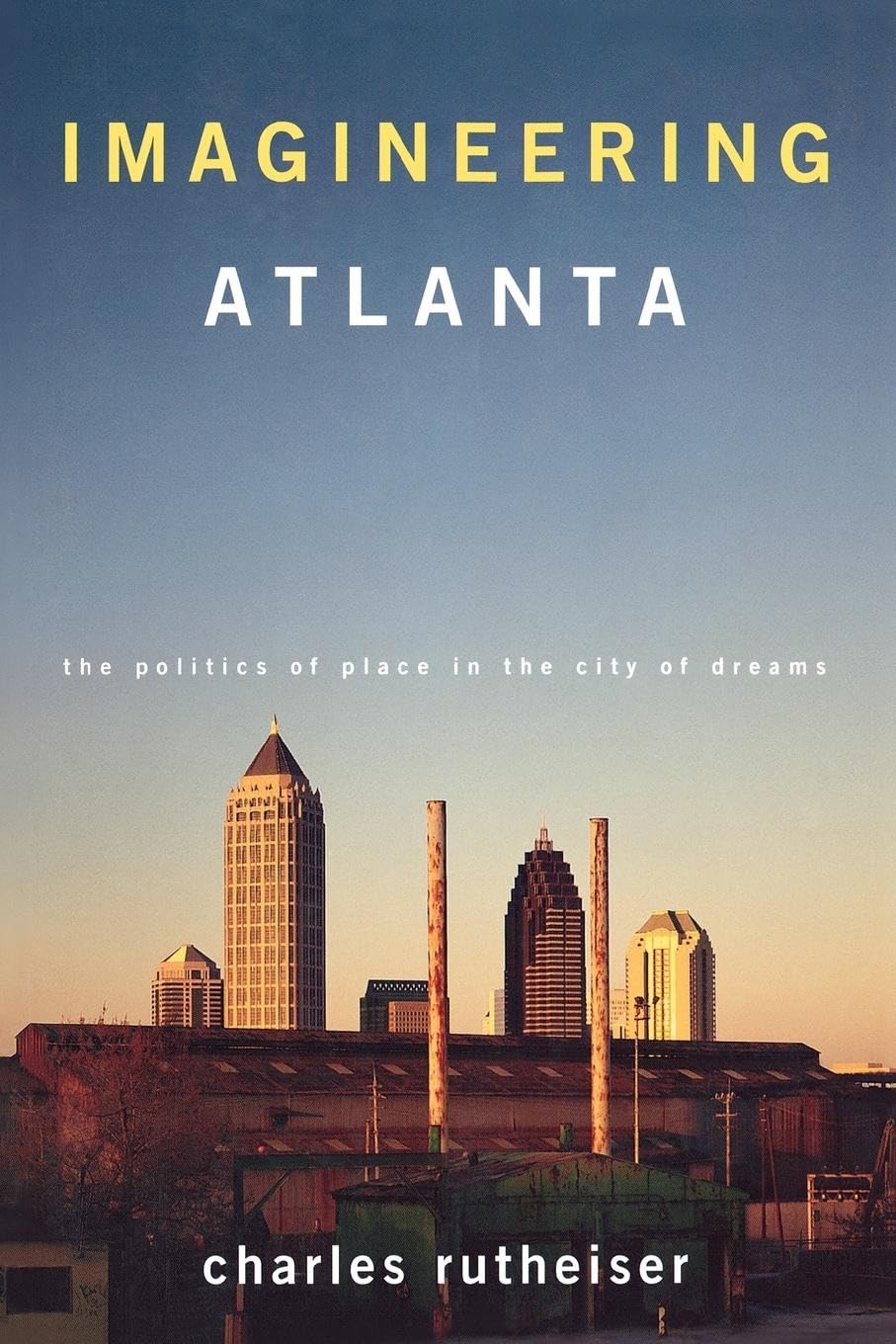
Imagineering Atlanta: The Politics of Place in the City of Dreams (Haymarket Series),Used
Sold by Ergodebooks, an authorized reseller.
Returns accepted within 30 days | support@ergodebooks.com
Shipping Information
- Free Standard Shipping — United States only
- Processing Time: 3–5 business days
- Estimated Delivery: 6–10 business days after dispatch
- Double-boxed, fully insured & discreetly packaged
- Tracking number sent via email once dispatched
Returns & Refund
Returns accepted within 30 days of delivery.
Damaged or Defective Item
Free return shipping + replacement or full refund
Wrong Item Received
Free return shipping + replacement or full refund
Change of Mind
Return shipping at customer's expense · 25% restocking fee applies
Payment Option

In the age of decentralization, instant communications, and the subordination of locality to the demands of a globalizing market, contemporary cities have taken on placeless or ageographic characters. They have become phantasmagorical landscapes. Atlanta, argues Charles Rutheiser, is in many ways paradigmatic of this generic urbanism. As such, it provides a fertile ground for investigating the play of culture, power and place within a nonplace urban realm. Rutheiser uses the mobilization for the 1996 Olympics to talk about the uneven development of Atlantas landscape. Like other cities lacking any natural advantages, Atlantas reputation and built form have been regularly reconfigured by generations of entrepreneurs, politicians, journalists and assorted visionaries to create a serviceoriented information city of global reach. Borrowing a term from Walt Disney, Rutheiser refers to these successive waves of organized and systematic promotion as linked, but not always wellcoordinated acts of urban imagineering. Focusing on the historic core of the metropolitan area, Rutheiser shows how Atlanta has long been both a test bed for federal urban renewal and a playground for private capital. The city provides an object lesson in internal colonization and urban underdevelopment. Yet, however illustrative of general trends, Atlanta also represents a unique conjunction of universals and particulars; it exemplifies a reality quite unlike either New York or Los Angelestwo cities to which it has often been compared. This book thus adds an important case study to the emerging discourse on contemporary urbanism. It goes beyond providing another account of uneven development and the themeparking of a North American city: Rutheiser reflects on how contemporary American society thinks about cities, and argues that, ultimately, despite the everincreasing virtualization of daytoday life, the obliteration of locality is never complete. There always remains some here, if only deep beneath the urbane disguises, in the interstices of social activity, in the contradictions of experience and in the residues of individual and collective memory.
⚠️ WARNING (California Proposition 65):
This product may contain chemicals known to the State of California to cause cancer, birth defects, or other reproductive harm.
For more information, please visit www.P65Warnings.ca.gov.