
Title
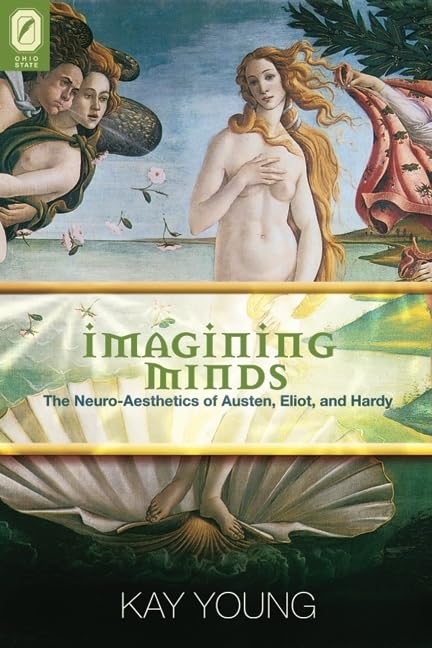
Imagining Minds: The Neuroaesthetics Of Austen, Eliot, And Hardy (Theory Interpretation Narrativ)
Sold by Ergodebooks, an authorized reseller.
Returns accepted within 30 days | support@ergodebooks.com
Shipping Information
- Free Standard Shipping — United States only
- Processing Time: 3–5 business days
- Estimated Delivery: 6–10 business days after dispatch
- Double-boxed, fully insured & discreetly packaged
- Tracking number sent via email once dispatched
Returns & Refund
Returns accepted within 30 days of delivery.
Damaged or Defective Item
Free return shipping + replacement or full refund
Wrong Item Received
Free return shipping + replacement or full refund
Change of Mind
Return shipping at customer's expense · 25% restocking fee applies
Payment Option

Jane Austen, George Eliot, And Thomas Hardythree Great Masters Of The English Novelare Three Remarkable Imagining Minds. As Readers Of Their Novels, We Feel Ourselves To Be In Contact With Their Authorial Minds And Conjure The Minds They Create Spread Across The Pages Of Their Narrative Worlds. In The Way That We Believe In And Hold In Mind The Idea That Other Human Beings Have Minds Of Their Own Do We As Readers Of The Novel Believe We Are In The Presence Of These Other Minds. But How?Imagining Minds Explores How The Novels Of Austen, Eliot, And Hardy Create The Feltquality Of Their Authoring Minds And Of The Minds They Author By Bringing Their Writing In Relation To Cognitive Neuroscience Accounts Of The Mindbrain, Especially Of William James And Antonio Damasio. It Is In That Relational Space Between The Novels And Theories Of Mindbrain That Kay Young Works Through Her Fundamental Claim: The Novel Writes About The Nature Of Mind, Narrates It At Work, And Stimulates Us To Know Deepened Experiences Of Consciousness In Its Touching Of Our Reading Minds.While, In Addition To James And Damasio, Young Draws On A Range Of Theories Of Mindbrain Generated By Current Research In Philosophy, Neuroscience, Cognitive Science, Psychology, Psychiatry, And Psychoanalysis To Help Her Understand The Novels Imagining Of Mind, Her Claim Is That Those Disciplines Cannot Themselves Perform The More Fully Integrated Because Embodied And Emotionally Stimulating Mind Work Of Thenovelmind Work That Prompts Us As Their Readers To Better Know Our Own Minds.
⚠️ WARNING (California Proposition 65):
This product may contain chemicals known to the State of California to cause cancer, birth defects, or other reproductive harm.
For more information, please visit www.P65Warnings.ca.gov.
- Q: What is the page count of 'Imagining Minds'? A: The book contains two hundred eighteen pages. This length provides an in-depth exploration of the themes discussed.
- Q: What are the dimensions of this book? A: The book measures six inches in length, zero point six inches in width, and nine point zero two inches in height. These dimensions make it easy to handle and store.
- Q: What type of binding does this book have? A: This book is available in paperback binding. Paperback options are lightweight and flexible, making them user-friendly.
- Q: How do I read 'Imagining Minds' effectively? A: To read this book effectively, it's best to engage with the material thoughtfully. Take notes on key concepts and reflect on the cognitive neuroscience connections.
- Q: Is this book suitable for all reading levels? A: This book is primarily aimed at adult readers and those with an interest in literary theory. It contains advanced themes that may not be suitable for younger audiences.
- Q: Can I use this book for academic purposes? A: Yes, this book can be used for academic purposes. It provides critical insights into the works of Austen, Eliot, and Hardy, making it valuable for literary studies.
- Q: What should I do to keep this book in good condition? A: To keep 'Imagining Minds' in good condition, store it in a cool, dry place and avoid exposing it to direct sunlight. Handle it gently to prevent wear and tear.
- Q: Are there any special care instructions for the book? A: No special care instructions are needed beyond standard book care. Ensure it is kept clean and free from moisture.
- Q: How should I store this book? A: Store this book upright on a shelf to prevent bending. Ensure it is placed among other books to provide support.
- Q: How does this book compare to other literary theory texts? A: This book offers a unique perspective by integrating cognitive neuroscience with literary analysis. It stands out for its focus on the minds of authors and characters.
- Q: Is this book a good choice for someone new to literary theory? A: While insightful, it may be complex for beginners. Readers new to literary theory should consider introductory texts before tackling this book.
- Q: What themes are explored in 'Imagining Minds'? A: The book explores themes of consciousness, the nature of mind, and the relationship between literature and cognitive neuroscience. It delves into how reading shapes our understanding of mental processes.
- Q: What if I receive a damaged book? A: If you receive a damaged copy of 'Imagining Minds', contact the retailer for a return or exchange. Most retailers have policies in place to address such issues.
- Q: Can I return the book if I'm not satisfied? A: Yes, returns are typically accepted if you're not satisfied. Check the retailer's return policy for specific guidelines.
- Q: What should I do if I have questions about the content? A: If you have questions about the content, consider discussing it with others interested in literary theory or consulting academic forums for deeper insights.