
Title
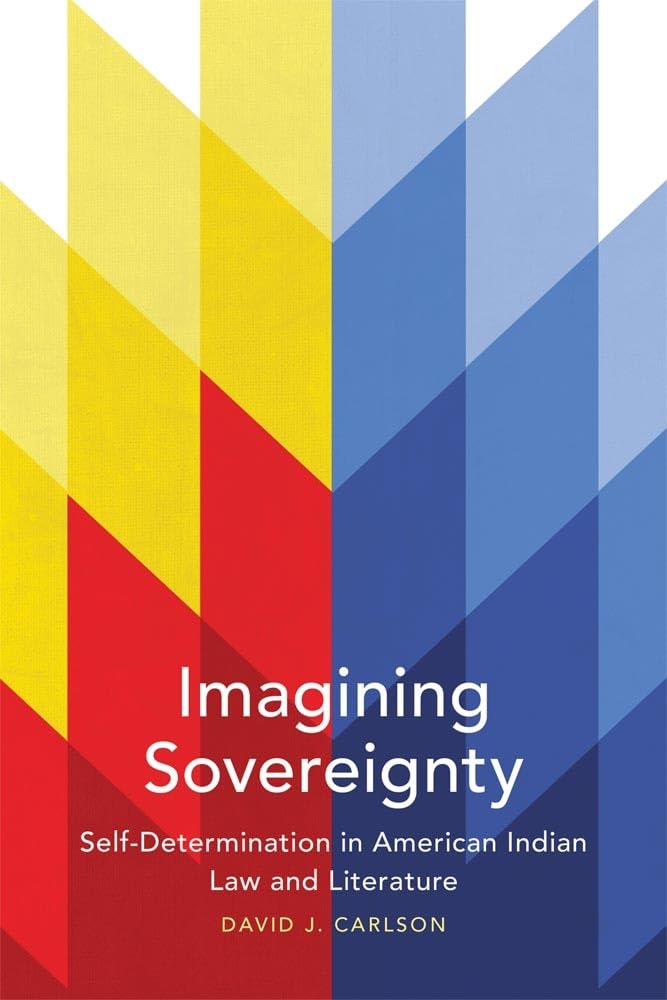
Imagining Sovereignty (American Indian Literature And Critical Studies Series) (Volume 66),Used
Sold by Ergodebooks, an authorized reseller.
Returns accepted within 30 days | support@ergodebooks.com
Shipping Information
- Free Standard Shipping — United States only
- Processing Time: 3–5 business days
- Estimated Delivery: 6–10 business days after dispatch
- Double-boxed, fully insured & discreetly packaged
- Tracking number sent via email once dispatched
Returns & Refund
Returns accepted within 30 days of delivery.
Damaged or Defective Item
Free return shipping + replacement or full refund
Wrong Item Received
Free return shipping + replacement or full refund
Change of Mind
Return shipping at customer's expense · 25% restocking fee applies
Payment Option

Sovereignty is perhaps the most ubiquitous term in American Indian writing todaybut its meaning and function are anything but universally understood. This is as it should be, David J. Carlson suggests, for a concept frequently at the center of variousand often competingclaims to authority. In Imagining Sovereignty, Carlson explores sovereignty as a discursive middle ground between tribal communities and the United States as a settlercolonial power. His work reveals the complementary ways in which legal and literary texts have generated politically significant representations of the world, which in turn have produced particular effects on readers and advanced the cause of tribal selfdetermination.Drawing on western legal historical sources and American Indian texts, Carlson traces a dual genealogy of sovereignty. Imagining Sovereignty identifies the concept as a marker, one that allows both the colonizing power of the United States and the resisting powers of various American Indian nations to organize themselves and their various claims to authority. In the process, sovereignty also functions as a point of exchange where these claims compete with and complicate one another. To this end, Carlson analyzes how several contemporary American Indian writers and critics have sought to fuse literary practices and legal structures into fully formed discourses of selfdetermination. After charting the development of the concept of sovereignty in natural law and its permutations in federal Indian policy, Carlson maps out the nature and function of sovereignty discourses in the work of contemporary Native scholars such as Russel Barsh, Gerald Taiaiake Alfred, DArcy McNickle, and Vine Deloria, and in the work of more expressly literary American Indian writers such as Craig Womack, Elizabeth CookLynn, Gerald Vizenor, and Francisco Patencio.Often read in opposition, the writings of these indigenous authors emerge in Imagining Sovereignty as a coherent literary and political traditionone whose varied discourse of sovereignty aptly reflects American Indian peoples diverse political contexts.
⚠️ WARNING (California Proposition 65):
This product may contain chemicals known to the State of California to cause cancer, birth defects, or other reproductive harm.
For more information, please visit www.P65Warnings.ca.gov.