
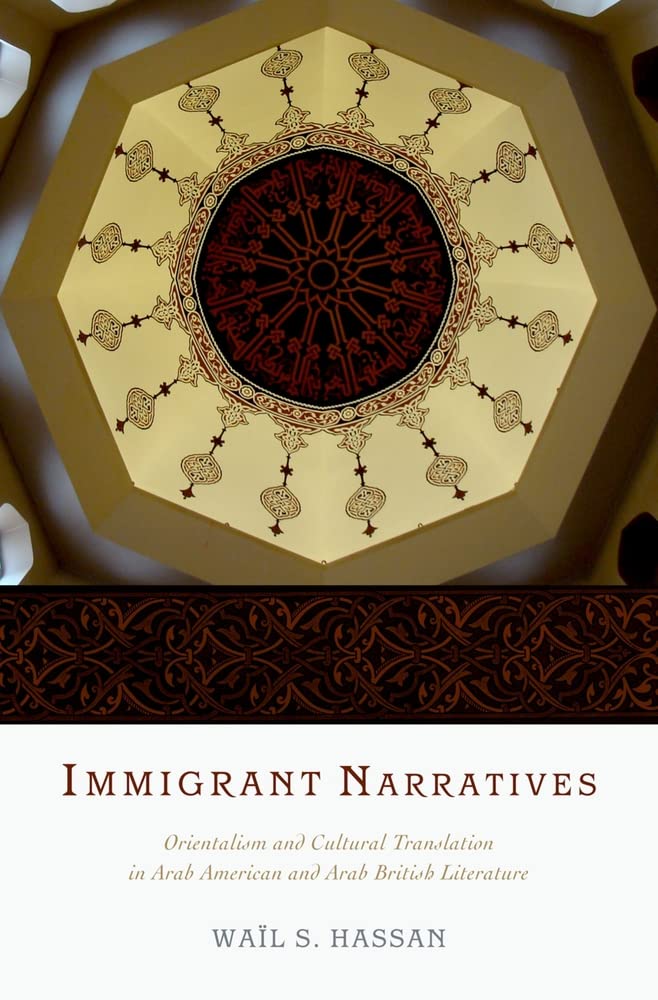
Title
Immigrant Narratives: Orientalism and Cultural Translation in Arab American and Arab British Literature,Used
Sold by Ergodebooks, an authorized reseller.
Returns accepted within 30 days | support@ergodebooks.com
Shipping Information
- Free Standard Shipping — United States only
- Processing Time: 3–5 business days
- Estimated Delivery: 6–10 business days after dispatch
- Double-boxed, fully insured & discreetly packaged
- Tracking number sent via email once dispatched
Returns & Refund
Returns accepted within 30 days of delivery.
Damaged or Defective Item
Free return shipping + replacement or full refund
Wrong Item Received
Free return shipping + replacement or full refund
Change of Mind
Return shipping at customer's expense · 25% restocking fee applies
Payment Option

Since the work of Edward Said first appeared, countless studies have shown the ways in which Western writerssometimes unwittinglyparticipate in the oversimplified East/West dichotomy of Orientalism. Yet no study has considered how writers from the socalled Orient approach this idea. A wideranging survey of the vast and diverse world of Anglophone Arab literature, Immigrant Narratives examines the complex ways in which Arab migrs contend with, resist, and participate in the problems of Orientalism.Hassan's account begins in the early twentieth century, as he considers the pioneering Lebanese American writers, Ameen Rihani and Kahlil Gibran. The former's seminal novel, The Book of Khalid sought to fuse Arabic and European literary traditions in search of a civilizational synthesis, whereas the latter found success by mixing Hindu, Christian, mystical, and English Romantic ideas into a popular spiritualism. Hassan then considers Arab immigrant lifewriting, ranging from autobiographies by George Haddad and Abraham Rihbany to memoirs of exile by the Egyptianborn Leila Ahmed and Palestinian refugees like Fawaz Turki and Edward Said. Hassan considers issues of representation in looking to how Arab immigrant writers like Ramzi Salti and Rabih Alameddine use homosexuality to reflect on Arab typecasting. Ahdaf Soueif's fiction reflects her growing awareness of the politics of reception of Anglophone Arab women writers while Leila Aboulela's fiction, inspired by an immigrant Islamic perspective, depicts the predicament of the Muslim minority in Britain.Drawing upon postcolonial, translation, and minority discourse theory, Immigrant Narratives investigates how key writers have described their immigrant experiences, acting as mediators and interpreters between cultures, and how they have forged new identities in their adopted countries.
⚠️ WARNING (California Proposition 65):
This product may contain chemicals known to the State of California to cause cancer, birth defects, or other reproductive harm.
For more information, please visit www.P65Warnings.ca.gov.