
Title
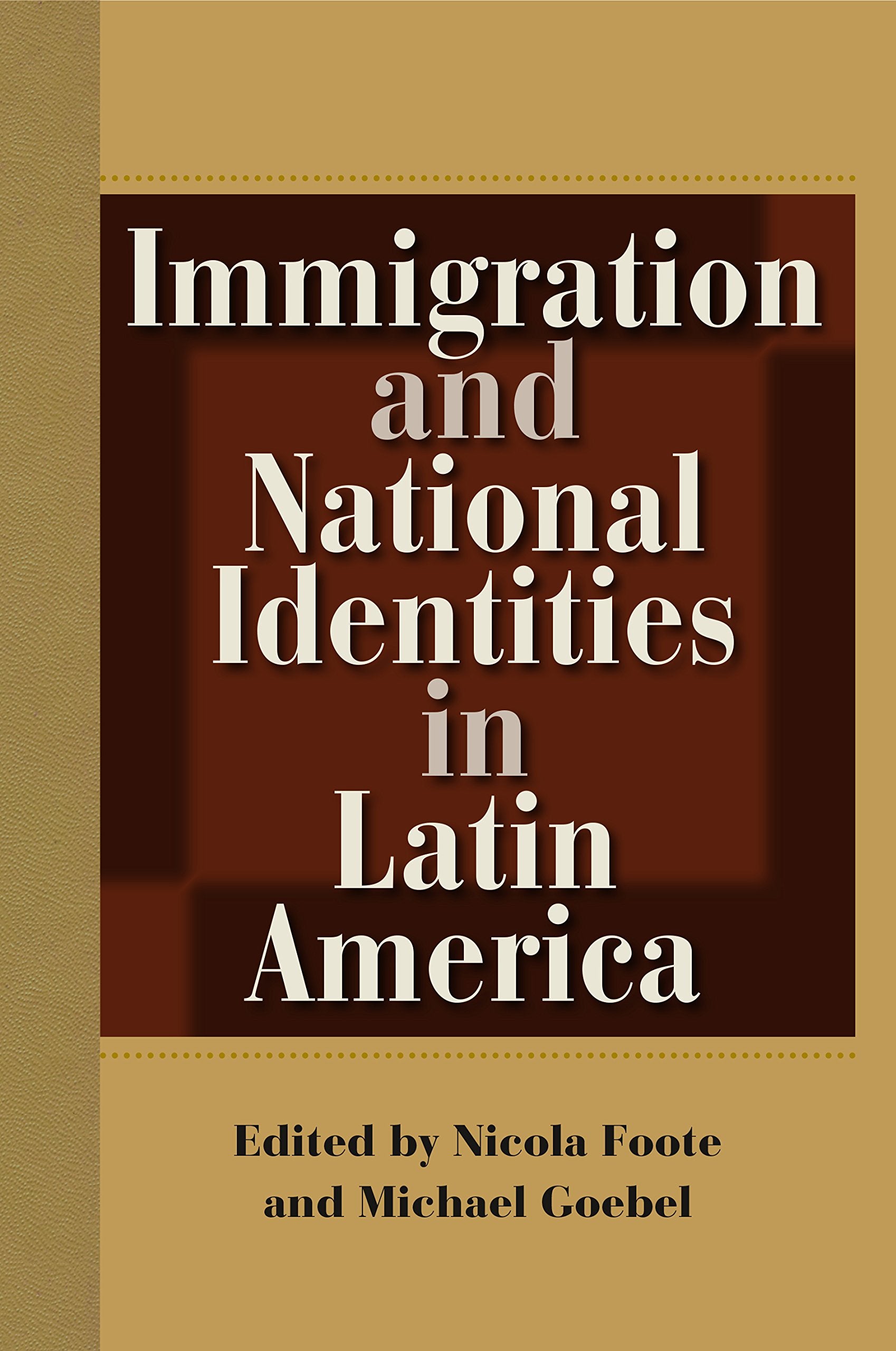
Immigration And National Identities In Latin America,Used
Sold by Ergodebooks, an authorized reseller.
Returns accepted within 30 days | support@ergodebooks.com
Shipping Information
- Free Standard Shipping — United States only
- Processing Time: 3–5 business days
- Estimated Delivery: 6–10 business days after dispatch
- Double-boxed, fully insured & discreetly packaged
- Tracking number sent via email once dispatched
Returns & Refund
Returns accepted within 30 days of delivery.
Damaged or Defective Item
Free return shipping + replacement or full refund
Wrong Item Received
Free return shipping + replacement or full refund
Change of Mind
Return shipping at customer's expense · 25% restocking fee applies
Payment Option

This groundbreaking study examines the connection between what are arguably the two most distinguishing phenomena of the modern world: the unprecedented surges in global mobility and in the creation of politically bounded spaces and identities.Jose C. Moya, author of Cousins and StrangersAn excellent collection of studies connecting transnational migration to the construction of national identities. Highly recommended.Luis Roniger, author of Transnational Politics in Central AmericaThe importance of this collection goes beyond the confines of one geographic region as it offers new insight into the role of migration in the definition and redefinition of nation states everywhere.Fraser Ottanelli, coeditor of Letters from theSpanish Civil WarThis volume has set the standard for future work to follow.Daniel Masterson, author of The History of PeruBetween the midnineteenth and midtwentieth centuries, an influx of Europeans, Asians, and Arabic speakers indelibly changed the face of Latin America. While many studies of this period focus on why the immigrants came to the region, this volume addresses how the newcomers helped construct national identities in the Caribbean, Mexico, Argentina, and Brazil.In these essays, some of the most respected scholars of migration history examine the range of responsessome welcoming, some xenophobicto the newcomers. They also look at the lasting effects that Jewish, German, Chinese, Italian, and Syrian immigrants had on the economic, sociocultural, and political institutions. These explorations of assimilation, race formation, and transnationalism enrich our understanding not only of migration to Latin America but also of the impact of immigration on the construction of national identity throughout the world.Contributors: Jrgen Buchenau Jeane DeLaney Nicola Foote Michael Goebel Steven Hyland Jr. Jeffrey Lesser Kathleen Lpez Lara Putnam Raanan Rein Stefan Rinke Frederik Schulze
⚠️ WARNING (California Proposition 65):
This product may contain chemicals known to the State of California to cause cancer, birth defects, or other reproductive harm.
For more information, please visit www.P65Warnings.ca.gov.