If you have any questions, you are always welcome to contact us. We'll get back to you as soon as possible, withing 24 hours on weekdays.
Customer service
All questions about your order, return and delivery must be sent to our customer service team by e-mail at yourstore@yourdomain.com
Sale & Press
If you are interested in selling our products, need more information about our brand or wish to make a collaboration, please contact us at press@yourdomain.com
Help
If you have any questions, you are always welcome to contact us. We'll get back to you as soon as possible, withing 24 hours on weekdays.
Customer service
All questions about your order, return and delivery must be sent to our customer service team by e-mail at yourstore@yourdomain.com
Sale & Press
If you are interested in selling our products, need more information about our brand or wish to make a collaboration, please contact us at press@yourdomain.com
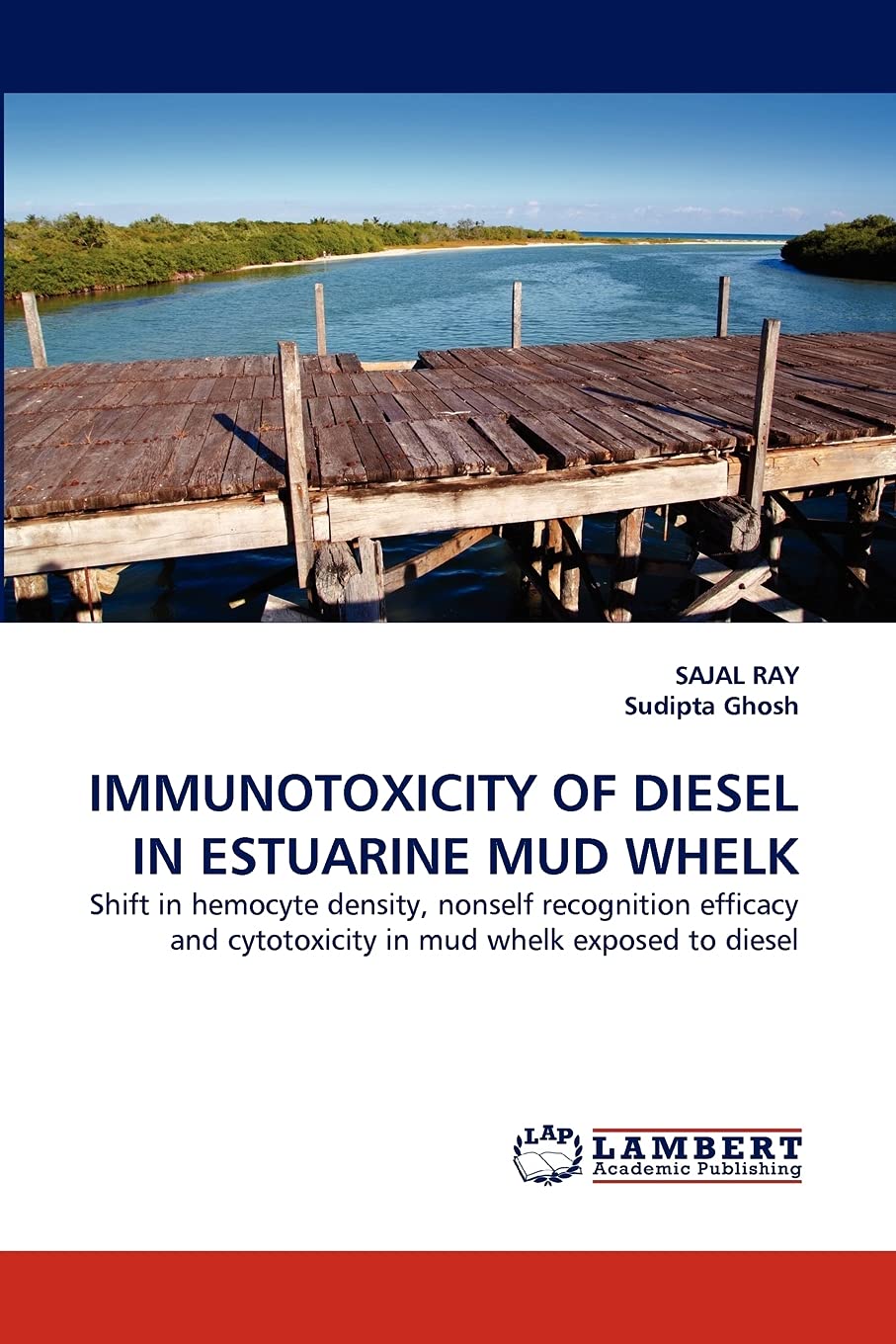
Sundarbans estuary of India is rich in biodiversity and under the threat of contamination by various xenobiotics including diesel. Motorised boats run by diesel are the chief mode of transport across the river and creeks of Sundarbans mangrove. Occasional spillage of diesel from these vessels often contaminates the water and littoral habitat of mud whelk, an important molluscan resident of this estuary. Hemocytes, the chief immunoeffector cells of mollusc perform diverse physiological functions like nonself recognition, biological plug formation by aggregation, elicitation of cytotoxicity and phagocytosis. Undesirable shift in hemocyte density, nonself recognition ability and cytotoxicity in mud whelk exposed to diesel are indicative to impairment of immune status and reduction of survival fitness of this species in its natural habitat. Prolonged exposure and toxicity of diesel in benthic community may lead to a gradual loss of littoral biodiversity of Sundarbans estuary.
⚠️ WARNING (California Proposition 65):
This product may contain chemicals known to the State of California to cause cancer,
birth defects, or other reproductive harm.
For MAP (Minimum Advertised Price) violations and Intellectual Property (IP) or Trademark concerns, please contact:
support@ergodebooks.com
⚠️ California Proposition 65 Warning: Some products sold on this website may expose you to chemicals known to the State of California to cause cancer, birth defects, or other reproductive harm. For more information, visit www.P65Warnings.ca.gov.