If you have any questions, you are always welcome to contact us. We'll get back to you as soon as possible, withing 24 hours on weekdays.
Customer service
All questions about your order, return and delivery must be sent to our customer service team by e-mail at yourstore@yourdomain.com
Sale & Press
If you are interested in selling our products, need more information about our brand or wish to make a collaboration, please contact us at press@yourdomain.com
Help
If you have any questions, you are always welcome to contact us. We'll get back to you as soon as possible, withing 24 hours on weekdays.
Customer service
All questions about your order, return and delivery must be sent to our customer service team by e-mail at yourstore@yourdomain.com
Sale & Press
If you are interested in selling our products, need more information about our brand or wish to make a collaboration, please contact us at press@yourdomain.com
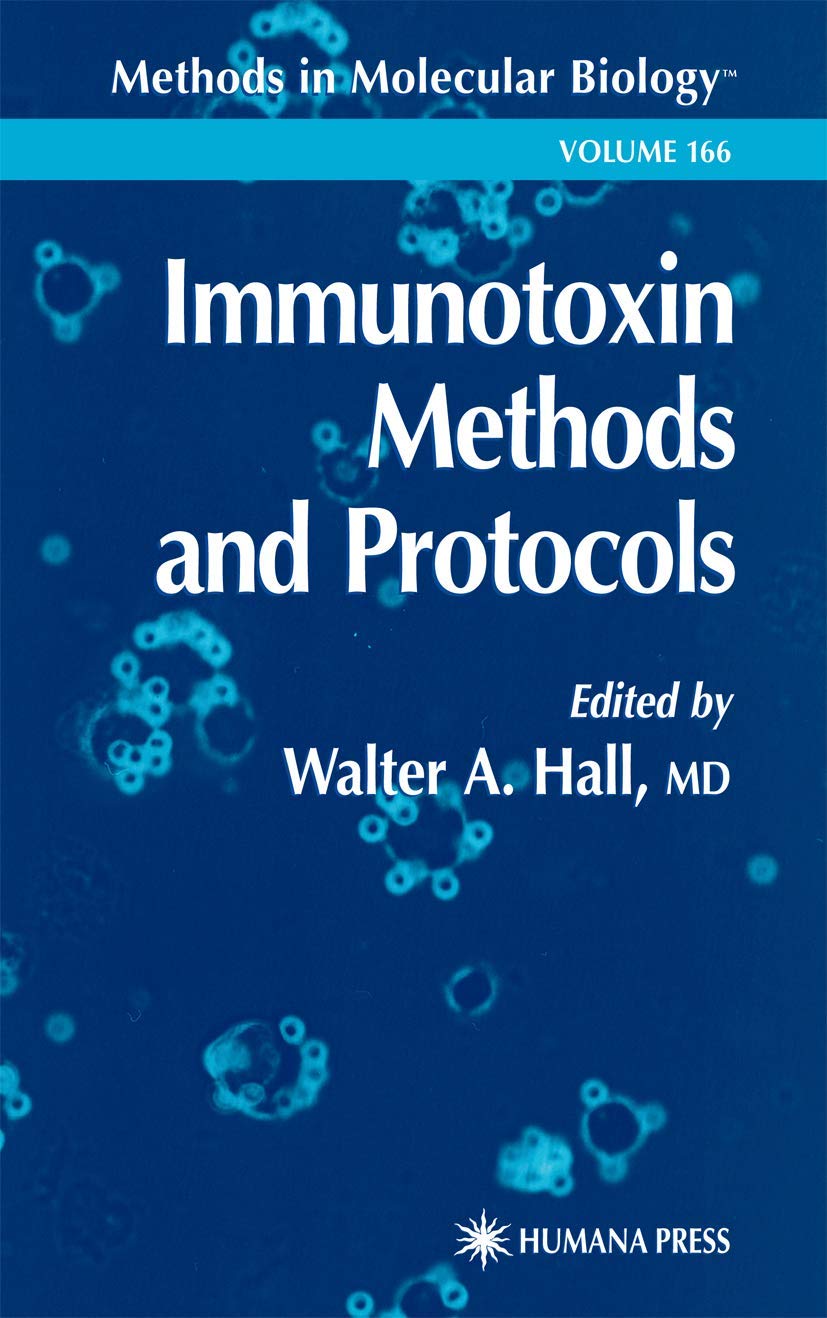
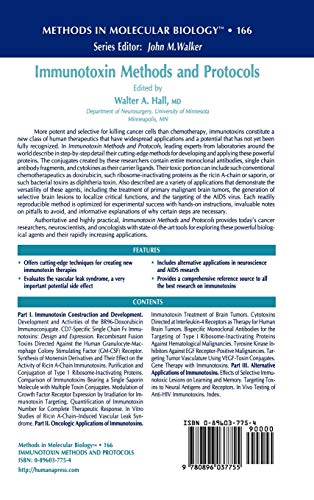
Immunotoxins represent a new class of human therapeutics that have widespread applications and a potential that has not yet been fully recognized since they were first conceived of by Paul Ehrlich in 1906. The majority of advances in the development and implementation of immunotoxins has occurred over the last 20 years. The reasons for this use of immunotoxins in basic science and clinical research are the powerful concurrent advances in genetic engineering and receptor physiology. Recombinant technology has allowed investigators to produce sufficient quantities of a homogeneous c pound that allows clinical trials to be performed. The identification of specific receptors on malignant cell types has enabled scientists to generate immunotoxins that have had positive results in clinical trials. As more cellular targets are identified in coming years, additional trials will be conducted in different disease states affecting still larger patient populations. Modulation of the immune system to decrease the humoral response to immunotoxins may improve their overall efficacy. As increasingly more effective compounds are generated, it will be necessary to decrease the local and systemic toxicity sociated with these agents, and methods for doing so are presently being veloped. The work presented in Immunotoxin Methods and Protocols focuses on three specific areas of immunotoxin investigation that are being conducted by experts throughout the world. The first section describes the construction and development of a variety of immunotoxins.
⚠️ WARNING (California Proposition 65):
This product may contain chemicals known to the State of California to cause cancer,
birth defects, or other reproductive harm.
For MAP (Minimum Advertised Price) violations and Intellectual Property (IP) or Trademark concerns, please contact:
support@ergodebooks.com
⚠️ California Proposition 65 Warning: Some products sold on this website may expose you to chemicals known to the State of California to cause cancer, birth defects, or other reproductive harm. For more information, visit www.P65Warnings.ca.gov.