If you have any questions, you are always welcome to contact us. We'll get back to you as soon as possible, withing 24 hours on weekdays.
Customer service
All questions about your order, return and delivery must be sent to our customer service team by e-mail at yourstore@yourdomain.com
Sale & Press
If you are interested in selling our products, need more information about our brand or wish to make a collaboration, please contact us at press@yourdomain.com
Help
If you have any questions, you are always welcome to contact us. We'll get back to you as soon as possible, withing 24 hours on weekdays.
Customer service
All questions about your order, return and delivery must be sent to our customer service team by e-mail at yourstore@yourdomain.com
Sale & Press
If you are interested in selling our products, need more information about our brand or wish to make a collaboration, please contact us at press@yourdomain.com
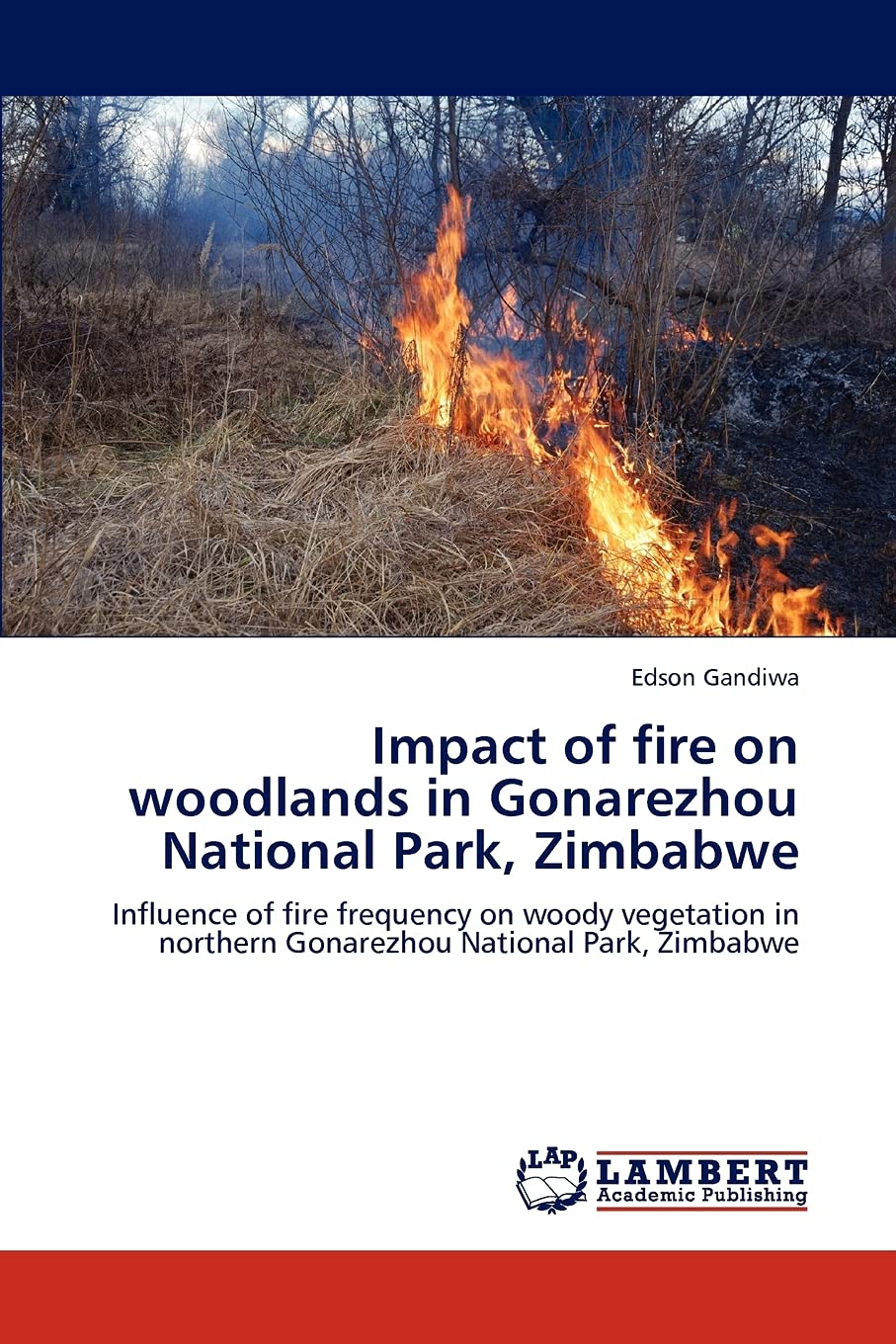
This study investigates the influence of fire frequency on woody vegetation in northern Gonarezhou National Park (GNP), Zimbabwe. The study first examines the nature of fire frequency patterns in the GNP, their relationship with rainfall and later, the resultant impacts of fires on woodlands. The break point year in the fire occurrence trends in GNP was 1987. There was a strong positive correlation between number of fires and year (r = 0.79) between 1969 and 1987. In contract, between 1987 and 2005, there was a negative correlation between number of fires and year (r = 0.49). There was a positive correlation (r = 0.44) between the percentage area burnt by fires and annual rainfall in GNP between 1969 and 2005. A total of 64 woody plant species were recorded in the two woodlands namely, Combretum apiculatum (44) and Colophospermum mopane (20) from 1,986 individual woody plants sampled. In both the C. apiculatum and mopane woodlands, high species diversities were found in the high fire frequency burn zones. The study results suggest that repeated burning alters woodland structure and composition in savanna areas. Developing adaptable fire management plans is hence paramount.
⚠️ WARNING (California Proposition 65):
This product may contain chemicals known to the State of California to cause cancer,
birth defects, or other reproductive harm.
For MAP (Minimum Advertised Price) violations and Intellectual Property (IP) or Trademark concerns, please contact:
support@ergodebooks.com
⚠️ California Proposition 65 Warning: Some products sold on this website may expose you to chemicals known to the State of California to cause cancer, birth defects, or other reproductive harm. For more information, visit www.P65Warnings.ca.gov.