If you have any questions, you are always welcome to contact us. We'll get back to you as soon as possible, withing 24 hours on weekdays.
Customer service
All questions about your order, return and delivery must be sent to our customer service team by e-mail at yourstore@yourdomain.com
Sale & Press
If you are interested in selling our products, need more information about our brand or wish to make a collaboration, please contact us at press@yourdomain.com
Help
If you have any questions, you are always welcome to contact us. We'll get back to you as soon as possible, withing 24 hours on weekdays.
Customer service
All questions about your order, return and delivery must be sent to our customer service team by e-mail at yourstore@yourdomain.com
Sale & Press
If you are interested in selling our products, need more information about our brand or wish to make a collaboration, please contact us at press@yourdomain.com
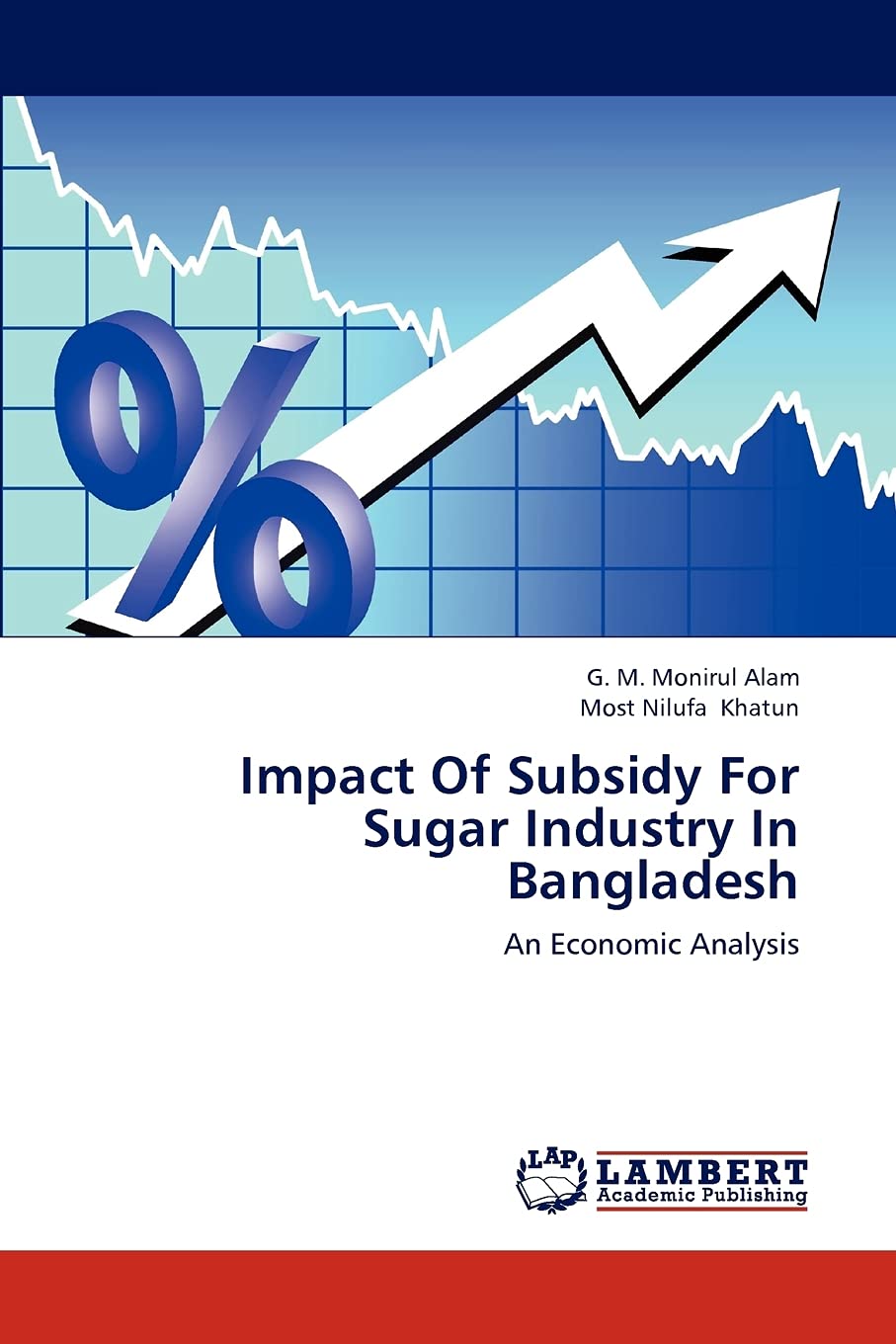
Subsidy in agriculture is an important issue and is an instrument of fiscal policy of the government. The developed countries are providing huge amount of subsidy to agriculture whereas the developing countries are restricted in many ways particularly under WTO regulation. In 2001 the government of Bangladesh again decided to provide subsidy on agriculture including sugarcane after the withdrawal of subsidy in1992. Sugar industry is the most important agrobased industry in Bangladesh. This industry is passing its crisis period due to huge amount of losses every year. Poor sugarcane farmers are not able to apply proper doses of input due to higher input price which results in low sugarcane yield. Policy makers are interested to know whether subsidy has made any positive impact on sugar industry or not. And how this programme can be made more effective? This book tried to answer /examine this question using empirical data from 15 sugar mills and came up with some important findings about the impact of subsidy in this sector. This book will be very useful for planners, policy makers and researchers as well.
⚠️ WARNING (California Proposition 65):
This product may contain chemicals known to the State of California to cause cancer,
birth defects, or other reproductive harm.
For MAP (Minimum Advertised Price) violations and Intellectual Property (IP) or Trademark concerns, please contact:
support@ergodebooks.com
⚠️ California Proposition 65 Warning: Some products sold on this website may expose you to chemicals known to the State of California to cause cancer, birth defects, or other reproductive harm. For more information, visit www.P65Warnings.ca.gov.