
Title
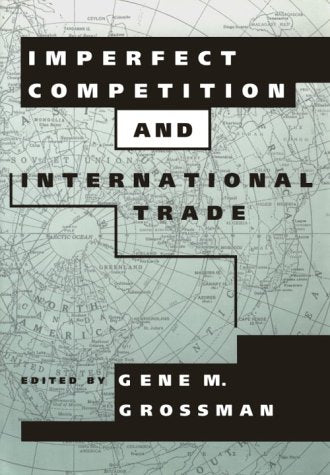
Imperfect Competition and International Trade (Readings in Economics),Used
Sold by Ergodebooks, an authorized reseller.
Returns accepted within 30 days | support@ergodebooks.com
Shipping Information
- Free Standard Shipping — United States only
- Processing Time: 3–5 business days
- Estimated Delivery: 6–10 business days after dispatch
- Double-boxed, fully insured & discreetly packaged
- Tracking number sent via email once dispatched
Returns & Refund
Returns accepted within 30 days of delivery.
Damaged or Defective Item
Free return shipping + replacement or full refund
Wrong Item Received
Free return shipping + replacement or full refund
Change of Mind
Return shipping at customer's expense · 25% restocking fee applies
Payment Option

The last decade has seen an important extension of the theory of international trade to include imperfectly competitive market structures. This book collects 19 of the most influential articles on trade with imperfect competition, providing ready access to current research by toplevel economists. Following an introduction. by Grossman that surveys the literature, the readings cover such important topics as the causes and consequences of intraindustry trade, the effects of tariffs and quantitative restrictions in oligopolistic settings, the welfare consequences of strategic trade policies, the raison d'tre for multinational corporations, the determinants of innovation, and the interaction between technological progress and trade. The recent work on trade incorporating imperfect competition can help to explain the high volume of intraindustry trade between similarly endowed countries and can account for the increasing importance of multinational corporations in the conduct of international trade. It can predict the emergence of crosscountry technology gaps and can help to identify the determinants of dynamic comparative advantage. The explorations of trade with imperfect competition have also deepened substantially our understanding of the costs and benefits of trade policy. We now know why governments may be motivated to assist their national firms in global oligopolistic competitions, and we also know the limitations of the arguments in support of strategic trade policies.ContributorsRichard E. Baldwin, James A. Brander, Avinash K. Dixit, Jonathan Eaton, Wilfred J. Ethier, Gene M. Grossman, Elhanan Helpman, Kala Krishna, Paul R. Krugman, James R. Markusen, Victor Norman, Luis A. RiveraBatiz, Paul M. Romer, Barbara J. Spencer, Anthony J. Venables Shmuel Ben Zvi
⚠️ WARNING (California Proposition 65):
This product may contain chemicals known to the State of California to cause cancer, birth defects, or other reproductive harm.
For more information, please visit www.P65Warnings.ca.gov.