
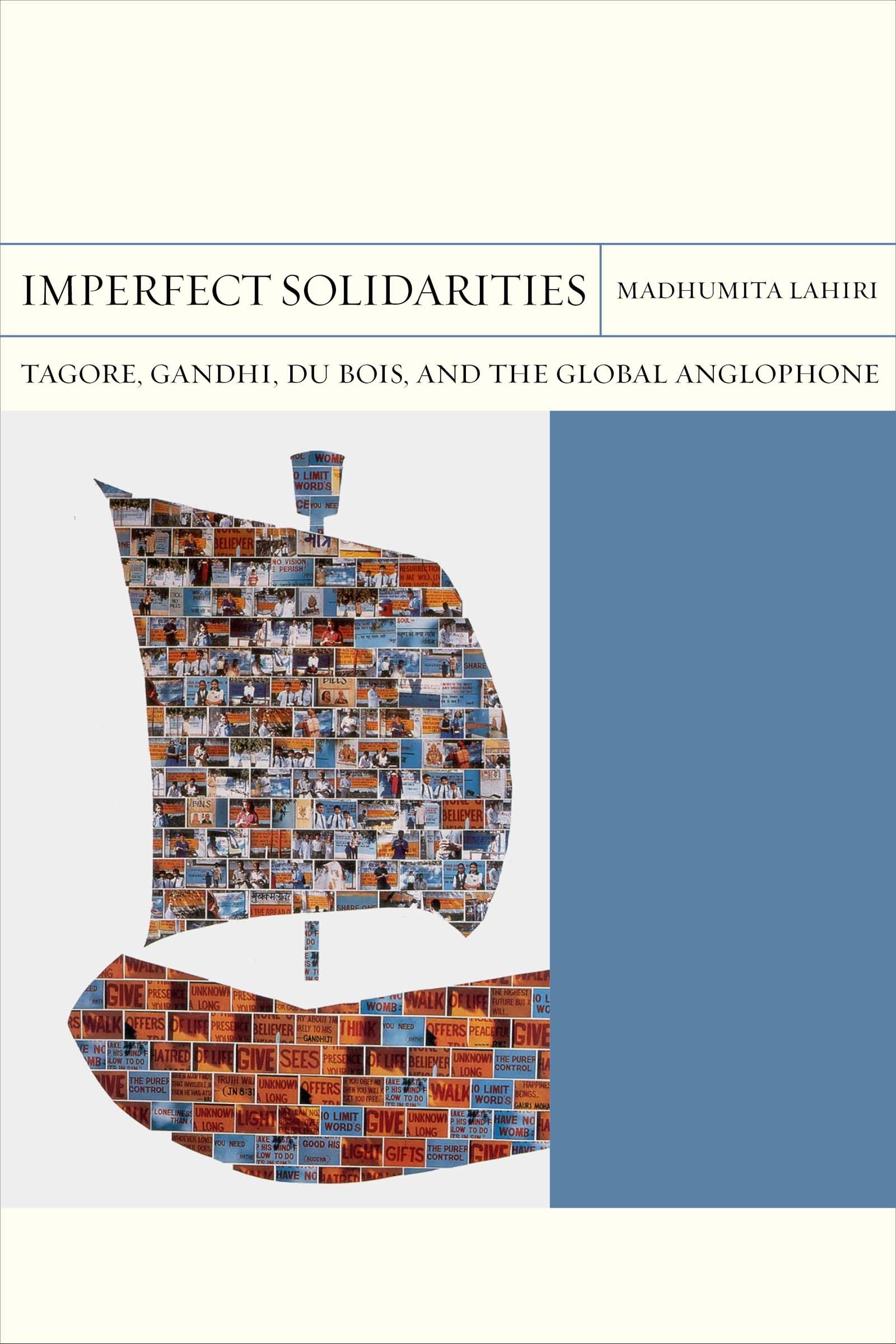
Title
Imperfect Solidarities: Tagore, Gandhi, Du Bois, And The Global Anglophone (Volume 36) (Flashpoints),Used
Sold by Ergodebooks, an authorized reseller.
Returns accepted within 30 days | support@ergodebooks.com
Shipping Information
- Free Standard Shipping — United States only
- Processing Time: 3–5 business days
- Estimated Delivery: 6–10 business days after dispatch
- Double-boxed, fully insured & discreetly packaged
- Tracking number sent via email once dispatched
Returns & Refund
Returns accepted within 30 days of delivery.
Damaged or Defective Item
Free return shipping + replacement or full refund
Wrong Item Received
Free return shipping + replacement or full refund
Change of Mind
Return shipping at customer's expense · 25% restocking fee applies
Payment Option

A century ago, activists confronting racism and colonialismin India, South Africa, and Black Americaused print media to connect with one another. Then, as now, the most effective medium for their undertakings was the English language. Imperfect Solidarities: Tagore, Gandhi, Du Bois, and the Global Anglophone tells the story of this interconnected Anglophone world. Through Rabindranath Tagores writings on China, Mahatma Gandhis recollections of South Africa, and W. E. B. Du Boiss invocations of India, Madhumita Lahiri theorizes print internationalism. This methodology requires new terms within the worldwide hegemony of the English language (the global Anglophone) in order to encourage alternate geographies (such as the Global South) and new collectivities (such as people of color).The women of print internationalism feature prominently in this account. Sonja Schlesin, born in Moscow, worked with Indians in South Africa. Sister Nivedita, an Irish woman in India, collaborated with a Japanese historian. Jessie Redmon Fauset, an African American, brought the world home to young readers through her work as an author and editor.Reading across races and regions, genres and genders, Imperfect Solidarities demonstrates the utility of the neologism for postcolonial literary studies.
⚠️ WARNING (California Proposition 65):
This product may contain chemicals known to the State of California to cause cancer, birth defects, or other reproductive harm.
For more information, please visit www.P65Warnings.ca.gov.
- Q: How many pages does the book 'Imperfect Solidarities' have? A: The book has two hundred thirty-two pages. This length allows for an in-depth exploration of its themes.
- Q: What is the binding type of 'Imperfect Solidarities'? A: The book is available in paperback binding. This makes it lightweight and portable for readers.
- Q: What are the dimensions of 'Imperfect Solidarities'? A: The dimensions are five point ninety-eight inches by one point three inches by nine point zero two inches. This size is typical for trade paperbacks.
- Q: Who is the author of 'Imperfect Solidarities'? A: The author is Madhumita Lahiri. She explores significant historical connections through this work.
- Q: What genre does 'Imperfect Solidarities' belong to? A: The book is classified under Criticism and Theory. It delves into postcolonial literary studies.
- Q: What themes are explored in 'Imperfect Solidarities'? A: The book examines themes of racism, colonialism, and print internationalism. It connects influential figures across different regions.
- Q: How can I use 'Imperfect Solidarities' for research? A: You can utilize the book as a scholarly resource on postcolonial theory. It provides insights into historical activism and literature.
- Q: Is 'Imperfect Solidarities' suitable for academic study? A: Yes, it is suitable for academic study. The book offers critical analysis and historical context valuable for students.
- Q: What reading level is appropriate for 'Imperfect Solidarities'? A: The book is best suited for advanced readers, particularly those in higher education. Its themes are complex and thought-provoking.
- Q: How should I store 'Imperfect Solidarities' to keep it in good condition? A: Store the book in a cool, dry place away from direct sunlight. This helps preserve its physical condition.
- Q: Can I clean the pages of 'Imperfect Solidarities'? A: No, it is not recommended to clean the pages. Instead, handle the book carefully to avoid damage.
- Q: What if 'Imperfect Solidarities' arrives damaged? A: You should contact the seller for a return or exchange. Most retailers have policies in place for damaged items.
- Q: Are there any special care instructions for 'Imperfect Solidarities'? A: No special care instructions are needed. Just handle the book with care to maintain its condition.
- Q: How does 'Imperfect Solidarities' compare to other literary criticism works? A: It offers a unique perspective on global Anglophone literature. This distinguishes it from more traditional literary criticism.
- Q: Is 'Imperfect Solidarities' a good choice for readers interested in postcolonial studies? A: Yes, it is an excellent choice for those interested in postcolonial studies. The book provides valuable insights into historic and literary connections.