
Title


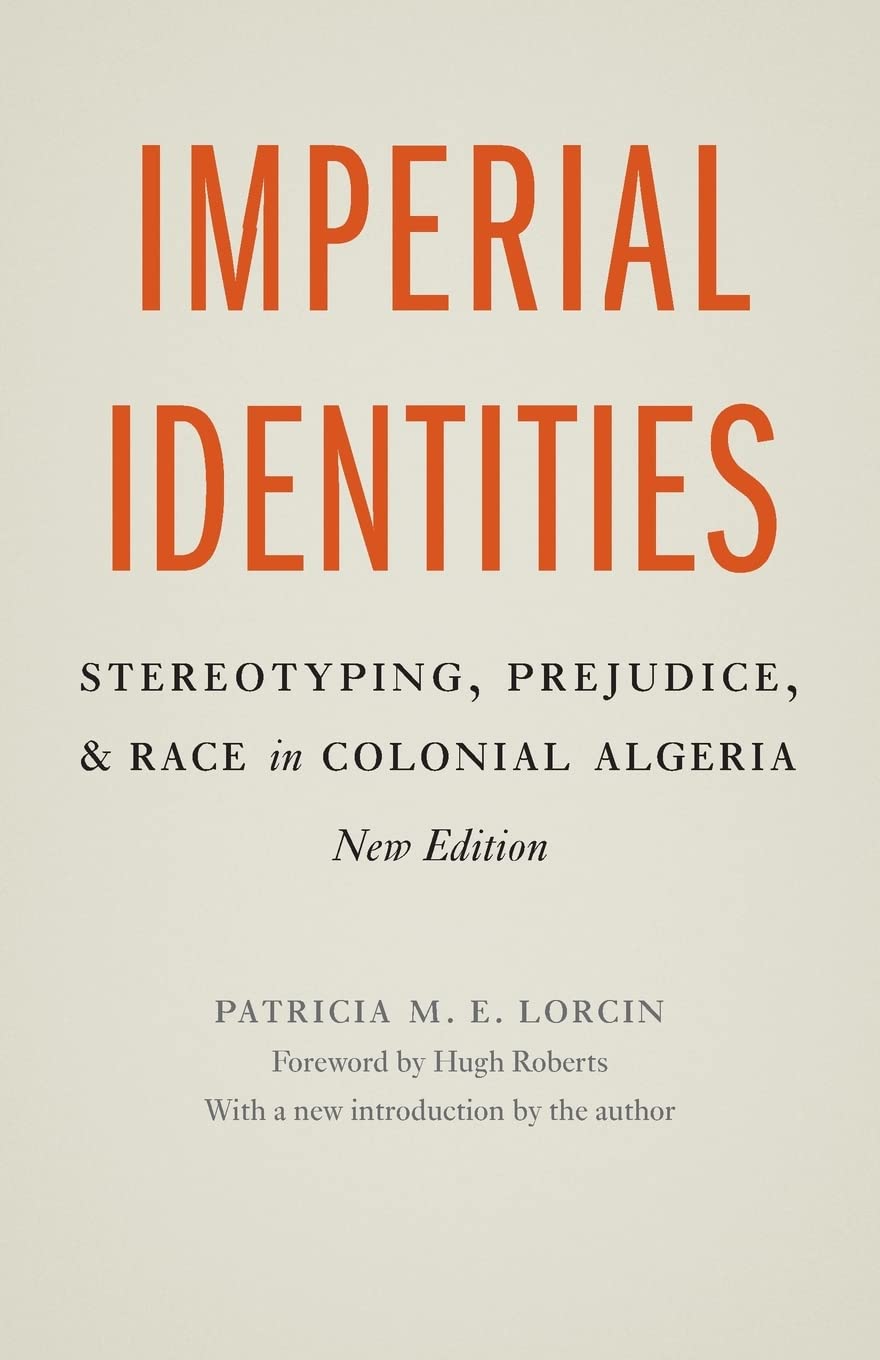
Imperial Identities: Stereotyping, Prejudice, And Race In Colonial Algeria, New Edition
Sold by Ergodebooks, an authorized reseller.
Returns accepted within 30 days | support@ergodebooks.com
Shipping Information
- Free Standard Shipping — United States only
- Processing Time: 3–5 business days
- Estimated Delivery: 6–10 business days after dispatch
- Double-boxed, fully insured & discreetly packaged
- Tracking number sent via email once dispatched
Returns & Refund
Returns accepted within 30 days of delivery.
Damaged or Defective Item
Free return shipping + replacement or full refund
Wrong Item Received
Free return shipping + replacement or full refund
Change of Mind
Return shipping at customer's expense · 25% restocking fee applies
Payment Option

Imperial Identities Is A Groundbreaking Book That Addresses Identity Formation In Colonial Algeria Of Two Predominant Ethnicities And Analyzes French Attitudes In The Context Of Nineteenthcentury Ideologies. Patricia M. E. Lorcin Explores The Process Through Which Ethnic Categories And Cultural Distinctions Were Developed And Used As Instruments Of Social Control In Colonial Society. She Examines The Circumstances That Gave Rise To And The Influences That Shaped The Colonial Images Of Good Kabyle And Bad Arab (Usually Referred To As The Kabyle Myth) In Algeria.In This New Edition Of Imperial Identities, Lorcin Addresses The Related Scholarship That Has Appeared Since The Books Original Publication, Looks At Postindependence Issues Relevant To The Arab/Berber Question, And Discusses The Developments In Algeria And France Connected To Arab/Berber Politics, Including The 1980 Berber Spring And The 19922002 Civil War. The New Edition Also Contains A Full And Updated Bibliography.
⚠️ WARNING (California Proposition 65):
This product may contain chemicals known to the State of California to cause cancer, birth defects, or other reproductive harm.
For more information, please visit www.P65Warnings.ca.gov.
- Q: What is the main focus of 'Imperial Identities'? A: 'Imperial Identities' explores identity formation in colonial Algeria, specifically focusing on two predominant ethnicities and analyzing French attitudes in the context of nineteenth-century ideologies.
- Q: Who is the author of 'Imperial Identities'? A: The author of 'Imperial Identities' is Patricia M. E. Lorcin.
- Q: When was the new edition of 'Imperial Identities' published? A: The new edition of 'Imperial Identities' was published on September 1, 2014.
- Q: What topics are covered in the new edition of 'Imperial Identities'? A: The new edition addresses related scholarship since the original publication, post-independence issues regarding the Arab/Berber question, and developments in Algeria and France related to Arab/Berber politics.
- Q: How many pages does 'Imperial Identities' have? A: 'Imperial Identities' has a total of 394 pages.
- Q: What type of binding does 'Imperial Identities' have? A: 'Imperial Identities' is available in paperback binding.
- Q: Is 'Imperial Identities' a new book or a used one? A: 'Imperial Identities' is in new condition.
- Q: What themes does Patricia M. E. Lorcin examine in the book? A: Lorcin examines ethnic categories and cultural distinctions used as instruments of social control in colonial society, alongside the colonial images of 'good' Kabyle and 'bad' Arab.
- Q: Does the new edition include updated bibliographies? A: Yes, the new edition of 'Imperial Identities' contains a full and updated bibliography.
- Q: What is the significance of the Kabyle myth discussed in the book? A: The Kabyle myth refers to the constructed colonial images that portrayed the Kabyle as 'good' and the Arab as 'bad,' which were significant in shaping social perception and control during colonial rule.