If you have any questions, you are always welcome to contact us. We'll get back to you as soon as possible, withing 24 hours on weekdays.
Customer service
All questions about your order, return and delivery must be sent to our customer service team by e-mail at yourstore@yourdomain.com
Sale & Press
If you are interested in selling our products, need more information about our brand or wish to make a collaboration, please contact us at press@yourdomain.com
Help
If you have any questions, you are always welcome to contact us. We'll get back to you as soon as possible, withing 24 hours on weekdays.
Customer service
All questions about your order, return and delivery must be sent to our customer service team by e-mail at yourstore@yourdomain.com
Sale & Press
If you are interested in selling our products, need more information about our brand or wish to make a collaboration, please contact us at press@yourdomain.com
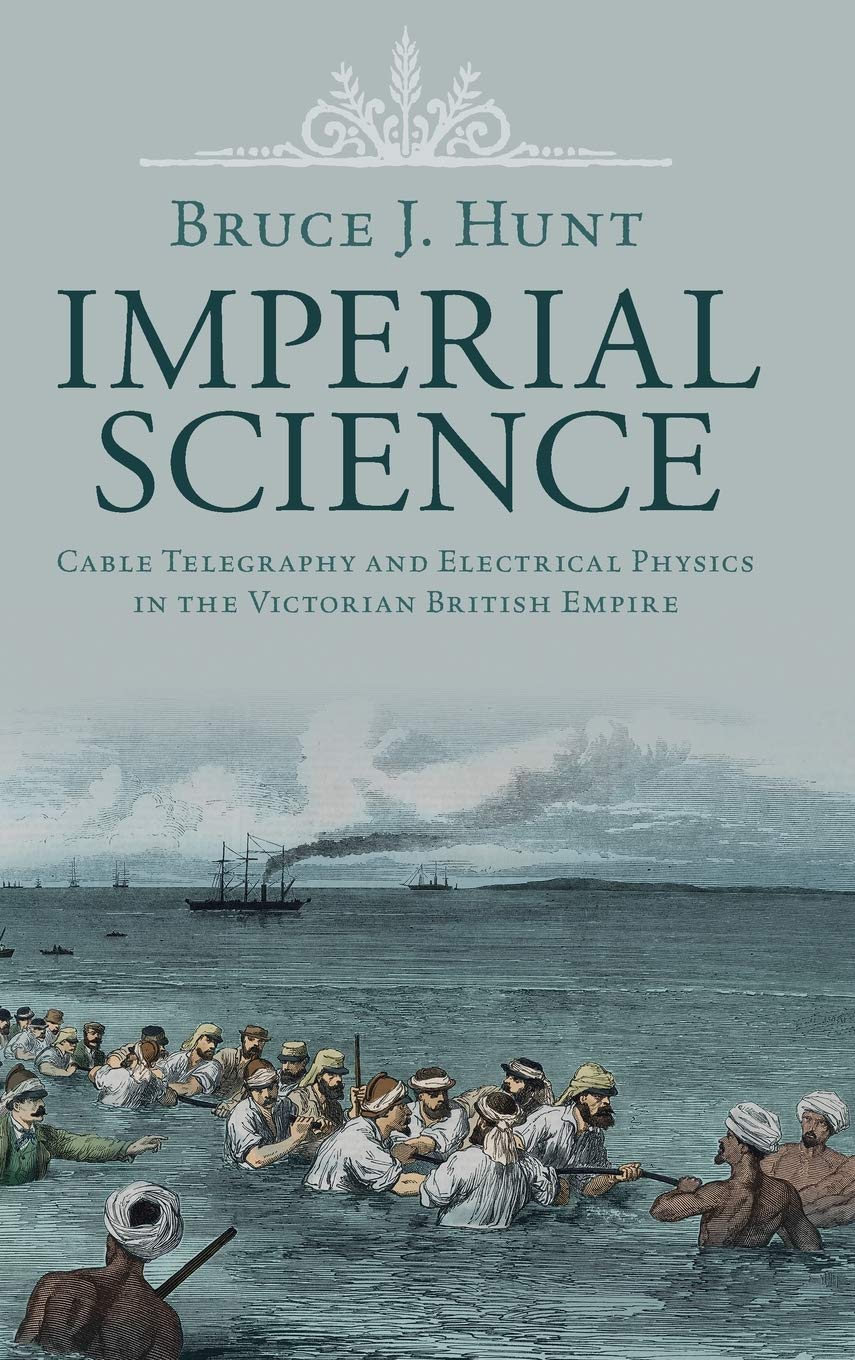
In the second half of the nineteenth century, British firms and engineers built, laid, and ran a vast global network of submarine telegraph cables. For the first time, cities around the world were put into almost instantaneous contact, with profound effects on commerce, international affairs, and the dissemination of news. Science, too, was strongly affected, as cable telegraphy exposed electrical researchers to important new phenomena while also providing a new and vastly larger market for their expertise. By examining the deep ties that linked the cable industry to work in electrical physics in the nineteenth century culminating in James Clerk Maxwell's formulation of his theory of the electromagnetic field Bruce J. Hunt sheds new light both on the history of the Victorian British Empire and on the relationship between science and technology.
⚠️ WARNING (California Proposition 65):
This product may contain chemicals known to the State of California to cause cancer,
birth defects, or other reproductive harm.
For MAP (Minimum Advertised Price) violations and Intellectual Property (IP) or Trademark concerns, please contact:
support@ergodebooks.com
⚠️ California Proposition 65 Warning: Some products sold on this website may expose you to chemicals known to the State of California to cause cancer, birth defects, or other reproductive harm. For more information, visit www.P65Warnings.ca.gov.