
Title
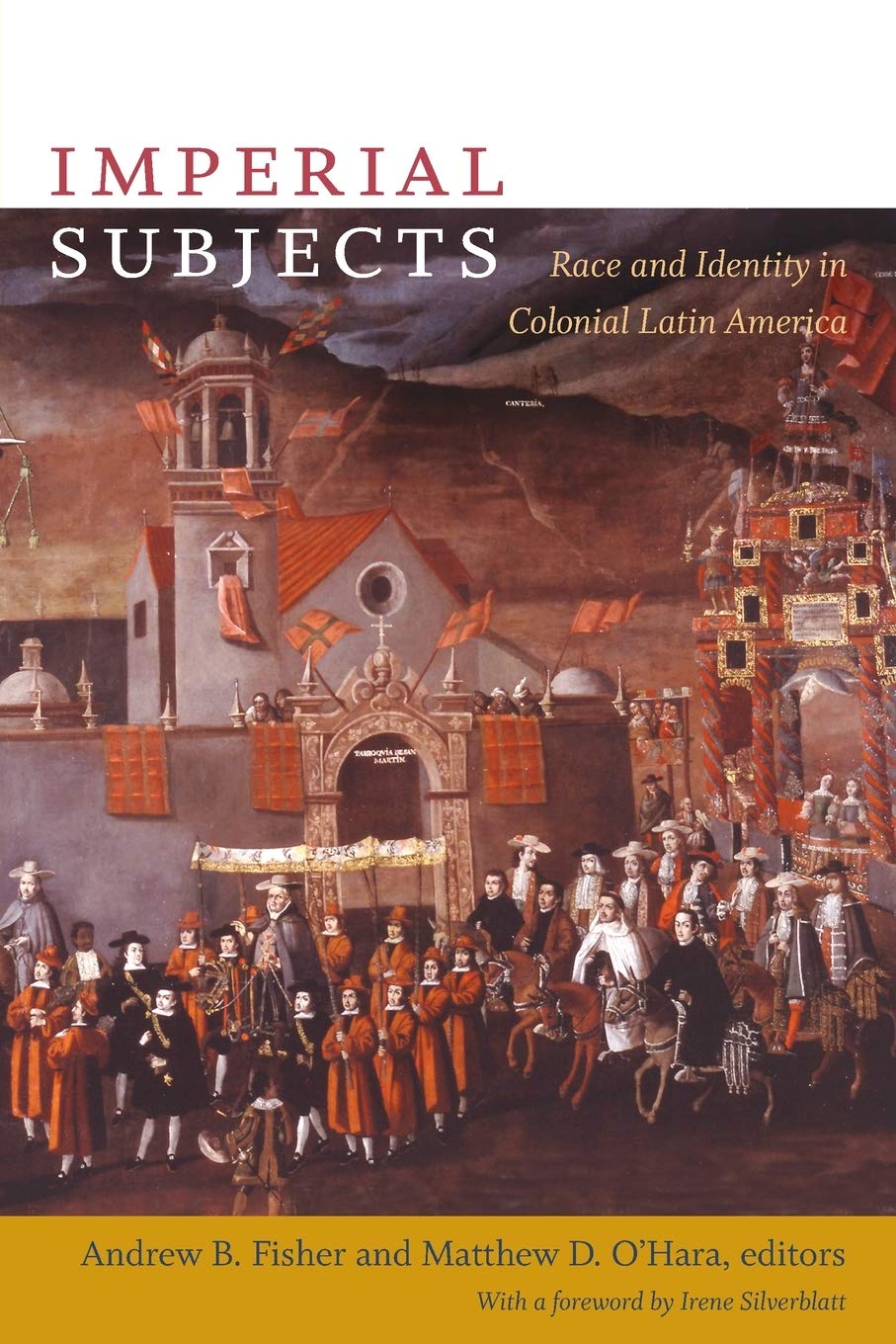
Imperial Subjects: Race And Identity In Colonial Latin America (Latin America Otherwise),Used
Sold by Ergodebooks, an authorized reseller.
Returns accepted within 30 days | support@ergodebooks.com
Shipping Information
- Free Standard Shipping — United States only
- Processing Time: 3–5 business days
- Estimated Delivery: 6–10 business days after dispatch
- Double-boxed, fully insured & discreetly packaged
- Tracking number sent via email once dispatched
Returns & Refund
Returns accepted within 30 days of delivery.
Damaged or Defective Item
Free return shipping + replacement or full refund
Wrong Item Received
Free return shipping + replacement or full refund
Change of Mind
Return shipping at customer's expense · 25% restocking fee applies
Payment Option

In colonial Latin America, social identity did not correlate neatly with fixed categories of race and ethnicity. As Imperial Subjects demonstrates, from the early years of Spanish and Portuguese rule, understandings of race and ethnicity were fluid. In this collection, historians offer nuanced interpretations of identity as they investigate how Iberian settlers, African slaves, Native Americans, and their multiethnic progeny understood who they were as individuals, as members of various communities, and as imperial subjects. The contributors explorations of the relationship between colonial ideologies of difference and the identities historical actors presented span the entire colonial period and beyond: from early contact to the legacy of colonial identities in the new republics of the nineteenth century. The volume includes essays on the major colonial centers of Mexico, Peru, and Brazil, as well as the Caribbean basin and the imperial borderlands.Whether analyzing cases in which the Inquisition found that the individuals before it were legally Indians and thus exempt from prosecution, or considering lateeighteenth and earlynineteenthcentury petitions for declarations of whiteness that entitled the mixedrace recipients to the legal and social benefits enjoyed by whites, the books contributors approach the question of identity by examining interactions between imperial subjects and colonial institutions. Colonial mandates, rulings, and legislation worked in conjunction with the exercise and negotiation of power between individual officials and an array of social actors engaged in countless brief interactions. Identities emerged out of the interplay between internalized understandings of self and group association and externalized social norms and categories.Contributors. Karen D. Caplan, R. Douglas Cope, Mariana L. R. Dantas, Mara Elena Daz, Andrew B. Fisher, Jane Mangan, Jeremy Ravi Mumford, Matthew D. OHara, Cynthia Radding, Sergio Serulnikov, Irene Silverblatt, David Tavrez, Ann Twinam
⚠️ WARNING (California Proposition 65):
This product may contain chemicals known to the State of California to cause cancer, birth defects, or other reproductive harm.
For more information, please visit www.P65Warnings.ca.gov.