
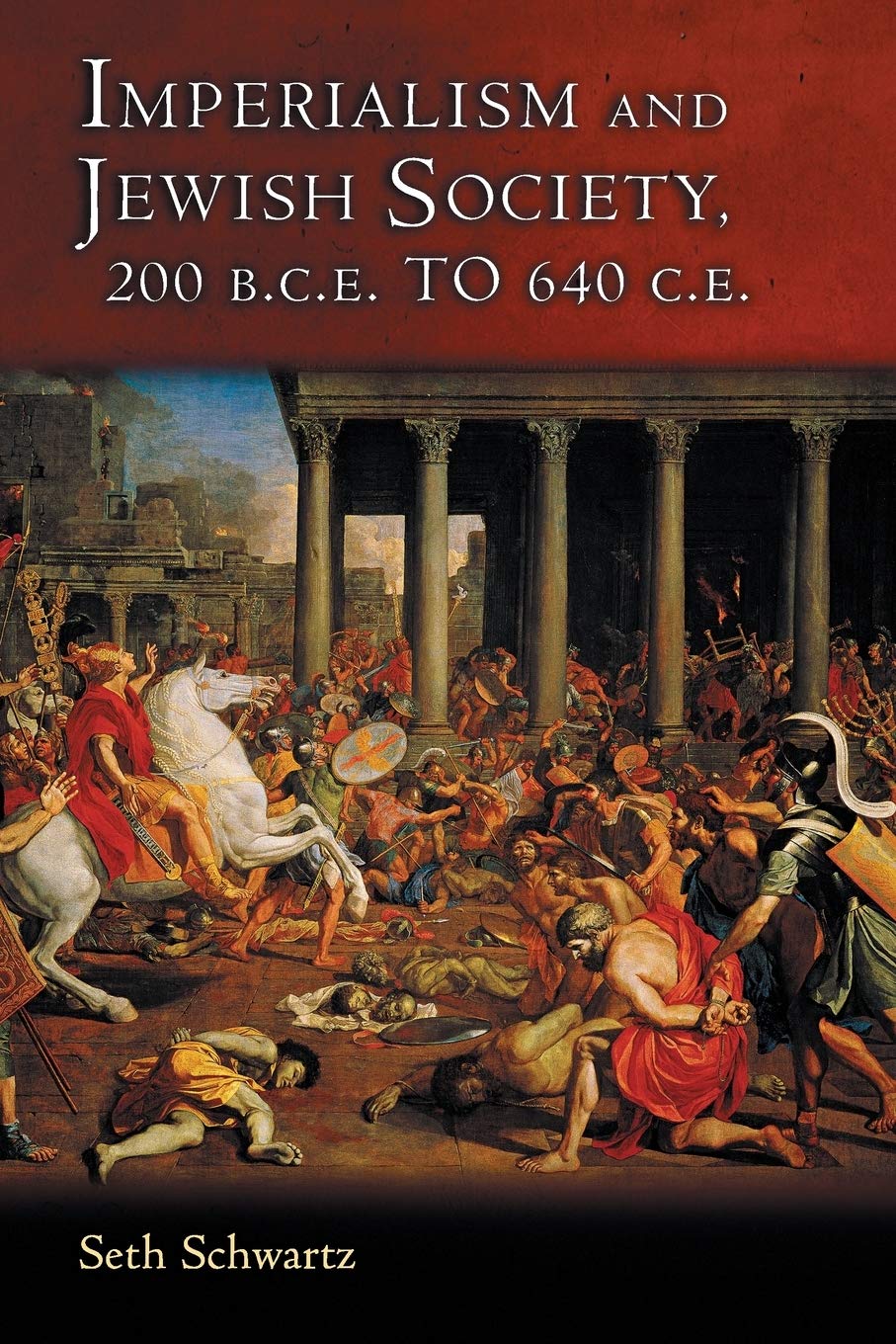
Title
Imperialism and Jewish Society: 200 B.C.E. to 640 C.E. (Jews, Christians, and Muslims from the Ancient to the Modern World),Used
Sold by Ergodebooks, an authorized reseller.
Returns accepted within 30 days | support@ergodebooks.com
Shipping Information
- Free Standard Shipping — United States only
- Processing Time: 3–5 business days
- Estimated Delivery: 6–10 business days after dispatch
- Double-boxed, fully insured & discreetly packaged
- Tracking number sent via email once dispatched
Returns & Refund
Returns accepted within 30 days of delivery.
Damaged or Defective Item
Free return shipping + replacement or full refund
Wrong Item Received
Free return shipping + replacement or full refund
Change of Mind
Return shipping at customer's expense · 25% restocking fee applies
Payment Option

This provocative new history of Palestinian Jewish society in antiquity marks the first comprehensive effort to gauge the effects of imperial domination on this people. Probing more than eight centuries of Persian, Greek, and Roman rule, Seth Schwartz reaches some startling conclusionsforemost among them that the Christianization of the Roman Empire generated the most fundamental features of medieval and modern Jewish life.Schwartz begins by arguing that the distinctiveness of Judaism in the Persian, Hellenistic, and early Roman periods was the product of generally prevailing imperial tolerance. From around 70 C.E. to the midfourth century, with failed revolts and the alluring cultural norms of the High Roman Empire, Judaism all but disintegrated. However, late in the Roman Empire, the Christianized state played a decisive role in ''reJudaizing'' the Jews. The state gradually excluded them from society while supporting their leaders and recognizing their local communities. It was thus in Late Antiquity that the synagoguecentered community became prevalent among the Jews, that there reemerged a distinctively Jewish art and literaturelaying the foundations for Judaism as we know it today.Through masterful scholarship set in rich detail, this book challenges traditional views rooted in romantic notions about Jewish fortitude. Integrating material relics and literature while setting the Jews in their eastern Mediterranean context, it addresses the complex and varied consequences of imperialism on this vast period of Jewish history more ambitiously than ever before. Imperialism in Jewish Society will be widely read and much debated.
⚠️ WARNING (California Proposition 65):
This product may contain chemicals known to the State of California to cause cancer, birth defects, or other reproductive harm.
For more information, please visit www.P65Warnings.ca.gov.
- Q: What is the main focus of 'Imperialism and Jewish Society: 200 B.C.E. to 640 C.E.'? A: The book explores the effects of imperial domination on Palestinian Jewish society, examining over eight centuries of Persian, Greek, and Roman rule.
- Q: Who is the author of this book? A: The author is Seth Schwartz, a historian known for his research on Jewish history.
- Q: What is the publication date of this book? A: The book was published on February 1, 2004.
- Q: How many pages does this book contain? A: The book contains 336 pages.
- Q: What type of binding does this book have? A: This edition of the book is a paperback.
- Q: Is this book in good condition? A: Yes, it is described as a used book in good condition.
- Q: What are the key themes discussed in the book? A: Key themes include Jewish distinctiveness during different imperial periods and the impact of Christianization on Jewish society.
- Q: Does this book include illustrations or photographs? A: The product details do not specify if there are illustrations or photographs in the book.
- Q: Is this book suitable for academic study? A: Yes, the book features masterful scholarship and comprehensive research, making it suitable for academic study.
- Q: Can this book be used for understanding modern Jewish identity? A: Yes, it provides insights into the historical foundations that shaped modern Jewish life, making it relevant for understanding contemporary Jewish identity.