
Title
Improving Literacy Achievement: An Effective Approach to Continuous Progress,Used
Sold by Ergodebooks, an authorized reseller.
Returns accepted within 30 days | support@ergodebooks.com
Shipping Information
- Free Standard Shipping — United States only
- Processing Time: 3–5 business days
- Estimated Delivery: 6–10 business days after dispatch
- Double-boxed, fully insured & discreetly packaged
- Tracking number sent via email once dispatched
Returns & Refund
Returns accepted within 30 days of delivery.
Damaged or Defective Item
Free return shipping + replacement or full refund
Wrong Item Received
Free return shipping + replacement or full refund
Change of Mind
Return shipping at customer's expense · 25% restocking fee applies
Payment Option

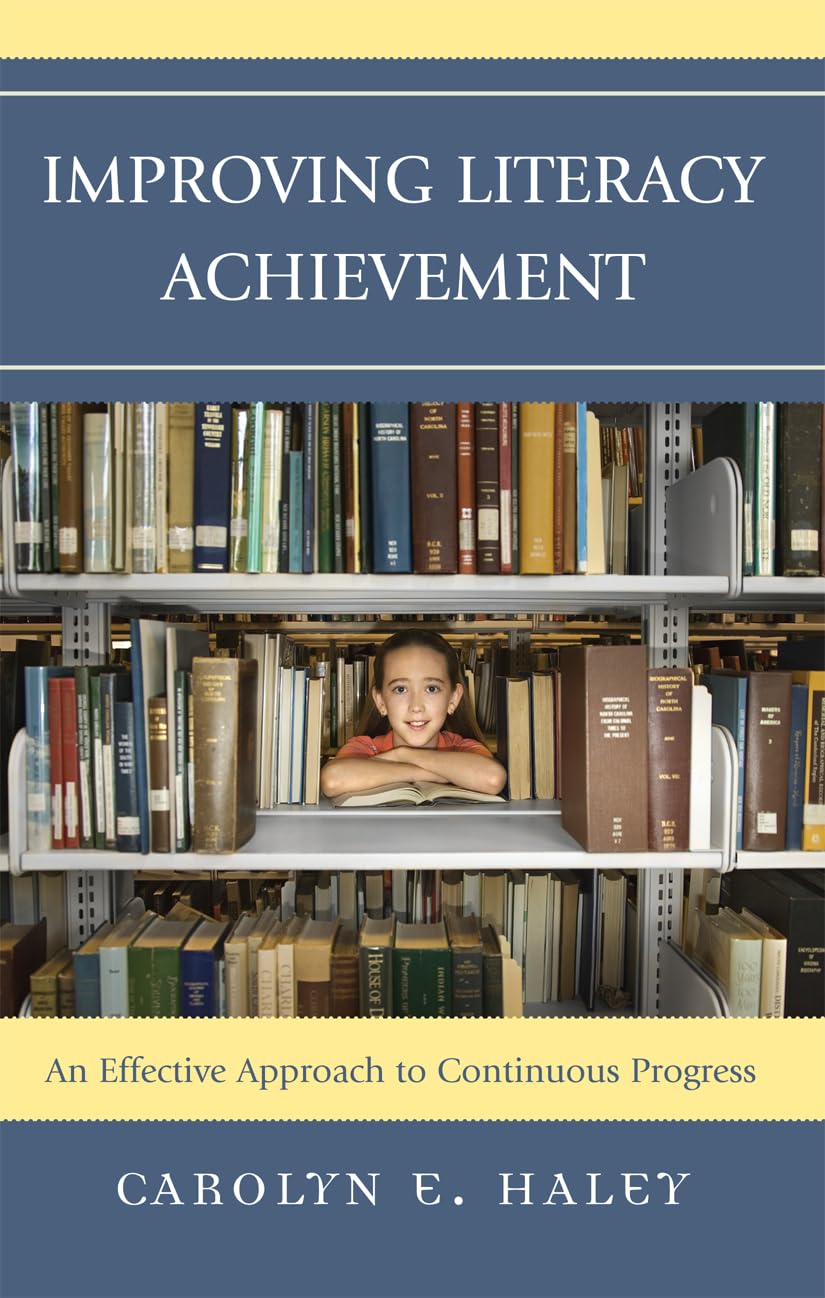
Product Description Billions of dollars are spent searching for programs and strategic plans that will prove to be the panacea for improving literacy achievement. With all of the experimental and researched programs implemented in school districts, the overall results are still at a minimum and many improvement gains have been short term. Improving Literacy Achievement focuses on literacy achievement through a Continuous Progress conceptual approach. This book features detailed steps for developing and implementing a literacy program for primary students in grades K3 and includes chapters on looping, or continuous progress, at higher levels (grades 45). Carolyn E. Haley shows how looping at these levels proves to be an effective practice in increasing student achievement in all subject areas as evidenced in her research and extensive work. Review As an education reporter, I often saw educators shy from new ideas, but Haley's school was revolutionary and effective in its approach to literacy, and her students' reading scores quickly told the tale. This book is important, especially for parents and educators with students in povertystricken or lowperforming schools. Ann O'Hanlon, former staff writer, The Washington PostThe continuous progress model is a childcentered, developmentally appropriate, effective program. It provides students the time necessary to acquire the reading skills to become proficient readers. Atrisk students that come to school lagging in the background knowledge required for success in the traditional grades are never left behind. Sandra V. Carrillo, assistant principal, Prince William County (Virginia) SchoolsHaley's book on successfully designing and implementing the continuous progress program to improve student literacy should be required reading for teachers, administrators, and researchers alike. This planned change intervention simultaneously provides an innovative and proven alternative strategy to the onesizefitsall approach for teaching reading skills in the public school setting. Reginald Shareef, Ph.D., professor of political science and public administration, Radford UniversityHaley stepped out from the norm when she implemented for children a continuous progress model of instructional delivery at Triangle Elementary School, Prince William County, Virginia. She found a way to successfully meet children's needs at their appropriate levels of instruction. The success she achieved was simply phenomenal. Kris Pedersen, former associate superintendent, Prince William County (VA) Schools About the Author Carolyn E. Haley, a teacher, administrator, and educational consultant has thirtytwo years of experience in education. She has spent the past twentyone years as a school administrator in both urban and suburban school districts.
⚠️ WARNING (California Proposition 65):
This product may contain chemicals known to the State of California to cause cancer, birth defects, or other reproductive harm.
For more information, please visit www.P65Warnings.ca.gov.