If you have any questions, you are always welcome to contact us. We'll get back to you as soon as possible, withing 24 hours on weekdays.
Customer service
All questions about your order, return and delivery must be sent to our customer service team by e-mail at yourstore@yourdomain.com
Sale & Press
If you are interested in selling our products, need more information about our brand or wish to make a collaboration, please contact us at press@yourdomain.com
Help
If you have any questions, you are always welcome to contact us. We'll get back to you as soon as possible, withing 24 hours on weekdays.
Customer service
All questions about your order, return and delivery must be sent to our customer service team by e-mail at yourstore@yourdomain.com
Sale & Press
If you are interested in selling our products, need more information about our brand or wish to make a collaboration, please contact us at press@yourdomain.com
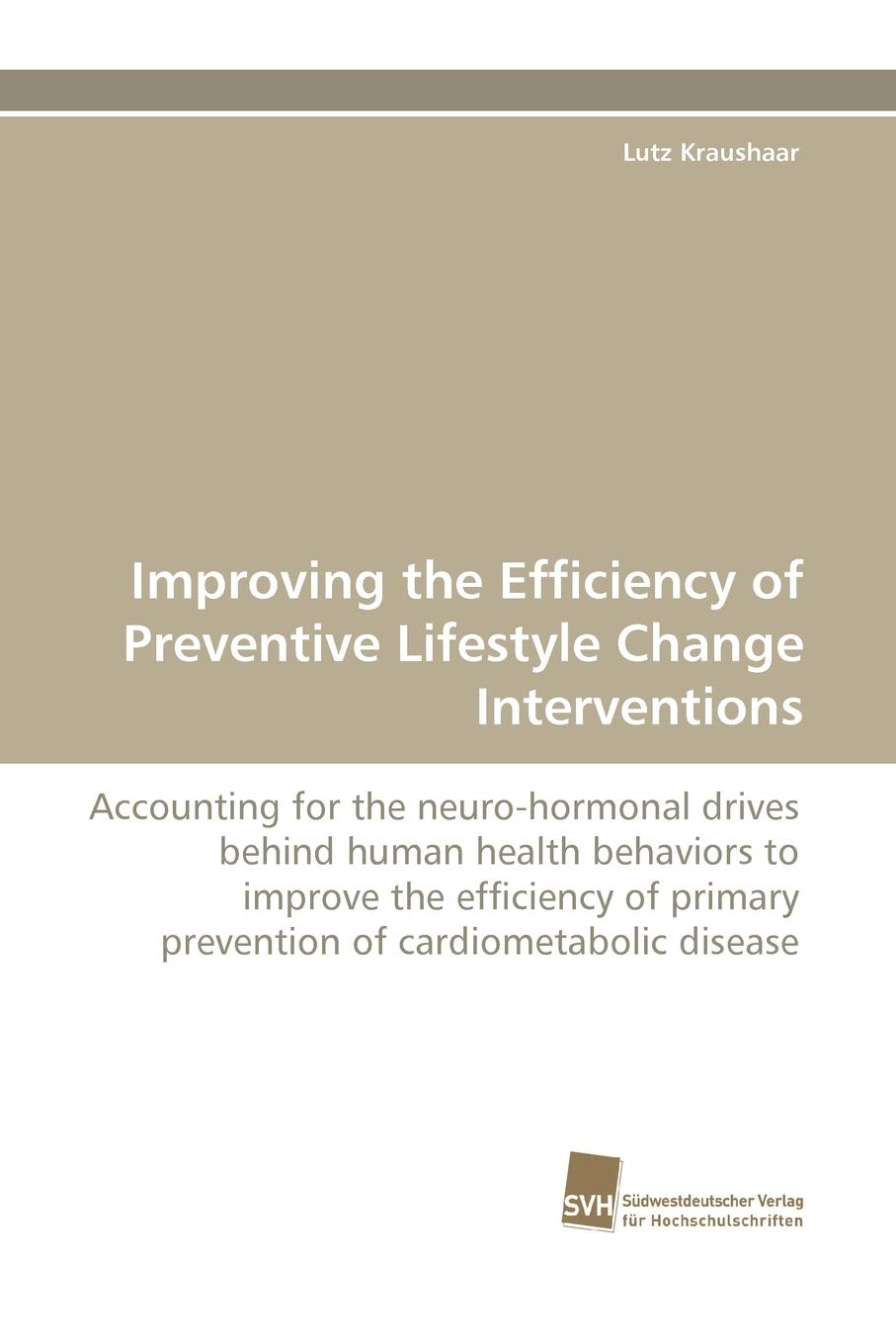
The paradox of behaving in a selfharming way, while being fully cognizant of the feared consequences, is the hallmark of addiction. At its core are neurohormonal mechanisms, which resist volitional attempts at behaving contrary to what these mechanisms impel the organism to do. The high attrition rates and nearly complete decay of adherence observed in lifestyle change interventions suggest that health behaviors are the result of autonomous drives, which frustrate volitional interference. The implication for research is to abandon the untenable precept of health behaviors being controlled exclusively by reason. This work is an attempt at formulating a model with which to explain the behavioral paradox, and from which to develop and test strategies for more efficient lifestyle change interventions. It presents the results of a study which tested the engagement of cognitive feedback control mimicking the efficiency of the homeostatic feedback loop as the autonomous effector of human feeding and physical activity behaviors. These results suggest that the efficiency of lifestyle change interventions can be dramatically improved.
⚠️ WARNING (California Proposition 65):
This product may contain chemicals known to the State of California to cause cancer,
birth defects, or other reproductive harm.
For MAP (Minimum Advertised Price) violations and Intellectual Property (IP) or Trademark concerns, please contact:
support@ergodebooks.com
⚠️ California Proposition 65 Warning: Some products sold on this website may expose you to chemicals known to the State of California to cause cancer, birth defects, or other reproductive harm. For more information, visit www.P65Warnings.ca.gov.