
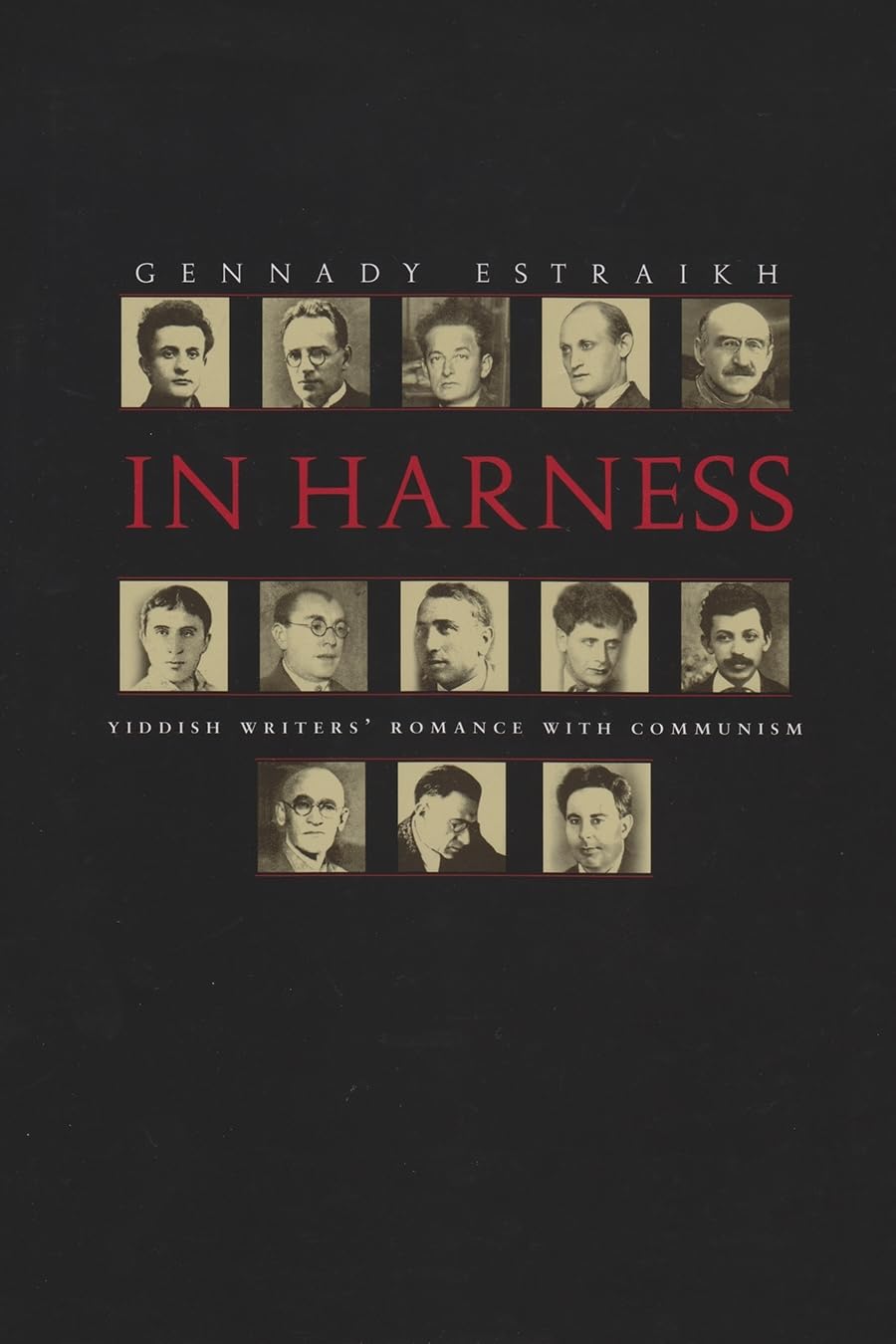
Title
In Harness: Yiddish Writers' Romance With Communism (Judaic Traditions In Literature, Music, And Art),New
Sold by Ergodebooks, an authorized reseller.
Returns accepted within 30 days | support@ergodebooks.com
Shipping Information
- Free Standard Shipping — United States only
- Processing Time: 3–5 business days
- Estimated Delivery: 6–10 business days after dispatch
- Double-boxed, fully insured & discreetly packaged
- Tracking number sent via email once dispatched
Returns & Refund
Returns accepted within 30 days of delivery.
Damaged or Defective Item
Free return shipping + replacement or full refund
Wrong Item Received
Free return shipping + replacement or full refund
Change of Mind
Return shipping at customer's expense · 25% restocking fee applies
Payment Option

Here is a detailed glimpse into the lives and times of Yiddish writers enthralled with Communism at the turn of the century through the mid1930s. Centering mainly on the Soviet Jewish literati but with an eye to their American counterparts, the book follows their paths from avantgarde beginnings in Kiev after the 1905 revolution to their peak in the mid1930s. Notables such as David Bergelsonwho helmed the shortlived Yiddish periodical called In Harnessand Der Nister and David Hodshtein come to life as do Leyb Kvitko, Peretz Markish, Itsik Fefer, Moshe Litvakov, Yekhezkel Dobrushin, and Nokhum Oislender. Gennady J. Estraikh charts the course of their artistic and political flowering and decline and considers the effects of geographyprovincial vs. urbanand party politics upon literary development and aesthetics. No other book concentrates on this aspect of the Jewish intellectual scene nor has any book unveiled the scale and intensity of Yiddish Communist literary life in the 1920s and 1930s or the contributions its writers made to Jewish culture.
⚠️ WARNING (California Proposition 65):
This product may contain chemicals known to the State of California to cause cancer, birth defects, or other reproductive harm.
For more information, please visit www.P65Warnings.ca.gov.
- Q: What is the binding type of this book? A: This book is a hardcover edition. Hardcover bindings are durable and provide a sturdy option for longevity.
- Q: How many pages does it have? A: The book contains two hundred twenty-four pages. This length allows for a comprehensive exploration of its themes.
- Q: What are the dimensions of the book? A: The book measures six inches in length, zero point eighty-four inches in width, and nine point zero two inches in height. These dimensions make it easy to handle and read.
- Q: Who is the author of the book? A: The author of this book is Gennady J. Estraikh. He is known for his expertise in Yiddish literature and culture.
- Q: What is the book about? A: The book explores the lives of Yiddish writers involved with Communism between the early twentieth century and mid-1930s. It focuses on their artistic and political journeys.
- Q: Is this book suitable for academic study? A: Yes, this book is suitable for academic study. It provides valuable insights into Jewish intellectual history and literary movements.
- Q: How should I care for this book? A: To care for this book, keep it in a dry, cool place and avoid exposure to direct sunlight. This will help preserve its condition.
- Q: Can I read this book if I am new to Yiddish literature? A: Yes, beginners can read this book. It offers an accessible introduction to the subject matter, making it suitable for those new to Yiddish literature.
- Q: Is this book a good gift for a literature enthusiast? A: Yes, this book makes an excellent gift for literature enthusiasts. Its unique focus on Yiddish writers and Communism offers a niche perspective.
- Q: What if the book arrives damaged? A: If the book arrives damaged, you should contact customer support for assistance with returns or replacements. Most retailers have policies in place to address such issues.
- Q: Does the book include photographs? A: Yes, the book includes fifteen photographs. These visuals enhance the reader's understanding of the historical context.
- Q: What genre does this book belong to? A: This book belongs to the Gothic and Romantic genre. It explores deep emotional and cultural themes through its narrative.
- Q: Is there a bibliography included in the book? A: Yes, the book contains a bibliography. This resource can be helpful for further reading and research on the topics discussed.
- Q: What is the focus of this book's narrative? A: The narrative focuses on the artistic and political lives of Soviet Jewish literati and their American counterparts. It highlights their contributions to Jewish culture.
- Q: Are there any notable writers discussed in the book? A: Yes, notable writers such as David Bergelson, Der Nister, and Peretz Markish are discussed. Their works and influences are key parts of the narrative.