If you have any questions, you are always welcome to contact us. We'll get back to you as soon as possible, withing 24 hours on weekdays.
Customer service
All questions about your order, return and delivery must be sent to our customer service team by e-mail at yourstore@yourdomain.com
Sale & Press
If you are interested in selling our products, need more information about our brand or wish to make a collaboration, please contact us at press@yourdomain.com
Help
If you have any questions, you are always welcome to contact us. We'll get back to you as soon as possible, withing 24 hours on weekdays.
Customer service
All questions about your order, return and delivery must be sent to our customer service team by e-mail at yourstore@yourdomain.com
Sale & Press
If you are interested in selling our products, need more information about our brand or wish to make a collaboration, please contact us at press@yourdomain.com
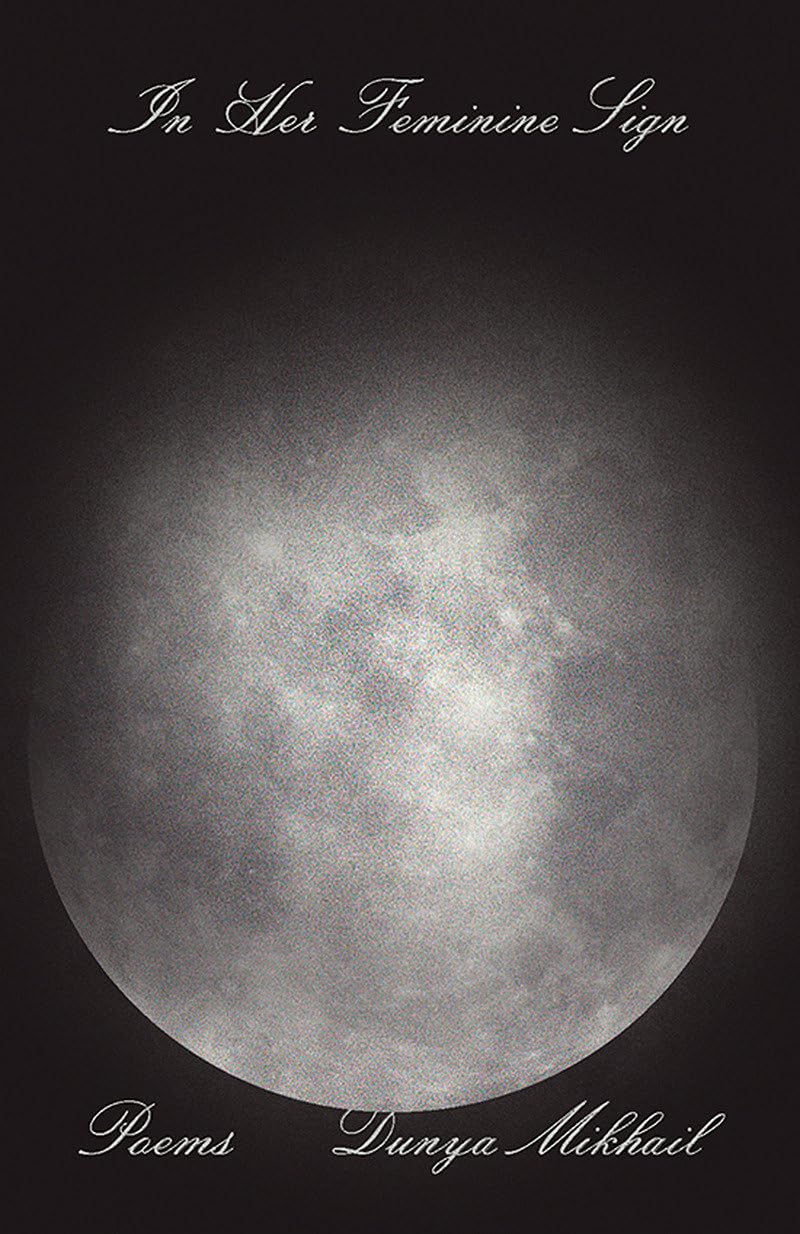
A brilliant poetic exploration of language and gender, place, and time, seen through the mirror of exileIn Her Feminine Sign follows on the heels of Dunya Mikhail's devastating account of Daesh kidnappings and killings of Yazidi women in Iraq, The Beekeeper. It is the first book she has written in both Arabic and English, a process she talks about in her preface, saying 'The poet is at home in both texts, yet she remains a stranger.' With a subtle simplicity and disquieting humor reminiscent of Wislawa Szymborska and an unadorned lyricism wholly her own, Mikhail shifts between her childhood in Baghdad and her present life in Detroit, between Ground Zero and a mass grave, between a game of chess and a flamingo. At the heart of the book is the symbol of the tied circle, the Arabic suffix taamarbutaa circle with two dots above it that determines a feminine word, or sign. This tied circle transforms into the moon, a stone that binds friendship, birdsong over ruins, three kidnapped women, and a hymn to Nisaba, the goddess of writing. A section of 'Iraqi haiku' unfolds like Sumerian symbols carved onto clay tablets, transmuted into the stuff of our ordinary, daily life. In another poem, Mikhail defines the Sumerian word for freedom, Amaargi, as 'what seeps out / from the dead into our dreams.'
⚠️ WARNING (California Proposition 65):
This product may contain chemicals known to the State of California to cause cancer,
birth defects, or other reproductive harm.
For MAP (Minimum Advertised Price) violations and Intellectual Property (IP) or Trademark concerns, please contact:
support@ergodebooks.com
⚠️ California Proposition 65 Warning: Some products sold on this website may expose you to chemicals known to the State of California to cause cancer, birth defects, or other reproductive harm. For more information, visit www.P65Warnings.ca.gov.