
Title
In Plain Sight: Simple, Difficult Lessons from New Jersey's Expensive Effort to Close the Achievement Gap,Used
Sold by Ergodebooks, an authorized reseller.
Returns accepted within 30 days | support@ergodebooks.com
Shipping Information
- Free Standard Shipping — United States only
- Processing Time: 3–5 business days
- Estimated Delivery: 6–10 business days after dispatch
- Double-boxed, fully insured & discreetly packaged
- Tracking number sent via email once dispatched
Returns & Refund
Returns accepted within 30 days of delivery.
Damaged or Defective Item
Free return shipping + replacement or full refund
Wrong Item Received
Free return shipping + replacement or full refund
Change of Mind
Return shipping at customer's expense · 25% restocking fee applies
Payment Option

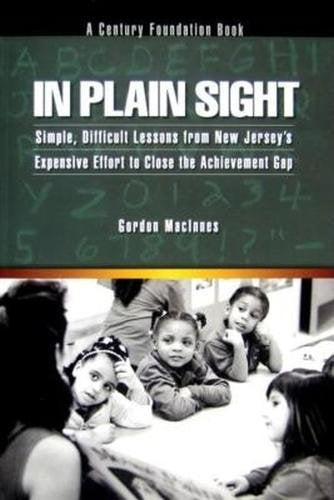
This is a story about what happens when a state education department partners with city school districts in an attempt to close the achievement gap between poor, minority city students and their counterparts in the predominantly white and more affluent suburban districts. It is set in New Jersey, but the lessons apply in any American city that has concentrations of poor children in failing school districts. What sets New Jersey apart is the generous level of courtmandated funding available, and the fact that preschool in the state begins at age three.A preliminary look at the results of New Jersey's expensive efforts resulting from the landmark New Jersey Supreme Court case Abbott v. Burke suggests an unsurprising conclusion: when additional funds are concentrated on supporting and enhancing teachers' efforts to assess the needs of their students and tailor their instruction to those needs, dramatically better results are possible. If no coherent plan for improved classroom instruction is implemented, more money makes no difference, and can, instead, produce confusion and declining performance.New Jersey has demonstrated remarkable success in improving children's educational attainmentfor example, only in Massachusetts did fourth graders score higher than those in New Jersey, a much more diverse state, on the 2007 National Assessment of Educational Progress (NAEP) reading test. And, remarkably, New Jersey was the only state in which scores in all ethnic categories improved over 2005.It is Gordon MacInnes's contention that New Jersey's fairly dramatic improvement is a product of a focused effort by many of the state's poorest school districts to introduce effective early literacy practices. No one is better equipped to tell the story of New Jersey's success in closing the achievement gap than MacInnes, and his remarkably frank and comprehensive examination of those districts where poor, minority students demonstrated continued academic improvement provides invaluable lessons for improving the academic prospects for all.
⚠️ WARNING (California Proposition 65):
This product may contain chemicals known to the State of California to cause cancer, birth defects, or other reproductive harm.
For more information, please visit www.P65Warnings.ca.gov.