
Title
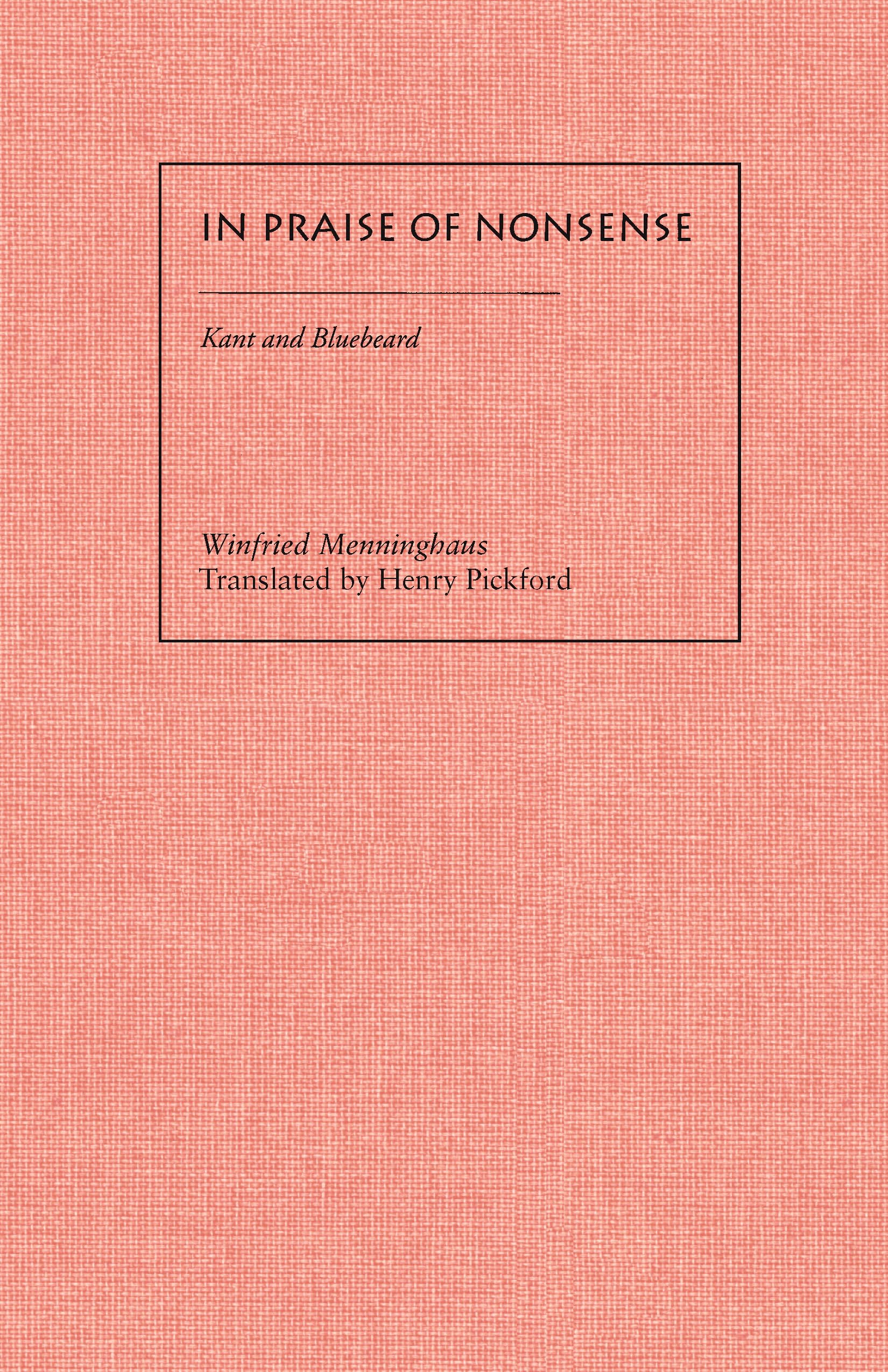
In Praise of Nonsense: Kant and Bluebeard (Meridian: Crossing Aesthetics),Used
Sold by Ergodebooks, an authorized reseller.
Returns accepted within 30 days | support@ergodebooks.com
Shipping Information
- Free Standard Shipping — United States only
- Processing Time: 3–5 business days
- Estimated Delivery: 6–10 business days after dispatch
- Double-boxed, fully insured & discreetly packaged
- Tracking number sent via email once dispatched
Returns & Refund
Returns accepted within 30 days of delivery.
Damaged or Defective Item
Free return shipping + replacement or full refund
Wrong Item Received
Free return shipping + replacement or full refund
Change of Mind
Return shipping at customer's expense · 25% restocking fee applies
Payment Option

Shells, leafwork, picture frames, hummingbirds, wallpaper decorations, hems of clothingsuch are the examples Kant's Critique of Judgment offers for a 'free' and purely aesthetic beauty. Menninghaus's book demonstrates that all these examples refer to a widely unknown debate on the arabesque and that Kant, in displacing it, addresses genuinely 'modern' phenomena. The early Romantic poetics and literature of the arabesque follow and radicalize Kant's move. Menninghaus shows parergonality and 'nonsense' to be two key features in the spread of the arabesque from architecture and the fine arts to philosophy and finally to literature. On the one hand, comparative readings of the parergon in Enlightenment aesthetics, Kant, and Schlegel reveal the importance of this term for establishing the very notion of a selfreflective work of art. On the other hand, drawing on Kant's posthumous anthropological notebooks, Menninghaus extrapolates an entire Kantian theory of what it means to produce nonsense and why the Critique of Judgment defines genius precisely through the power (as well as the dangers) of doing so. Ludwig Tieck's 1797 rewriting of Charles Perrault's famous Bluebeard tale (1697) explicitly claims to be an 'arabesque' book 'without any sense and coherence.' Menninghaus's close reading of this capricious narrative reveals a specifically Romanticas opposed, say, to a Victorian or dadaistictype of nonsense. Benjamin's as well as Propp's, LviStrauss's, and Meletinskij's oppositions of myth and fairy tale lend additional credit to a Romantic poetics that inaugurates 'universal poetry' while performing a bizarre trajectory through arabesque ornament, nonsense, parergonality, and the fairy tale.
⚠️ WARNING (California Proposition 65):
This product may contain chemicals known to the State of California to cause cancer, birth defects, or other reproductive harm.
For more information, please visit www.P65Warnings.ca.gov.