
Title

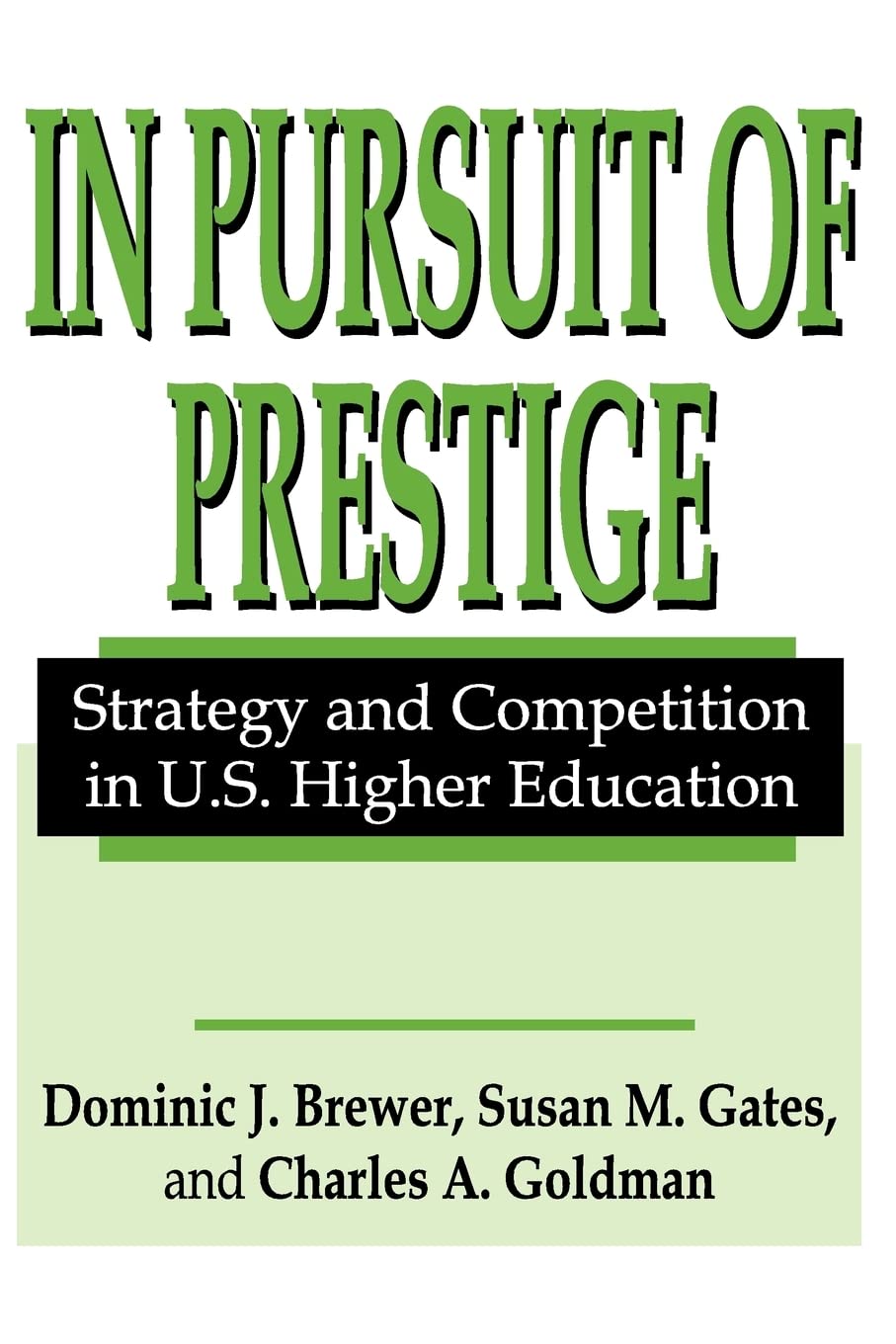
In Pursuit of Prestige: Strategy and Competition in U.S. Higher Education,New
Sold by Ergodebooks, an authorized reseller.
Returns accepted within 30 days | support@ergodebooks.com
Shipping Information
- Free Standard Shipping — United States only
- Processing Time: 3–5 business days
- Estimated Delivery: 6–10 business days after dispatch
- Double-boxed, fully insured & discreetly packaged
- Tracking number sent via email once dispatched
Returns & Refund
Returns accepted within 30 days of delivery.
Damaged or Defective Item
Free return shipping + replacement or full refund
Wrong Item Received
Free return shipping + replacement or full refund
Change of Mind
Return shipping at customer's expense · 25% restocking fee applies
Payment Option

By almost any measure, higher education is a vital part of the U.S. economy and society. Yet there is concern that the sector is inefficient or ill equipped to adapt to a changing environment. The information revolution, an aging population, demographic shifts, and a declining fiscal base all present it with major challenges.In Pursuit of Prestige describes the results of a twoyear study of higher education in the United States designed to shed light on these issues. This volume examines higher education as an industry. It focuses on how institutions serve four identifiable markets that generate revenues (student enrollment, research funding, public fiscal support, and private giving). They analyze higher educational institutions' investment, pricing, and marketing behaviors, and the nature of competition among schools. They review the industry's basic conditions and market structure, then define the three key dimensionsdegree level, scope, and resource allocationby which institutions map out strategies for competing for markets.The heart of the book is an analysis showing how these strategies are carried out based on sitevisit data from 26 highly diverse colleges and universities. This broad sampling covers all geographic regions of the country and every type of institution from elite research universities to community colleges. The authors then consider what strategies are possible in particular markets and how they affect students and competing institutions. Their conclusion draws out the implications of strategy and competition for the various customers of the U.S. higher education industry. Groundbreaking and genuinely exploratory in methodology.
⚠️ WARNING (California Proposition 65):
This product may contain chemicals known to the State of California to cause cancer, birth defects, or other reproductive harm.
For more information, please visit www.P65Warnings.ca.gov.