
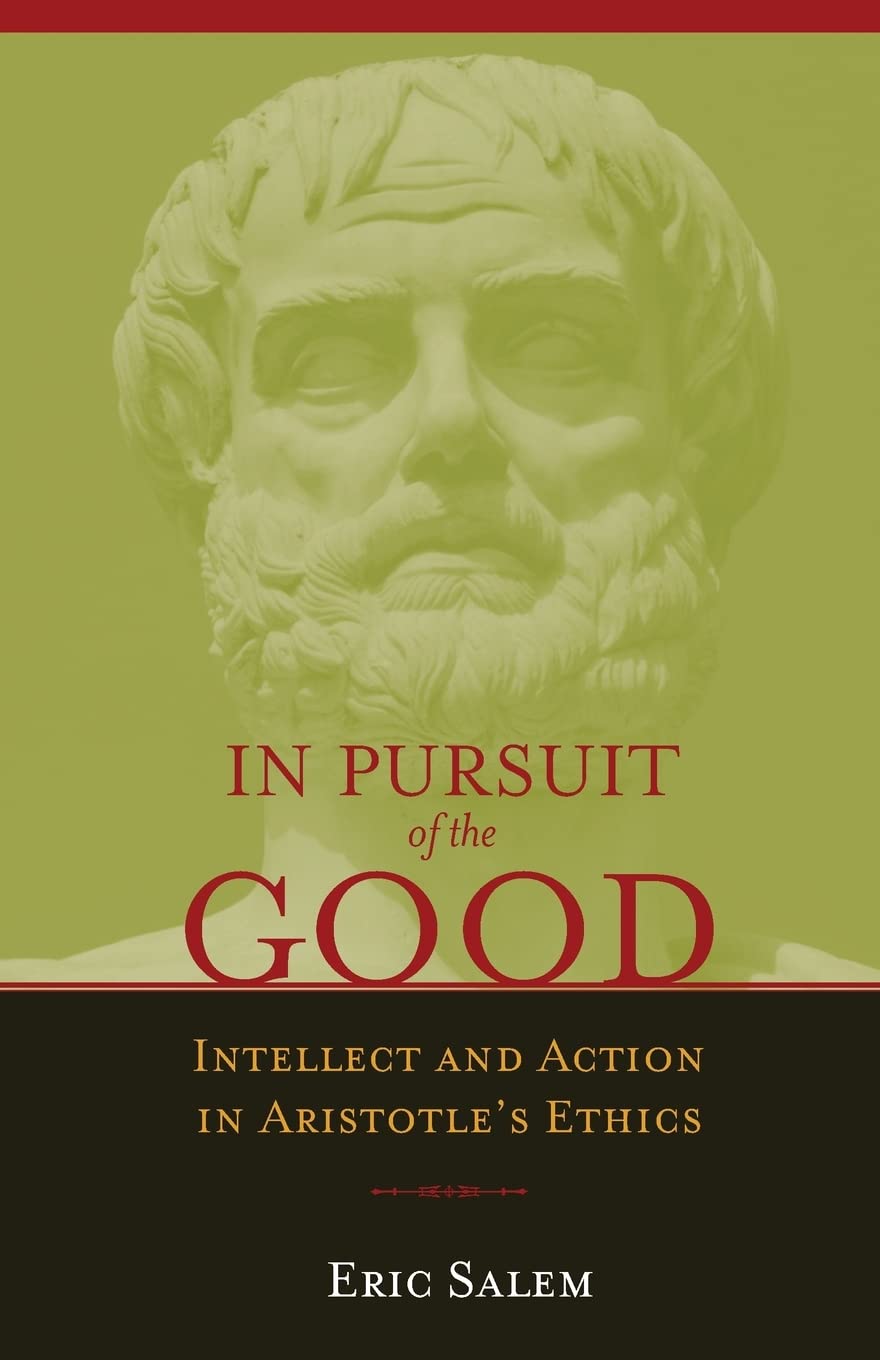
Title
In Pursuit of the Good: Intellect and Action in Aristotle's Ethics,Used
Sold by Ergodebooks, an authorized reseller.
Returns accepted within 30 days | support@ergodebooks.com
Shipping Information
- Free Standard Shipping — United States only
- Processing Time: 3–5 business days
- Estimated Delivery: 6–10 business days after dispatch
- Double-boxed, fully insured & discreetly packaged
- Tracking number sent via email once dispatched
Returns & Refund
Returns accepted within 30 days of delivery.
Damaged or Defective Item
Free return shipping + replacement or full refund
Wrong Item Received
Free return shipping + replacement or full refund
Change of Mind
Return shipping at customer's expense · 25% restocking fee applies
Payment Option

Where does happiness lie?' 'What is the best life?' Aristotle ponders these abiding questions in his Nicomachean Ethicsa work which has profoundly influenced Western thinking on ethical matters. A book of apparent obviousness, the Ethics possesses a depth and complexity that a reader at first may overlook or not grasp. In his study, In Pursuit of the Good, Eric Salem guides and deepens the reader's understanding of Aristotles masterpiece, thus helping him to decide what the Good Life should be.The choice for Aristotle is between the life of action and the life of contemplation. Salem writes that for Aristotle:Happiness does not lie in the enjoyment of bodily pleasures, in the 'childish amusement' so prized by most men, including 'those in power.' Nor does it lie in the exercise of the moral virtues; although Aristotle is careful to say that the happy man will practice the moral virtues as occasion dictates, the life of action is not, it seems, the happy life. Happiness rather lies in contemplation, in knowing, in 'seeing' for its own sake; happiness is the activity of the intellect in accordance with wisdom.Eric Salem has taught at St. John's College in Annapolis since 1990. He collaborated with Peter Kalkavage and Eva Brann on translations of Plato's Sophist and Phaedo. They are currently working on the Statesman.
⚠️ WARNING (California Proposition 65):
This product may contain chemicals known to the State of California to cause cancer, birth defects, or other reproductive harm.
For more information, please visit www.P65Warnings.ca.gov.
- Q: What is the page count of this book? A: This book has two hundred fifty-six pages. It provides a comprehensive exploration of Aristotle's ethical philosophies.
- Q: What are the dimensions of this book? A: The book measures eight and a half inches in length, five and four tenths inches in height, and is half an inch thick.
- Q: What type of binding does this book have? A: This book is paperback bound. This makes it lightweight and flexible for easy reading.
- Q: Who is the author of this book? A: The author of this book is Eric Salem. He is a scholar with extensive knowledge of Aristotle's works.
- Q: What category does this book fall under? A: This book falls under the Ancient and Classical category. It focuses on Aristotle's ethical theories.
- Q: What is the primary theme of this book? A: The primary theme is the exploration of happiness in relation to Aristotle's ethics. It examines the balance between action and contemplation.
- Q: How can I apply Aristotle's concepts from this book? A: You can apply Aristotle's concepts by reflecting on your own life choices and considering how they align with the pursuit of happiness.
- Q: Is this book suitable for beginners in philosophy? A: Yes, this book is suitable for beginners. It provides clear insights into complex philosophical ideas.
- Q: How should I approach reading this book? A: You should read this book thoughtfully and take notes. Engaging with the text can enhance your understanding of Aristotle's ethics.
- Q: What is the best way to store this book? A: You should store this book upright on a shelf. This helps maintain its shape and keeps it in good condition.
- Q: Can I lend this book to a friend? A: Yes, you can lend this book to a friend. Just ensure that they handle it carefully to avoid damage.
- Q: How do I keep this book in good condition? A: To keep this book in good condition, avoid exposure to moisture and direct sunlight. Handle it gently while reading.
- Q: What if the book arrives damaged? A: If the book arrives damaged, you should contact the seller for a return or replacement. Keep the original packaging for reference.
- Q: Is there a warranty for this book? A: No, there is typically no warranty for books. However, check the seller's return policy for any guarantees.
- Q: What should I do if I have a question about the content? A: If you have questions about the content, consider discussing it with a philosophy group or seeking resources that elaborate on Aristotle's ethics.
- Q: Is this book appropriate for academic study? A: Yes, this book is appropriate for academic study. It provides valuable insights into Aristotle's ethical theories and their implications.