
Title
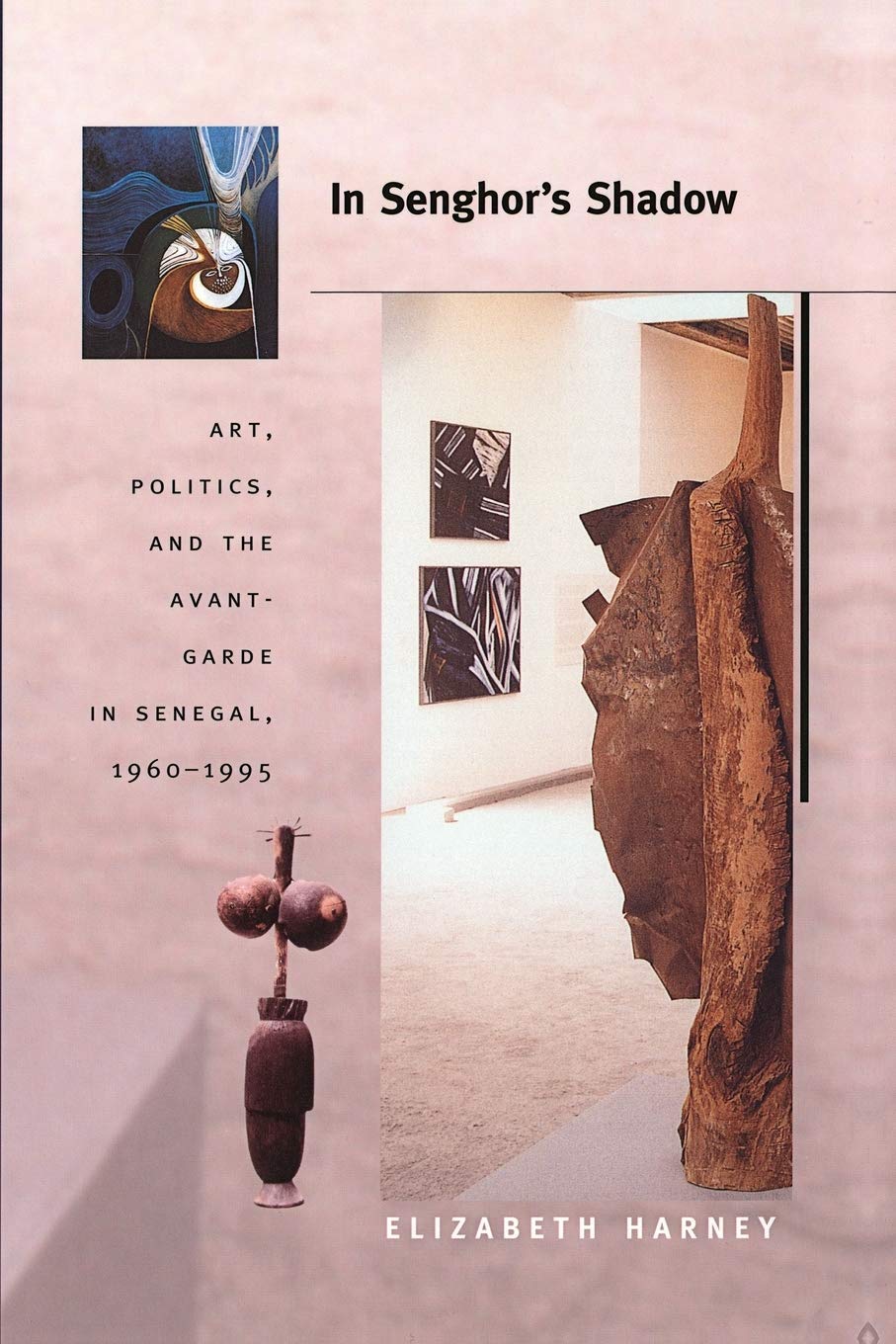
In Senghor's Shadow: Art, Politics, and the AvantGarde in Senegal, 19601995 (Objects/Histories),Used
Sold by Ergodebooks, an authorized reseller.
Returns accepted within 30 days | support@ergodebooks.com
Shipping Information
- Free Standard Shipping — United States only
- Processing Time: 3–5 business days
- Estimated Delivery: 6–10 business days after dispatch
- Double-boxed, fully insured & discreetly packaged
- Tracking number sent via email once dispatched
Returns & Refund
Returns accepted within 30 days of delivery.
Damaged or Defective Item
Free return shipping + replacement or full refund
Wrong Item Received
Free return shipping + replacement or full refund
Change of Mind
Return shipping at customer's expense · 25% restocking fee applies
Payment Option

In Senghors Shadow is a unique study of modern art in postindependence Senegal. Elizabeth Harney examines the art that flourished during the administration of Lopold Sdar Senghor, Senegals first president, and in the decades since he stepped down in 1980. As a major philosopher and poet of Negritude, Senghor envisioned an active and revolutionary role for modern artists, and he created a wellfunded system for nurturing their work. In questioning the canon of art produced under his aegisknown as the Ecole de DakarHarney reconsiders Senghors Negritude philosophy, his desire to express Senegals postcolonial national identity through art, and the system of art schools and exhibits he developed. She expands scholarship on global modernisms by highlighting the distinctive cultural history that shaped Senegalese modernism and the complex and often contradictory choices made by its early artists.Heavily illustrated with nearly one hundred images, including some in color, In Senghors Shadow surveys the work of a range of Senegalese artists, including painters, muralists, sculptors, and performancebased groupsfrom those who worked at the height of Senghors patronage system to those who graduated from art school in the early 1990s. Harney reveals how, in the 1970s, avantgardists contested Negritude beliefs by breaking out of established artistic forms. During the 1980s and 1990s, artists such as Moustapha Dim, Germaine Anta Gaye, and KanSi engaged with avantgarde methods and local artistic forms to challenge both Senghors legacy and the broader art worlds understandings of cultural syncretism. Ultimately, Harneys work illuminates the production and reception of modern Senegalese art within the global arena.
⚠️ WARNING (California Proposition 65):
This product may contain chemicals known to the State of California to cause cancer, birth defects, or other reproductive harm.
For more information, please visit www.P65Warnings.ca.gov.
- Q: What is the main focus of 'In Senghor's Shadow'? A: 'In Senghor's Shadow' focuses on modern art in post-independence Senegal, particularly during the presidency of Léopold Sédar Senghor. It examines the impact of Senghor's Negritude philosophy on artists and the art produced during and after his administration.
- Q: Who is the author of the book? A: The author of 'In Senghor's Shadow' is Elizabeth Harney, who provides a scholarly analysis of Senegalese modernism and the cultural history surrounding it.
- Q: What time period does the book cover? A: 'In Senghor's Shadow' covers the period from 1960 to 1995, focusing on the evolution of art in Senegal during and after Senghor's presidency.
- Q: How many pages does the book have? A: 'In Senghor's Shadow' has a total of 344 pages, providing an in-depth exploration of its subject matter.
- Q: What type of binding is used for this book? A: 'In Senghor's Shadow' is available in a paperback binding, making it a lightweight and portable option for readers.
- Q: Are there illustrations in the book? A: 'In Senghor's Shadow' is heavily illustrated with nearly one hundred images, including some in color, enhancing the reader's understanding of the artworks discussed.
- Q: What is the publication date of the book? A: 'In Senghor's Shadow' was published on November 23, 2004.
- Q: What themes are explored in the book? A: The book explores themes such as Negritude, postcolonial national identity, and the evolution of Senegalese modernism, including the challenges faced by artists during different decades.
- Q: What is the condition of the book being sold? A: The book is listed as a used book in good condition, suggesting it has been previously owned but is still in acceptable shape for reading.
- Q: Is this book suitable for academic study? A: Yes, 'In Senghor's Shadow' is suitable for academic study, offering valuable insights into modern art and cultural history, making it a resource for students and scholars alike.