
Title
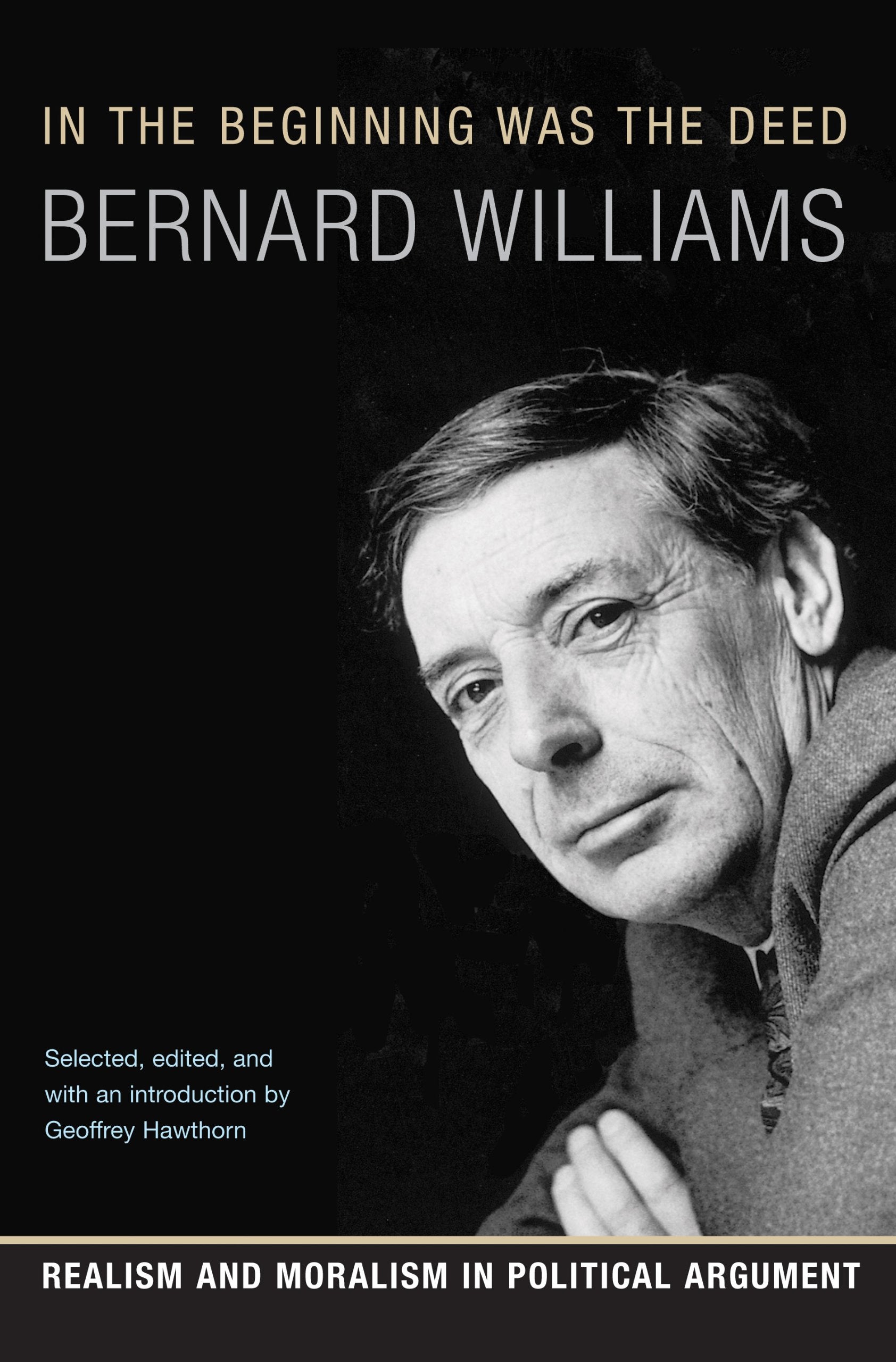
In the Beginning Was the Deed: Realism and Moralism in Political Argument,New
Sold by Ergodebooks, an authorized reseller.
Returns accepted within 30 days | support@ergodebooks.com
Shipping Information
- Free Standard Shipping — United States only
- Processing Time: 3–5 business days
- Estimated Delivery: 6–10 business days after dispatch
- Double-boxed, fully insured & discreetly packaged
- Tracking number sent via email once dispatched
Returns & Refund
Returns accepted within 30 days of delivery.
Damaged or Defective Item
Free return shipping + replacement or full refund
Wrong Item Received
Free return shipping + replacement or full refund
Change of Mind
Return shipping at customer's expense · 25% restocking fee applies
Payment Option

Bernard Williams is remembered as one of the most brilliant and original philosophers of the past fifty years. Widely respected as a moral philosopher, Williams began to write about politics in a sustained way in the early 1980s. There followed a stream of articles, lectures, and other major contributions to issues of public concernall complemented by his many works on ethics, which have important implications for political theory.This new collection of essays, most of them previously unpublished, addresses many of the core subjects of political philosophy: justice, liberty, and equality; the nature and meaning of liberalism; toleration; power and the fear of power; democracy; and the nature of political philosophy itself. A central theme throughout is that political philosophers need to engage more directly with the realities of political life, not simply with the theories of other philosophers. Williams makes this argument in part through a searching examination of where political thinking should originate, to whom it might be addressed, and what it should deliver.Williams had intended to weave these essays into a connected narrative on political philosophy with reflections on his own experience of postwar politics. Sadly he did not live to complete it, but this book brings together many of its components. Geoffrey Hawthorn has arranged the material to resemble as closely as possible Williams's original design and vision. He has provided both an introduction to Williams's political philosophy and a bibliography of his formal and informal writings on politics.Those who know the work of Bernard Williams will find here the familiar hallmarks of his writingoriginality, clarity, erudition, and wit. Those who are unfamiliar with, or unconvinced by, a philosophical approach to politics, will find this an engaging introduction. Both will encounter a thoroughly original voice in modern political theory and a searching approach to the shape and direction of liberal political thought in the past thirtyfive years.
⚠️ WARNING (California Proposition 65):
This product may contain chemicals known to the State of California to cause cancer, birth defects, or other reproductive harm.
For more information, please visit www.P65Warnings.ca.gov.
- Q: What is the main focus of 'In the Beginning Was the Deed'? A: The book primarily explores the relationship between realism and moralism in political argument, addressing core subjects of political philosophy such as justice, liberty, and democracy.
- Q: Who is the author of this book? A: The author is Bernard Williams, a renowned philosopher known for his contributions to moral philosophy and political theory.
- Q: What type of content can I expect in this collection of essays? A: The collection includes previously unpublished essays that reflect Williams's thoughts on various political issues, emphasizing the need for political philosophers to engage with real-world politics.
- Q: When was 'In the Beginning Was the Deed' published? A: The book was published on August 22, 2005.
- Q: Is this book suitable for someone unfamiliar with political philosophy? A: Yes, the book is designed to be engaging and accessible for readers new to philosophical approaches to politics, while also offering depth for those familiar with Williams's work.
- Q: What is the condition of the book being sold? A: The book is classified as 'Used Book in Good Condition', indicating that it has been previously owned but is still in very good shape.
- Q: How many pages does 'In the Beginning Was the Deed' have? A: The book has a total of 200 pages.
- Q: What kind of binding does this edition have? A: This edition is bound in hardcover.
- Q: Who edited this collection of essays? A: Geoffrey Hawthorn arranged the material and provided an introduction to Bernard Williams's political philosophy.
- Q: What themes does Bernard Williams explore in this book? A: Williams explores themes such as the nature of political philosophy, liberalism, toleration, power dynamics, and the realities of political life.