
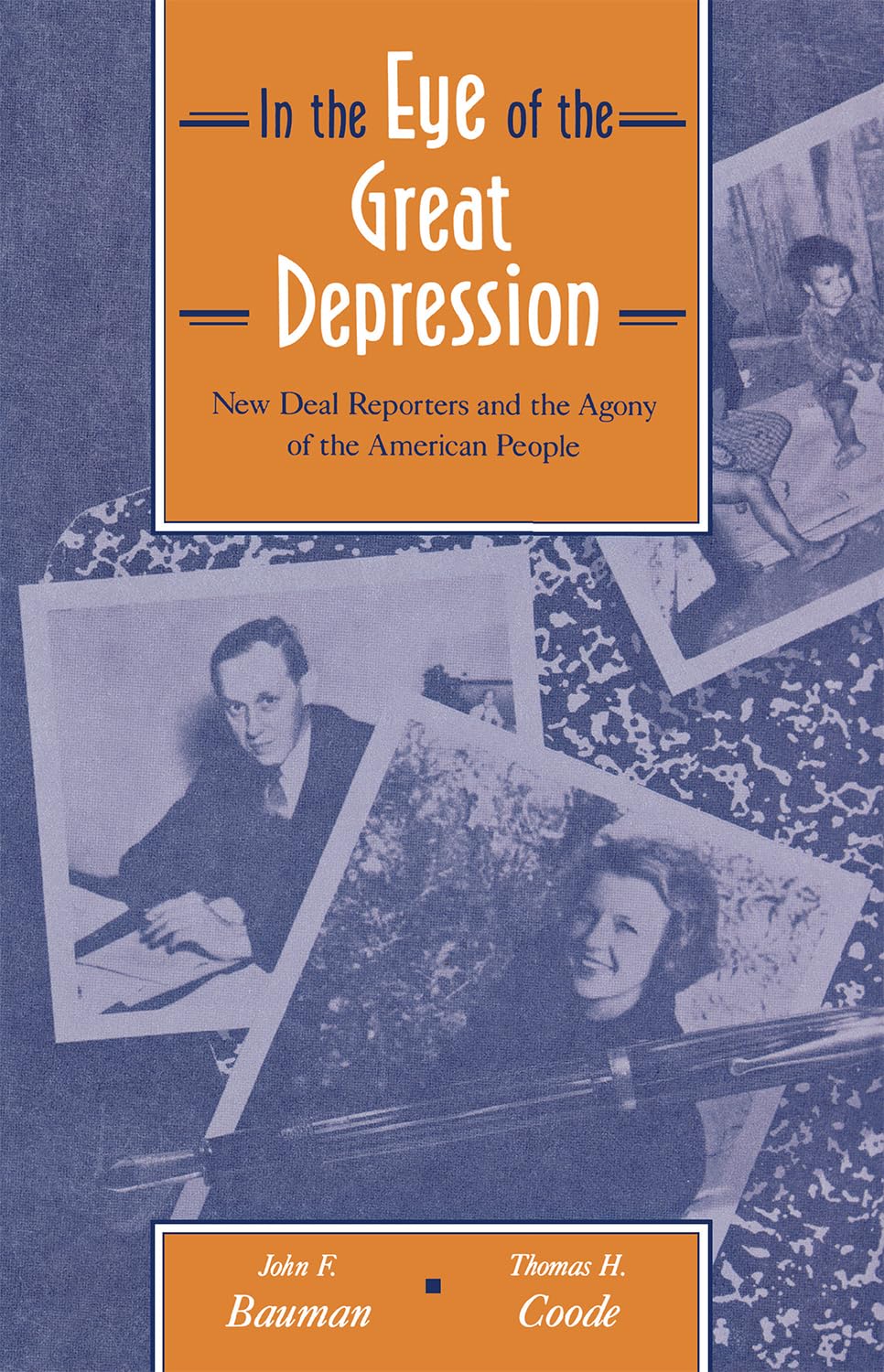
Title
In The Eye Of The Great Depression: New Deal Reporters And The Agony Of The American People,New
Sold by Ergodebooks, an authorized reseller.
Returns accepted within 30 days | support@ergodebooks.com
Shipping Information
- Free Standard Shipping — United States only
- Processing Time: 3–5 business days
- Estimated Delivery: 6–10 business days after dispatch
- Double-boxed, fully insured & discreetly packaged
- Tracking number sent via email once dispatched
Returns & Refund
Returns accepted within 30 days of delivery.
Damaged or Defective Item
Free return shipping + replacement or full refund
Wrong Item Received
Free return shipping + replacement or full refund
Change of Mind
Return shipping at customer's expense · 25% restocking fee applies
Payment Option

In Late 1933 And Early 1934, Harry Hopkins, Director Of The Infant Federal Emergency Relief Administration (Fera), Dispatched An Elite Corps Of Journalists And Authors, Including Bruce Mcclure And Lorena Hickok, To Obtain A Grassroots Portrait Of Depressionwracked America. His Marching Orders To Hickok Were 'To Go Out Around The Country And Look This Thing Over.... Tell Me What You See And Hear.... All Of It.'She And Her Compatriots Spent Two Years In Different Regions Of The Country, Talking With Preachers, Teachers, Civic Leaders, Businessmen, And 'The Small Fry John Citizen,' Monitoring The Mood Of A Nation Battered By Natural And Economic Disaster. They Found The Downside Of The American Dream: Flophouses Overflowing With Tenants Who Once Had Been Sturdy Middleclass Citizens, Aid Administration Offices Awash In Incompetence And Corruption, And, Beneath It All, A Permanent Underclass Of The Illiterate, The Mentally Ill, And The Aged. Untrained In Sociology Or Economics, The Reporters Described Their Impressions In Passionate And Graphic Terms That Helped Move The Roosevelt Administration To Implement The Work Programs Of The New Deal.Bauman And Coode Reveal Another Dark Side Of 1930S America, One That Is Evident In The Words Of The Writers Themselves: Racial And Class Prejudice. Comfortably Middleclass, Mostly From Traditional East Coast Backgrounds, Hopkins'S Reporters Reflected Prevalent Beliefs Concerning The 'Deserving' And 'Undeserving' Poorbeliefs That Would Influence The Scope Of Such New Deal Ventures As The 1935 Social Security Law. Author Marth Gellhorn, Repulsed By The Pattern Of Inbreeding And Degeneration She Observed Among The 'White Trash' Families Of South Carolina, Suggested A Twopronged Aid Program Of Education And Eugenics.In The Eye Of The Great Depression Objectively Portrays A Period Of American History That Is Too Often Romanticized As A Time When A Combination Of Inspired Leadership And Pioneer Resilience Pulled The Nation Through A Great Test Of Its Mettle.
⚠️ WARNING (California Proposition 65):
This product may contain chemicals known to the State of California to cause cancer, birth defects, or other reproductive harm.
For more information, please visit www.P65Warnings.ca.gov.
- Q: How many pages does the book have? A: This book has two hundred forty pages. It provides an in-depth look at the Great Depression through the eyes of reporters.
- Q: What is the binding type of the book? A: The book is paperback bound. This makes it lightweight and easy to handle for reading.
- Q: What are the dimensions of the book? A: The book measures six inches in length, zero point seventy-one inches in width, and nine point zero two inches in height. These dimensions make it a convenient size for carrying.
- Q: Who is the author of this book? A: The author of this book is John Bauman. He, along with co-author, provides insights into the historical context of the Great Depression.
- Q: What genre does this book belong to? A: This book falls under the genre of Economic History. It explores the socio-economic factors during the Great Depression.
- Q: How do I read this book effectively? A: To read this book effectively, approach it with an understanding of the historical context of the Great Depression. Highlight significant passages as you read.
- Q: Is this book suitable for high school students? A: Yes, this book is suitable for high school students. It provides valuable historical insights that can enhance their understanding of American history.
- Q: Can this book be used for academic research? A: Yes, this book can be used for academic research. It contains detailed accounts and analysis relevant to studies of the Great Depression.
- Q: What themes are covered in the book? A: The book covers themes such as economic hardship, social justice, and the impact of government policies during the Great Depression. It highlights personal stories and societal challenges.
- Q: How should I store this book? A: Store this book in a cool, dry place. Keep it upright on a shelf to prevent bending or damage to the cover.
- Q: What if the book arrives damaged? A: If the book arrives damaged, you should contact the seller immediately. They can assist with returns or replacements.
- Q: Is there a warranty for this book? A: No, there is generally no warranty for books. However, return policies may vary by seller.
- Q: What if I want to return the book? A: You can return the book if it is within the return window set by the seller. Ensure it is in good condition for a full refund.
- Q: How do I clean this book? A: To clean this book, simply use a dry cloth to wipe off dust. Avoid using liquids as they can damage the pages.
- Q: Is this book appropriate for younger audiences? A: This book may not be suitable for younger audiences due to its complex themes and historical context. It is best for older teens and adults.