
Title
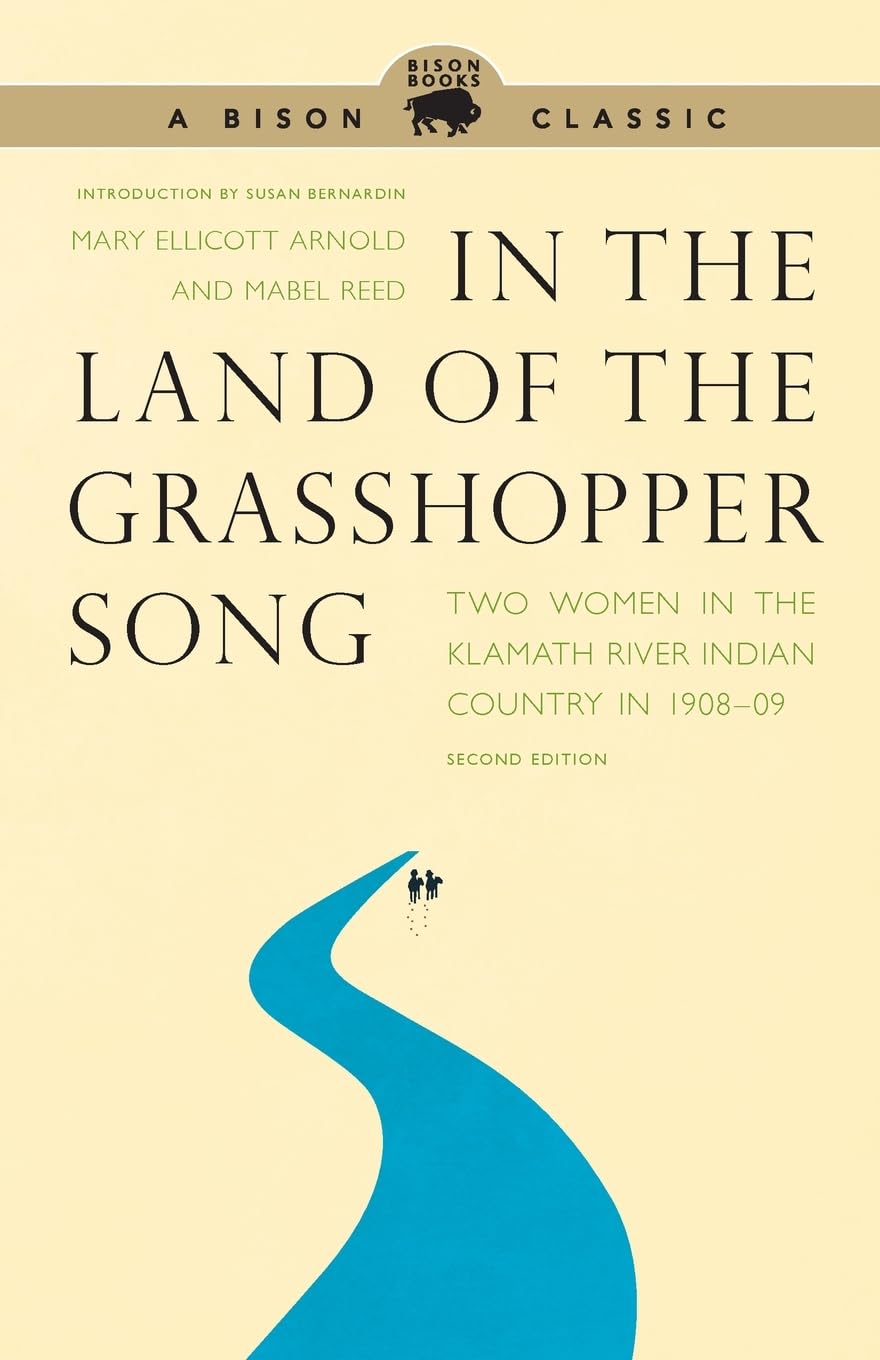
In the Land of the Grasshopper Song: Two Women in the Klamath River Indian Country in 190809, Second Edition,Used
Sold by Ergodebooks, an authorized reseller.
Returns accepted within 30 days | support@ergodebooks.com
Shipping Information
- Free Standard Shipping — United States only
- Processing Time: 3–5 business days
- Estimated Delivery: 6–10 business days after dispatch
- Double-boxed, fully insured & discreetly packaged
- Tracking number sent via email once dispatched
Returns & Refund
Returns accepted within 30 days of delivery.
Damaged or Defective Item
Free return shipping + replacement or full refund
Wrong Item Received
Free return shipping + replacement or full refund
Change of Mind
Return shipping at customer's expense · 25% restocking fee applies
Payment Option

In 1908 easterners Mary Ellicott Arnold and Mabel Reed accepted appointments as field matrons in Karuk tribal communities in the Klamath and Salmon River country of northern California. In doing so, they joined a handful of white women in a rugged region that retained the frontier mentality of the gold rush some fifty years earlier. Hired to promote the federal governments assimilation of American Indians, Arnold and Reed instead found themselves adapting to the world they entered, a complex and contentious territory of Anglo miners and Karuk families.In the Land of the Grasshopper Song, Arnold and Reeds account of their experiences, shows their irreverence towards Victorian ideals of womanhood, recounts their respect toward and friendship with Karuks, and offers a rare portrait of womens western experiences in this era. Writing with selfdeprecating humor, the women recall their misadventures as women in a white mans country and as whites in Indian country. A story about crossing cultural divides, In the Land of the Grasshopper Song also documents Karuk resilience despite seemingly insurmountable odds.New material by Susan Bernardin, Andr Cramblit, and Terry Supahan provides rich biographical, cultural, and historical contexts for understanding the continuing importance of this story for Karuk people and other readers.
⚠️ WARNING (California Proposition 65):
This product may contain chemicals known to the State of California to cause cancer, birth defects, or other reproductive harm.
For more information, please visit www.P65Warnings.ca.gov.
- Q: How many pages does the book have? A: The book has three hundred fifty pages. This length provides a comprehensive exploration of the experiences of Mary Ellicott Arnold and Mabel Reed.
- Q: What is the binding type of this book? A: The book is paperback bound. This binding style offers flexibility and is lightweight, making it easy to carry.
- Q: What are the dimensions of the book? A: The book measures five point five one inches in length, eight point four inches in height, and zero point eight inches in width. These dimensions make it a standard size for easy handling.
- Q: What is the genre of the book? A: The book falls under the Native American genre. It provides insights into the historical context of Karuk tribal communities.
- Q: Who is the author of the book? A: The author of the book is Mary Ellicott Arnold, alongside Mabel Reed. Their firsthand accounts offer a unique perspective on cultural interactions.
- Q: How do I read this book? A: You can read this book by simply opening it and following the text from start to finish. Its engaging narrative style makes it suitable for anyone interested in historical accounts.
- Q: Is this book suitable for educational purposes? A: Yes, the book is suitable for educational purposes. It provides valuable insights into Native American history and cultural interactions, making it ideal for students and researchers.
- Q: What age group is this book appropriate for? A: This book is appropriate for older teens and adults. Its themes and historical context are better suited for mature readers.
- Q: Can I use this book for research? A: Yes, you can use this book for research. It includes rich biographical and cultural contexts that add depth to studies on Native American history.
- Q: How should I store this book? A: Store the book in a cool, dry place away from direct sunlight. This will help preserve its condition and prevent fading of the cover.
- Q: Is there a specific way to clean the book? A: Yes, to clean the book, use a dry cloth to gently wipe the cover. Avoid using water or cleaning solutions as they may damage the pages.
- Q: What if the book arrives damaged? A: If the book arrives damaged, you should contact the seller for a return or replacement. Most sellers have policies in place to address such issues.
- Q: What is the return policy for the book? A: The return policy varies by seller, but typically you can return the book within a specified period if it is in its original condition. Always check the seller’s return policy before purchase.
- Q: Are there any illustrations or photographs in the book? A: No, the book does not contain illustrations or photographs. It focuses on narrative text to convey the experiences of the authors.
- Q: Can I gift this book to someone interested in history? A: Yes, this book makes a great gift for anyone interested in history, especially those curious about Native American culture and experiences.
- Q: Does the book include any new material? A: Yes, the second edition includes new material by Susan Bernardin, André Cramblit, and Terry Supahan. This provides additional context and enriches the original narratives.