If you have any questions, you are always welcome to contact us. We'll get back to you as soon as possible, withing 24 hours on weekdays.
Customer service
All questions about your order, return and delivery must be sent to our customer service team by e-mail at yourstore@yourdomain.com
Sale & Press
If you are interested in selling our products, need more information about our brand or wish to make a collaboration, please contact us at press@yourdomain.com
Help
If you have any questions, you are always welcome to contact us. We'll get back to you as soon as possible, withing 24 hours on weekdays.
Customer service
All questions about your order, return and delivery must be sent to our customer service team by e-mail at yourstore@yourdomain.com
Sale & Press
If you are interested in selling our products, need more information about our brand or wish to make a collaboration, please contact us at press@yourdomain.com
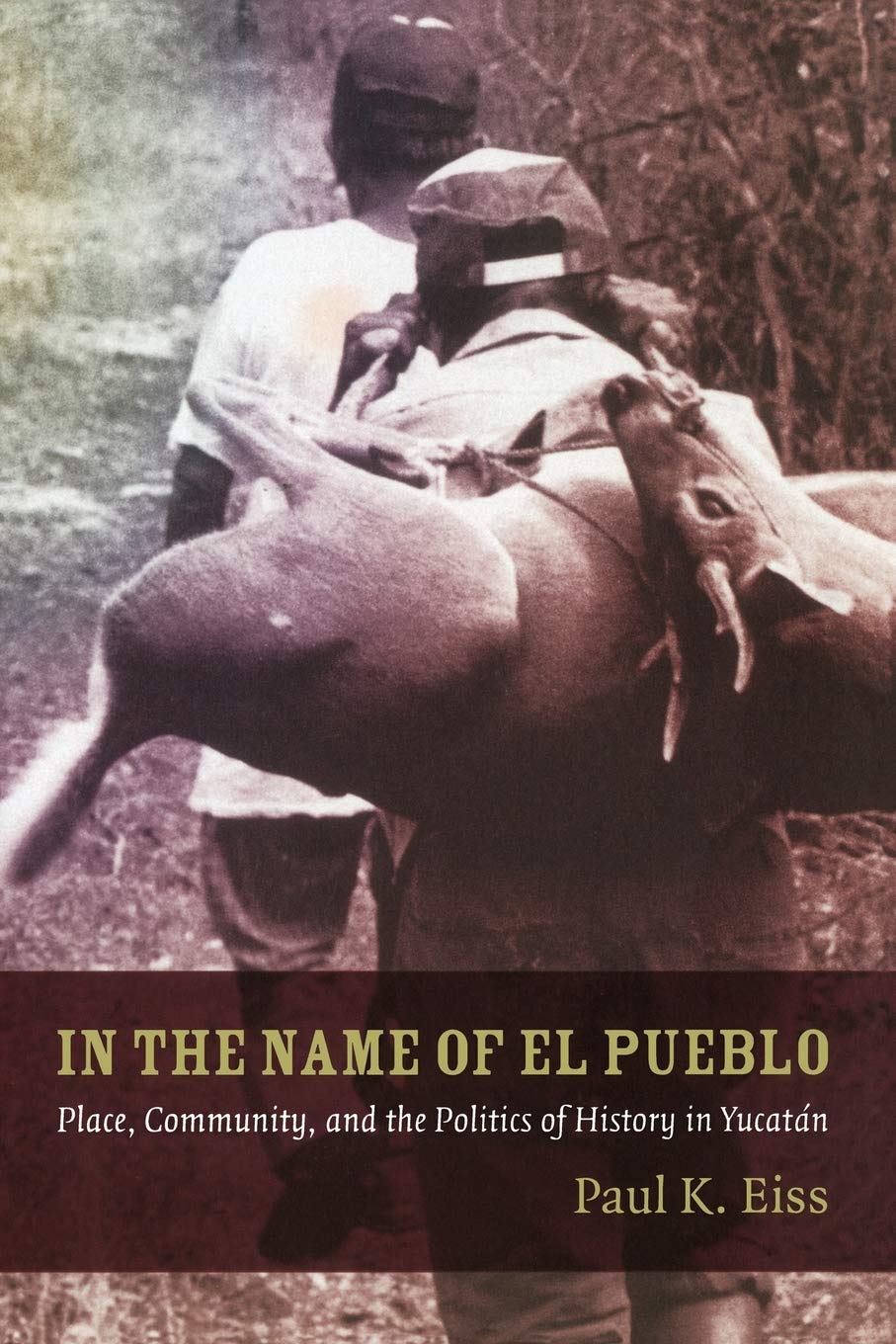
The term el pueblo is used throughout Latin America, referring alternately to small towns, to community, or to the people as a political entity. In this vivid anthropological and historical analysis of Mexicos Yucatn peninsula, Paul K. Eiss explores the multiple meanings of el pueblo and the power of the concept to unite the diverse claims made in its name. Eiss focuses on workingclass indigenous and mestizo populations, examining how those groups negotiated the meaning of el pueblo among themselves and in their interactions with outsiders, including landowners, activists, and government officials. Combining extensive archival and ethnographic research, he describes how residents of the region have laid claim to el pueblo in varied ways, as exemplified in communal narratives recorded in archival documents, in the performance of plays and religious processions, and in struggles over land, politics, and the built environment. Eiss demonstrates that while el pueblo is used throughout the hemisphere, the term is given meaning and power through the ways it is imagined and constructed in local contexts. Moreover, he reveals el pueblo to be a concept that is as historical as it is political. It is in the name of el pueblorather than class, race, or nationthat inhabitants of northwestern Yucatn stake their deepest claims not only to social or political rights, but over history itself.
⚠️ WARNING (California Proposition 65):
This product may contain chemicals known to the State of California to cause cancer,
birth defects, or other reproductive harm.
For MAP (Minimum Advertised Price) violations and Intellectual Property (IP) or Trademark concerns, please contact:
support@ergodebooks.com
⚠️ California Proposition 65 Warning: Some products sold on this website may expose you to chemicals known to the State of California to cause cancer, birth defects, or other reproductive harm. For more information, visit www.P65Warnings.ca.gov.