
Title
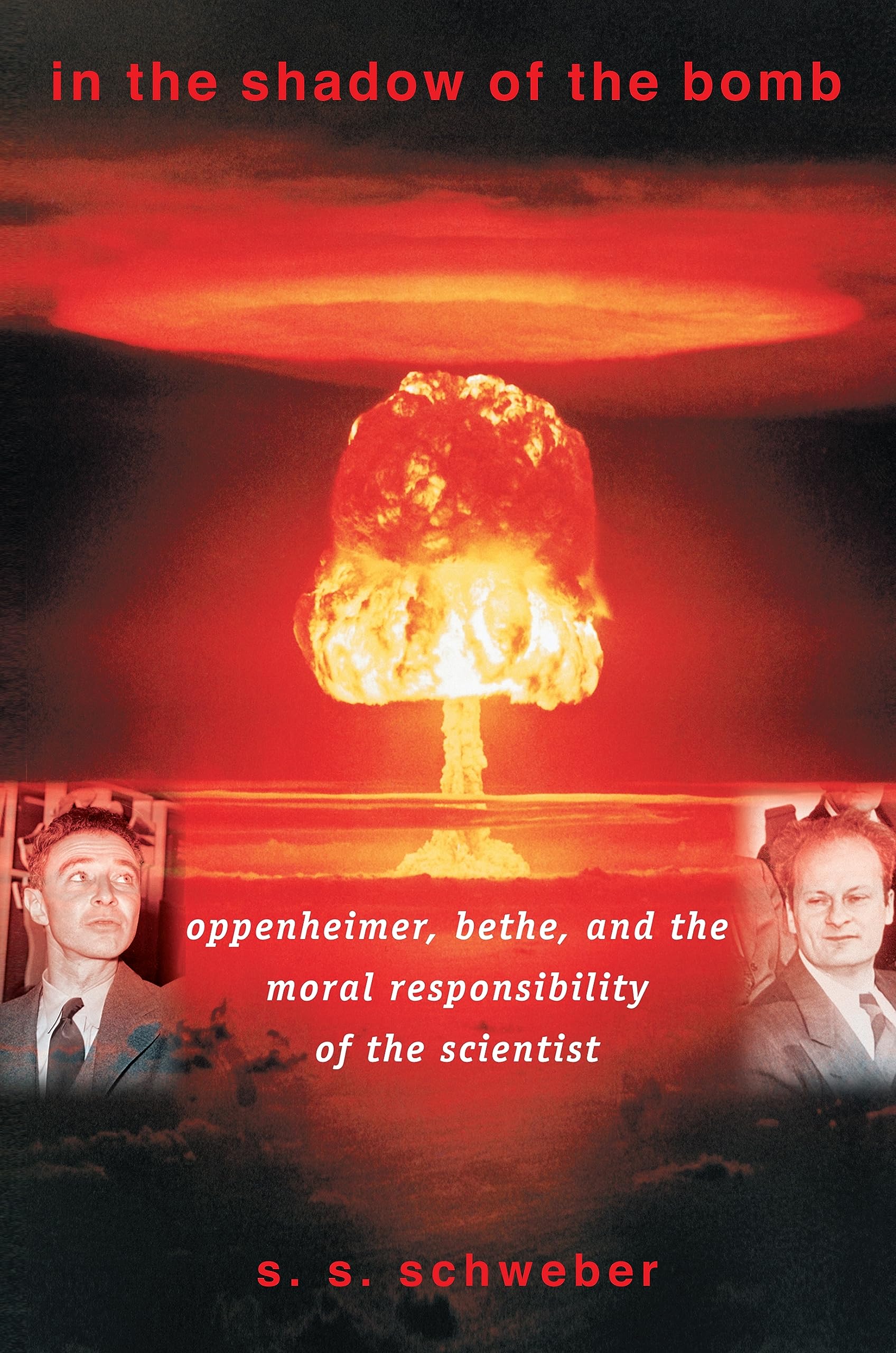
In The Shadow Of The Bomb: Oppenheimer, Bethe, And The Moral Responsibility Of The Scientist (Princeton Series In Physics)
Sold by Ergodebooks, an authorized reseller.
Returns accepted within 30 days | support@ergodebooks.com
Shipping Information
- Free Standard Shipping — United States only
- Processing Time: 3–5 business days
- Estimated Delivery: 6–10 business days after dispatch
- Double-boxed, fully insured & discreetly packaged
- Tracking number sent via email once dispatched
Returns & Refund
Returns accepted within 30 days of delivery.
Damaged or Defective Item
Free return shipping + replacement or full refund
Wrong Item Received
Free return shipping + replacement or full refund
Change of Mind
Return shipping at customer's expense · 25% restocking fee applies
Payment Option

How Two Charismatic, Exceptionally Talented Physicists Came To Terms With The Nuclear Weapons They Helped To Createin 1945, The United States Dropped The Bomb, And Physicists Were Forced To Contemplate Disquieting Questions About Their Roles And Responsibilities. When The Cold War Followed, They Were Confronted With Political Demands For Their Loyalty And Mccarthyism'S Threats To Academic Freedom. By Examining How J. Robert Oppenheimer And Hans A. Bethetwo Men With Similar Backgrounds But Divergent Aspirations And Charactersstruggled With These Moral Dilemmas, One Of Our Foremost Historians Of Physics Tells The Story Of Modern Physics, The Development Of Atomic Weapons, And The Cold War.Oppenheimer And Bethe Led Parallel Lives. Both Received Liberal Educations That Emphasized Moral As Well As Intellectual Growth. Both Were Outstanding Theoreticians Who Worked On The Atom Bomb At Los Alamos. Both Advised The Government On Nuclear Issues, And Both Resisted The Development Of The Hydrogen Bomb. Both Were, In Their Youth, Sympathetic To Liberal Causes, And Both Were Later Called To Defend The United States Against Soviet Communism And Colleagues Against Anticommunist Crusaders. Finally, Both Prized Scientific Community As A Salve To The Apparent Failure Of Enlightenment Values.Yet Their Responses To The Use Of The Atom Bomb, The Testing Of The Hydrogen Bomb, And The Treachery Of Domestic Politics Differed Markedly. Bethe, Who Drew Confidence From Scientific Achievement And Integration Into The Physics Community, Preserved A Deep Integrity. By Accepting A Modest Role, He Continued To Influence Policy And Contributed To The Nuclear Test Ban Treaty Of 1963. In Contrast, Oppenheimer First Embodied A New Scientific Personathe Scientist Who Creates Knowledge And Technology Affecting All Humanity And Boldly Addresses Their Impactand Then Could Not Carry Its Burden. His Desire To Retain Insider Status, Combined With His Isolation From Creative Work And Collegial Scientific Community, Led Him To Compromise Principles And, Ironically, To Lose Prestige And Fall Victim To Other Insiders.S. S. Schweber Draws On His Vast Knowledge Of Science And Its Historyin Addition To His Unique Access To The Personalities Involvedto Tell A Tale Of Two Men That Will Enthrall Readers Interested In Science, History, And The Lives And Minds Of Great Thinkers.
⚠️ WARNING (California Proposition 65):
This product may contain chemicals known to the State of California to cause cancer, birth defects, or other reproductive harm.
For more information, please visit www.P65Warnings.ca.gov.
- Q: How many pages does the book have? A: The book has two hundred eighty-eight pages. This length provides a comprehensive exploration of the themes and characters discussed.
- Q: What is the binding type of this book? A: The book is available in paperback binding. This makes it lightweight and easy to handle for reading.
- Q: What are the dimensions of the book? A: The book measures six point one inches in length, zero point six seven inches in width, and nine point one inches in height. These dimensions make it a convenient size for storage and reading.
- Q: Who is the author of this book? A: The author of the book is S. S. Schweber. He is recognized for his expertise in the history of physics.
- Q: What is the main theme of the book? A: The main theme is the moral responsibility of scientists in relation to nuclear weapons. It examines the ethical dilemmas faced by physicists during critical historical moments.
- Q: Is this book suitable for young readers? A: The book is not specifically aimed at young readers. It addresses complex themes related to nuclear science and moral responsibility.
- Q: How does the author explore the lives of Oppenheimer and Bethe? A: The author contrasts the lives of J. Robert Oppenheimer and Hans A. Bethe, highlighting their differing responses to the moral challenges posed by nuclear weapons.
- Q: Can this book be used for academic studies? A: Yes, this book can be used for academic studies related to physics, history, and ethics. It provides valuable insights into the lives of prominent scientists.
- Q: What is the condition of the used book? A: The book is listed as a used book in good condition. This means it may show minor signs of wear but is still fully functional for reading.
- Q: How should I care for this paperback book? A: To care for this paperback book, keep it dry and store it in a cool, dark place. Avoid bending the cover to prevent damage.
- Q: Is there a warranty for this book? A: No, there is typically no warranty for books. However, you may check with the seller for their return policy.
- Q: What should I do if the book arrives damaged? A: If the book arrives damaged, contact the seller immediately for assistance with a return or exchange. Provide photos of the damage if necessary.
- Q: How does this book compare to other books on nuclear science? A: This book offers a unique perspective by focusing on the moral dilemmas faced by physicists, distinguishing it from other scientific texts that may focus solely on technical aspects.
- Q: Is this book appropriate for professionals in science? A: Yes, this book is appropriate for professionals in science. It provides historical context and ethical considerations relevant to modern scientific practices.
- Q: What historical events does the book discuss? A: The book discusses significant historical events such as the development of atomic weapons and the Cold War. It examines their impact on the scientific community.
- Q: Will this book enhance my understanding of scientific ethics? A: Yes, this book will enhance your understanding of scientific ethics by exploring the moral responsibilities of scientists in relation to their work.