If you have any questions, you are always welcome to contact us. We'll get back to you as soon as possible, withing 24 hours on weekdays.
Customer service
All questions about your order, return and delivery must be sent to our customer service team by e-mail at yourstore@yourdomain.com
Sale & Press
If you are interested in selling our products, need more information about our brand or wish to make a collaboration, please contact us at press@yourdomain.com
Help
If you have any questions, you are always welcome to contact us. We'll get back to you as soon as possible, withing 24 hours on weekdays.
Customer service
All questions about your order, return and delivery must be sent to our customer service team by e-mail at yourstore@yourdomain.com
Sale & Press
If you are interested in selling our products, need more information about our brand or wish to make a collaboration, please contact us at press@yourdomain.com
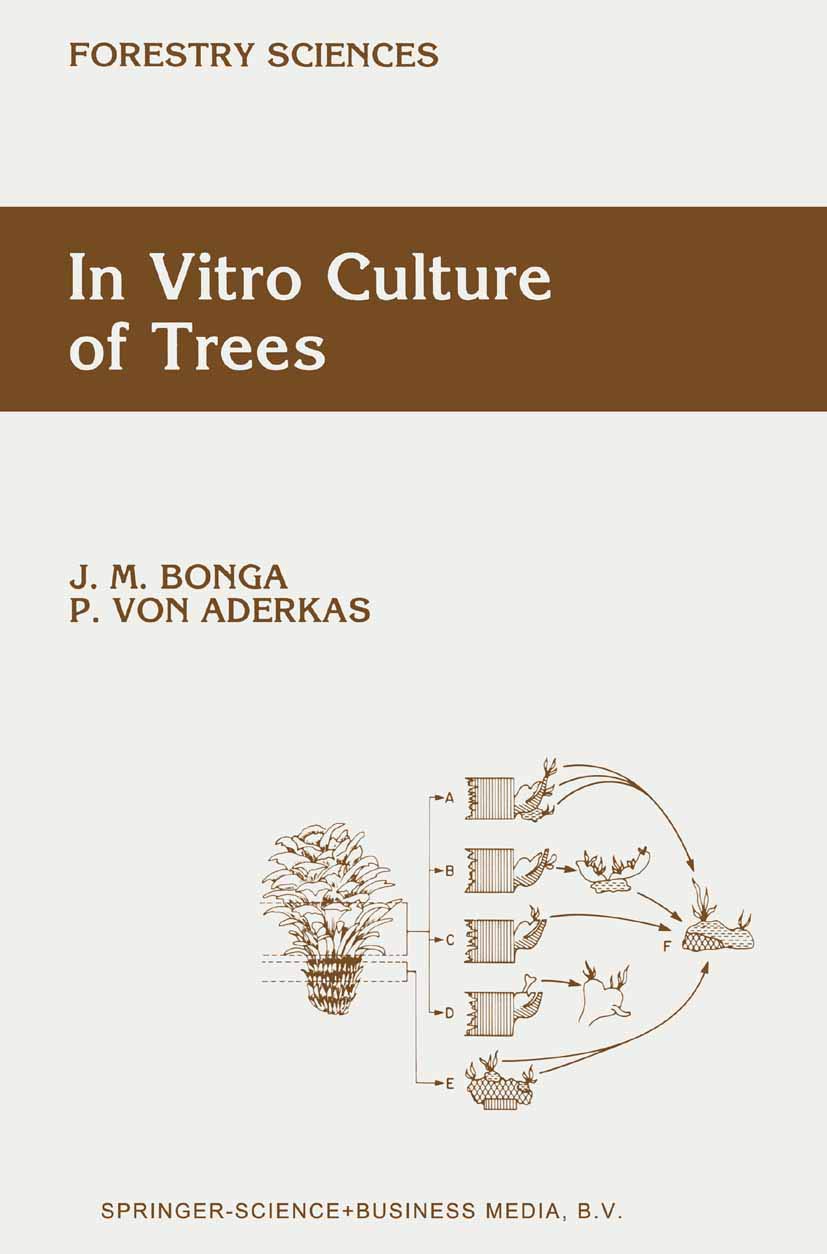
Woody plants provide many challenges to the tissue culturist. Although there are many excellent tissue culture books and manuals available, these are generally strongly biased towards herbacious crops. Consequently, they often do not pay sufficient attention to the problems that specifically apply to in vitro culture of tree species. Culture of the latter often poses problems which are either absent or of lesser significance when culturing herbacious species.When trees in the field are used as explant source, the problems can be especially severe. For example, the physiological condition of the explants is difficult to control because of variation in weather and biotic factors. Furthermore, it is often difficult to obtain explants free of contaminants from field grown trees. Lack of genetic uniformity and maturation are additional problems one often has to deal with when culturing tree cells or tissues. These problems are emphasized in this text. In vitro culture of trees is not viewed in isolation. It is considered in conjunction with breeding, traditional cloning and other common tree improvement techniques. The text discusses theoretical as well as practical aspects of the in vitro culture of trees.
⚠️ WARNING (California Proposition 65):
This product may contain chemicals known to the State of California to cause cancer,
birth defects, or other reproductive harm.
For MAP (Minimum Advertised Price) violations and Intellectual Property (IP) or Trademark concerns, please contact:
support@ergodebooks.com
⚠️ California Proposition 65 Warning: Some products sold on this website may expose you to chemicals known to the State of California to cause cancer, birth defects, or other reproductive harm. For more information, visit www.P65Warnings.ca.gov.