
Title
In Vivo Optical Imaging of Brain Function (Frontiers in Neuroscience),Used
Sold by Ergodebooks, an authorized reseller.
Returns accepted within 30 days | support@ergodebooks.com
Shipping Information
- Free Standard Shipping — United States only
- Processing Time: 3–5 business days
- Estimated Delivery: 6–10 business days after dispatch
- Double-boxed, fully insured & discreetly packaged
- Tracking number sent via email once dispatched
Returns & Refund
Returns accepted within 30 days of delivery.
Damaged or Defective Item
Free return shipping + replacement or full refund
Wrong Item Received
Free return shipping + replacement or full refund
Change of Mind
Return shipping at customer's expense · 25% restocking fee applies
Payment Option

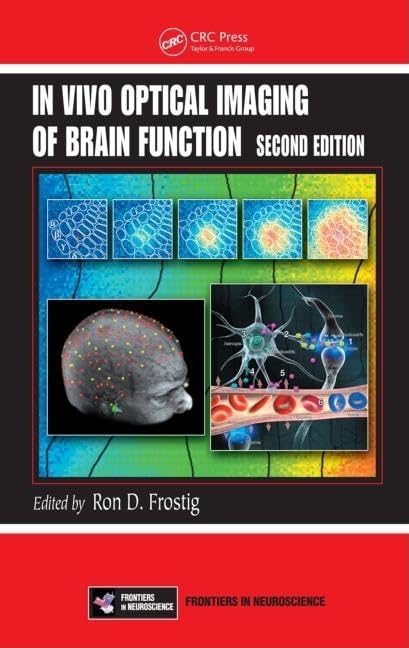
These are exciting times for the field of optical imaging of brain function. Rapid developments in theory and technology continue to considerably advance understanding of brain function. Reflecting changes in the field during the past five years, the second edition of In Vivo Optical Imaging of Brain Function describes stateoftheart techniques and their applications for the growing field of functional imaging in the live brain using optical imaging techniques.New in the Second Edition:Voltagesensitive dyes imaging in awake behaving animalsImaging based on genetically encoded probesImaging of mitochondrial autofluorescence as a tool for cortical mappingUsing pHsensitive dyes for functional mappingModulated imagingCalcium imaging of neuronal activity using 2photon microscopyFourier approach to optical imagingFully updated chapters from the first editionLeading Authorities Explore the Latest TechniquesUpdated to reflect continuous development in this emerging research area, this new edition, as with the original, reaches across disciplines to review a variety of noninvasive optical techniques used to study activity in the living brain. Leading authorities from such diverse areas as biophysics, neuroscience, and cognitive science present a host of perspectives that range from a single neuron to large assemblies of millions of neurons, captured at various temporal and spatial resolutions. Introducing techniques that were not available just a few years ago, the authors describe the theory, setup, analytical methods, and examples that highlight the advantages of each particular method.
⚠️ WARNING (California Proposition 65):
This product may contain chemicals known to the State of California to cause cancer, birth defects, or other reproductive harm.
For more information, please visit www.P65Warnings.ca.gov.