
Title
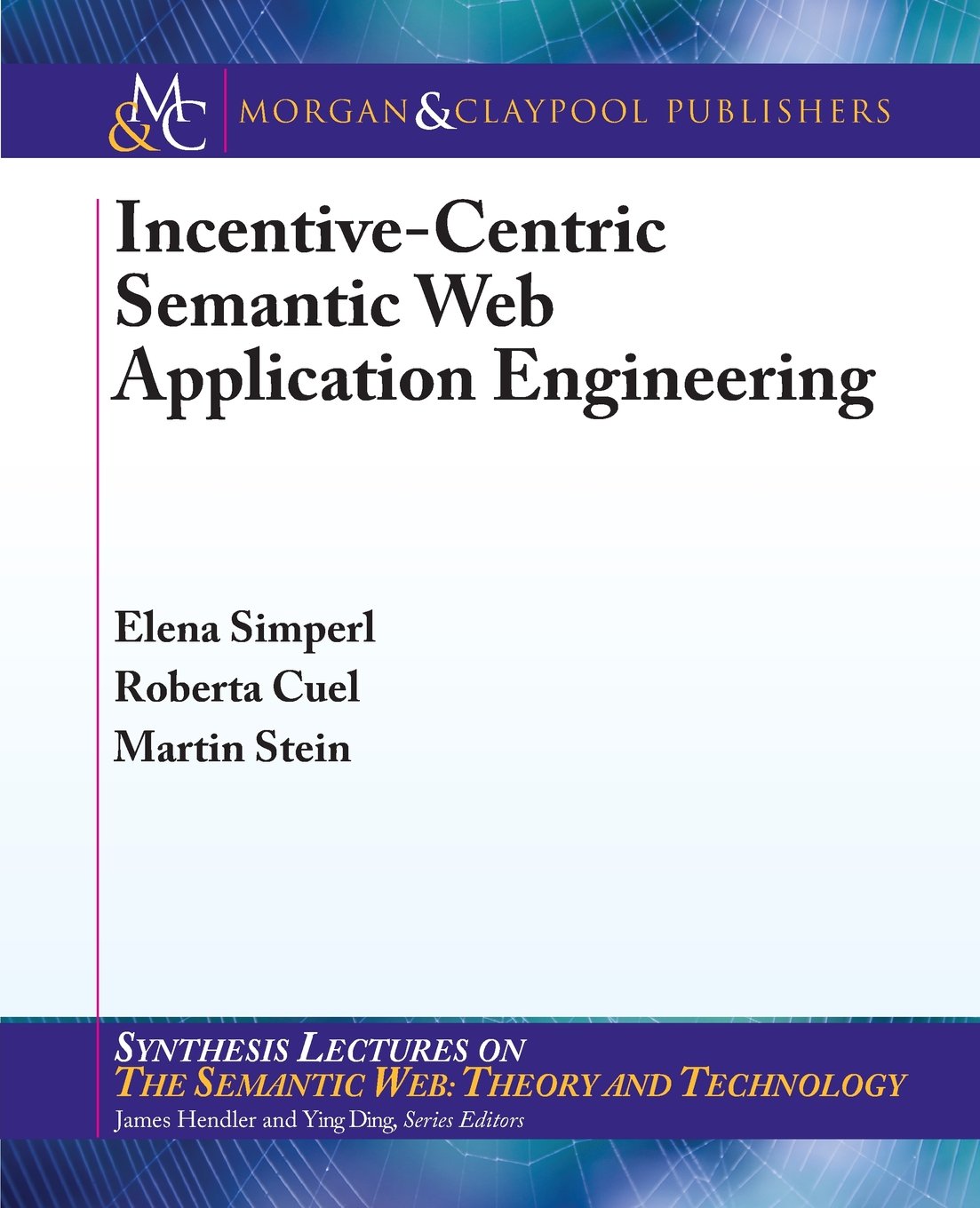
Incentivecentric Semantic Web Application Engineering (Synthesis Lectures On The Semantic Web: Theory And Technology),Used
Sold by Ergodebooks, an authorized reseller.
Returns accepted within 30 days | support@ergodebooks.com
Shipping Information
- Free Standard Shipping — United States only
- Processing Time: 1–3 business days
- Estimated Delivery: 3–5 business days after dispatch
- Double-boxed, fully insured & discreetly packaged
- Tracking number sent via email once dispatched
- Orders over $250 require signature upon delivery. Taxes calculated at checkout.
Returns & Refund
Returns accepted within 30 days of delivery.
Damaged or Defective Item
Free return shipping + replacement or full refund
Wrong Item Received
Free return shipping + replacement or full refund
Change of Mind
Return shipping at customer's expense · 25% restocking fee applies
Payment Option

While many Web 2.0inspired approaches to semantic content authoring do acknowledge motivation and incentives as the main drivers of user involvement, the amount of useful human contributions actually available will always remain a scarce resource. Complementarily, there are aspects of semantic content authoring in which automatic techniques have proven to perform reliably, and the added value of human (and collective) intelligence is often a question of cost and timing. The challenge that this book attempts to tackle is how these two approaches (machine and humandriven computation) could be combined in order to improve the costperformance ratio of creating, managing, and meaningfully using semantic content. To do so, we need to first understand how theories and practices from social sciences and economics about user behavior and incentives could be applied to semantic content authoring. We will introduce a methodology to help software designers to embed incentivesminded functionalities into semantic applications, as well as best practices and guidelines. We will present several examples of such applications, addressing tasks such as ontology management, media annotation, and information extraction, which have been built with these considerations in mind. These examples illustrate key design issues of incentivized Semantic Web applications that might have a significant effect on the success and sustainable development of the applications: the suitability of the task and knowledge domain to the intended audience, and the mechanisms set up to ensure highquality contributions, and extensive user involvement. Table of Contents: Semantic Data Management: A Humandriven Process / Fundamentals of Motivation and Incentives / Case Study: Motivating Employees to Annotate Content / Case Study: Building a Community of Practice Around Web Service Management and Annotation / Case Study: Games with a Purpose for Semantic Content Creation / Conclusions
⚠️ WARNING (California Proposition 65):
This product may contain chemicals known to the State of California to cause cancer, birth defects, or other reproductive harm.
For more information, please visit www.P65Warnings.ca.gov.