
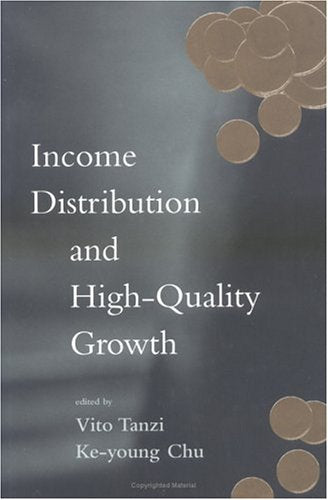
Title
Income Distribution And Highquality Growth (Mit Press)
Sold by Ergodebooks, an authorized reseller.
Returns accepted within 30 days | support@ergodebooks.com
Shipping Information
- Free Standard Shipping — United States only
- Processing Time: 3–5 business days
- Estimated Delivery: 6–10 business days after dispatch
- Double-boxed, fully insured & discreetly packaged
- Tracking number sent via email once dispatched
Returns & Refund
Returns accepted within 30 days of delivery.
Damaged or Defective Item
Free return shipping + replacement or full refund
Wrong Item Received
Free return shipping + replacement or full refund
Change of Mind
Return shipping at customer's expense · 25% restocking fee applies
Payment Option

The contributors argue that there need not be a tradeoff between growth and equity in the long run. However, attempts by government to influence income distribution through largescale tax and transfer programs can have a negative impact on growth.The contrast is vivid. While the majority of people in the industrial world and some in the developing world enjoy unprecedented affluence, a far greater number of people in the lowincome countries live in abject poverty. Although several developing countries are achieving rapid economic growth and poverty reduction, most formerly centrally planned countries are struggling to implement marketoriented reforms in the midst of economic deterioration and rising poverty. The paramount importance of reducing poverty worldwide is forcing economists and policymakers to look at how income distribution and economic growth interact. The essays in this volume grew out of a 1995 conference sponsored by the International Monetary Fund. The contributors are scholars and policymakers from academic institutions, governments, and international organizations. The questions discussed include: How does income distribution interact with economic growth in the short run and the long run? To what extent can government use transfer programs to increase the incomes of the poor? How can government use social programs to help the poor increase their incomeearning capacity? Does distributional inequality create an obstacle to longterm poverty reduction? Alternatively, is distributional inequality a necessary means of achieving economic growth? Generally, the contributors agree that there need not be a tradeoff between growth and equity in the long run. However, attempts by government to influence income distribution through largescale tax and transfer programs can have a negative impact on growth.
⚠️ WARNING (California Proposition 65):
This product may contain chemicals known to the State of California to cause cancer, birth defects, or other reproductive harm.
For more information, please visit www.P65Warnings.ca.gov.