If you have any questions, you are always welcome to contact us. We'll get back to you as soon as possible, withing 24 hours on weekdays.
Customer service
All questions about your order, return and delivery must be sent to our customer service team by e-mail at yourstore@yourdomain.com
Sale & Press
If you are interested in selling our products, need more information about our brand or wish to make a collaboration, please contact us at press@yourdomain.com
Help
If you have any questions, you are always welcome to contact us. We'll get back to you as soon as possible, withing 24 hours on weekdays.
Customer service
All questions about your order, return and delivery must be sent to our customer service team by e-mail at yourstore@yourdomain.com
Sale & Press
If you are interested in selling our products, need more information about our brand or wish to make a collaboration, please contact us at press@yourdomain.com
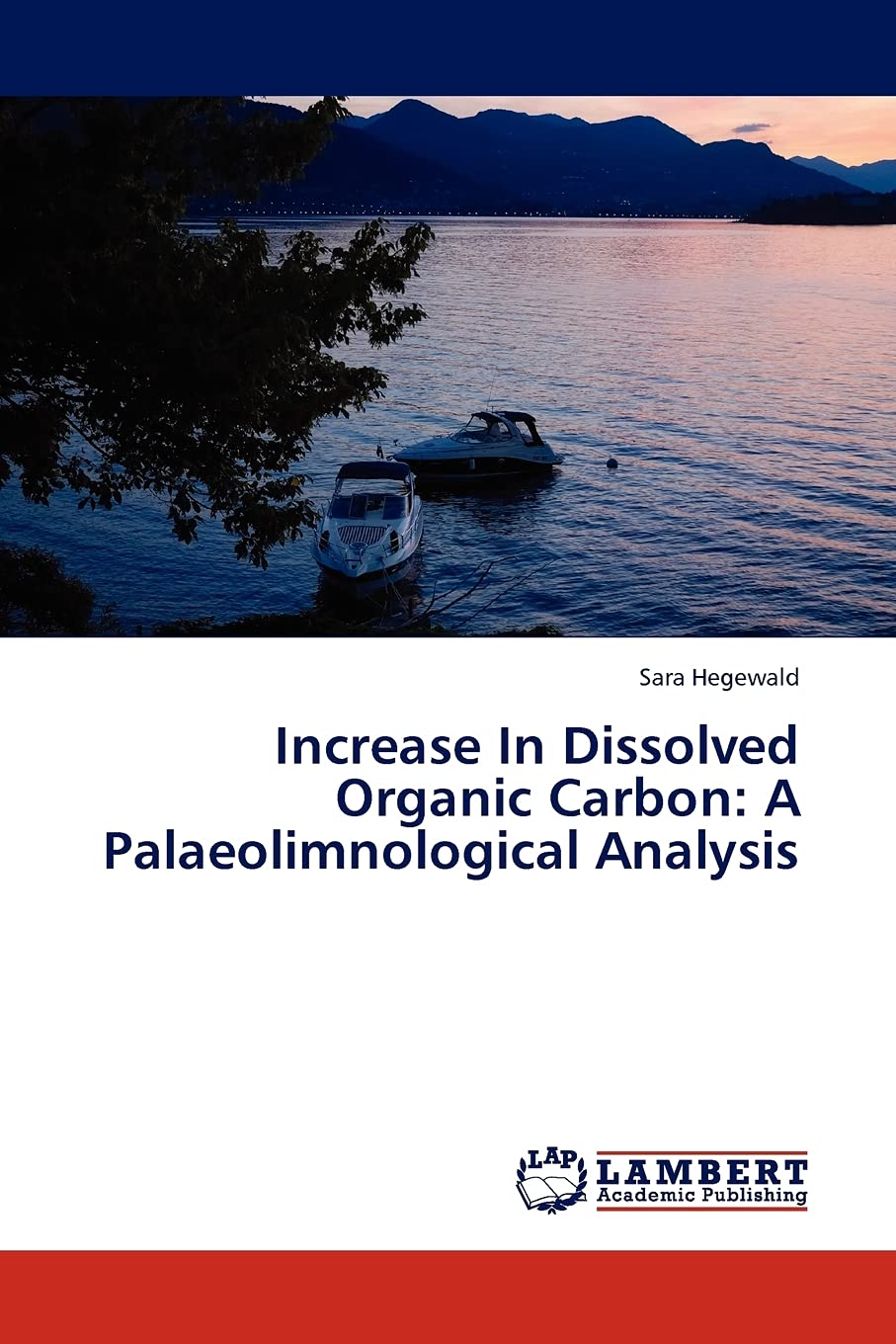
Over the past two decades, rising concentrations of dissolved organic carbon (DOC) have been observed in many freshwater lakes in Great Britain. Rising levels of DOC have implications for water quality and the carbon and energy balance of a system. Several hypotheses have been suggested to explain recent trends in DOC; however, a recent hypothesis suggests that reductions in acidifying emissions and thus sulphur deposition over the past two decades augmented by a decline in marine ion loading has been the cause behind the recent rise in DOC. In order to test this hypothesis, a palaeolimnological analysis was adopted by applying existing transfer functions produced by SWAP and EDDI to a previously compiled dataset comprising information from 97 cored lakes throughout Great Britain in order to reconstruct past levels of pH and DOC. This was to assess change through time in relation to the level of sulphur deposition at a site and overall, TOC which was used as a surrogate for DOC and pH were found to decline through time. Reliable reconstruction of TOC however, did not take place as both models consistently over and under predicted each value. Model predictive ability was also based
⚠️ WARNING (California Proposition 65):
This product may contain chemicals known to the State of California to cause cancer,
birth defects, or other reproductive harm.
For MAP (Minimum Advertised Price) violations and Intellectual Property (IP) or Trademark concerns, please contact:
support@ergodebooks.com
⚠️ California Proposition 65 Warning: Some products sold on this website may expose you to chemicals known to the State of California to cause cancer, birth defects, or other reproductive harm. For more information, visit www.P65Warnings.ca.gov.