
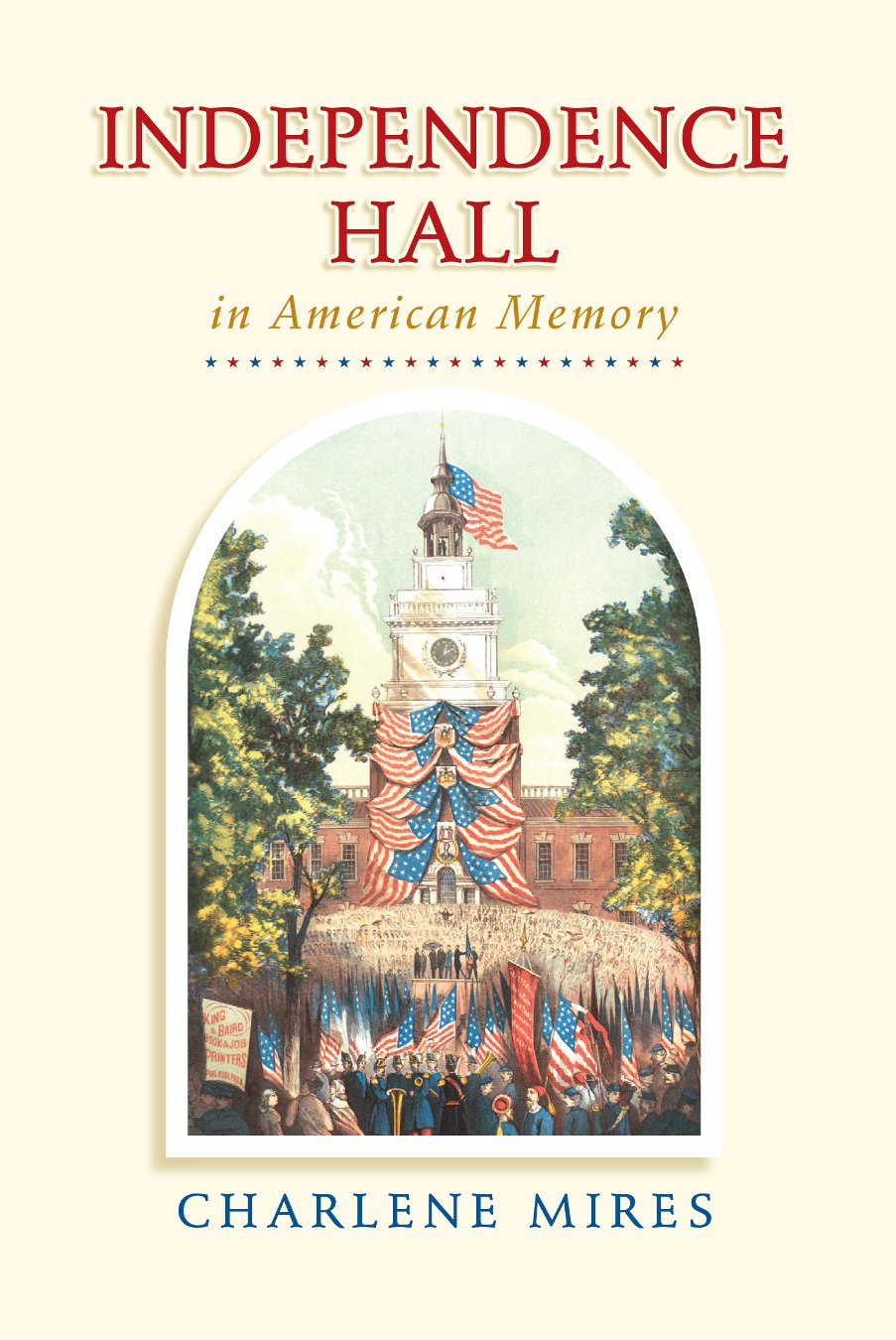
Title
Independence Hall In American Memory,Used
Sold by Ergodebooks, an authorized reseller.
Returns accepted within 30 days | support@ergodebooks.com
Shipping Information
- Free Standard Shipping — United States only
- Processing Time: 3–5 business days
- Estimated Delivery: 6–10 business days after dispatch
- Double-boxed, fully insured & discreetly packaged
- Tracking number sent via email once dispatched
Returns & Refund
Returns accepted within 30 days of delivery.
Damaged or Defective Item
Free return shipping + replacement or full refund
Wrong Item Received
Free return shipping + replacement or full refund
Change of Mind
Return shipping at customer's expense · 25% restocking fee applies
Payment Option

Winner of the 2003 Literary Award from The Athenaeum of PhiladelphiaIndependence Hall is a place Americans think they know well. Within its walls the Continental Congress declared independence in 1776, and in 1787 the Founding Fathers drafted the U.S. Constitution there. Painstakingly restored to evoke these momentous events, the building appears to have passed through time unscathed, from the heady days of the American Revolution to today. But Independence Hall is more than a symbol of the young nation. Beyond this, according to Charlene Mires, it has a long and varied history of changing uses in an urban environment, almost all of which have been forgotten.In Independence Hall, Mires rediscovers and chronicles the lost history of Independence Hall, in the process exploring the shifting perceptions of this most important building in America's popular imagination. According to Mires, the significance of Independence Hall cannot be fully appreciated without assessing the full range of political, cultural, and social history that has swirled about it for nearly three centuries. During its existence, it has functioned as a civic and cultural center, a political arena and courtroom, and a magnet for public celebrations and demonstrations. Artists such as Thomas Sully frequented Independence Square when Philadelphia served as the nation's capital during the 1790s, and portraitist Charles Willson Peale merged the arts, sciences, and public interest when he transformed a portion of the hall into a center for natural science in 1802.In the 1850s, hearings for accused fugitive slaves who faced the loss of freedom were held, ironically, in this famous birthplace of American independence. Over the years Philadelphians have used the old state house and its public square in a multitude of ways that have transformed it into an arena of conflict: labor grievances have echoed regularly in Independence Square since the 1830s, while civil rights protesters exercised their right to free speech in the turbulent 1960s. As much as the Founding Fathers, these people and events illuminate the building's significance as a cultural symbol.
⚠️ WARNING (California Proposition 65):
This product may contain chemicals known to the State of California to cause cancer, birth defects, or other reproductive harm.
For more information, please visit www.P65Warnings.ca.gov.