
Title
India At War: The Subcontinent and the Second World War,Used
Sold by Ergodebooks, an authorized reseller.
Returns accepted within 30 days | support@ergodebooks.com
Shipping Information
- Free Standard Shipping — United States only
- Processing Time: 3–5 business days
- Estimated Delivery: 6–10 business days after dispatch
- Double-boxed, fully insured & discreetly packaged
- Tracking number sent via email once dispatched
Returns & Refund
Returns accepted within 30 days of delivery.
Damaged or Defective Item
Free return shipping + replacement or full refund
Wrong Item Received
Free return shipping + replacement or full refund
Change of Mind
Return shipping at customer's expense · 25% restocking fee applies
Payment Option

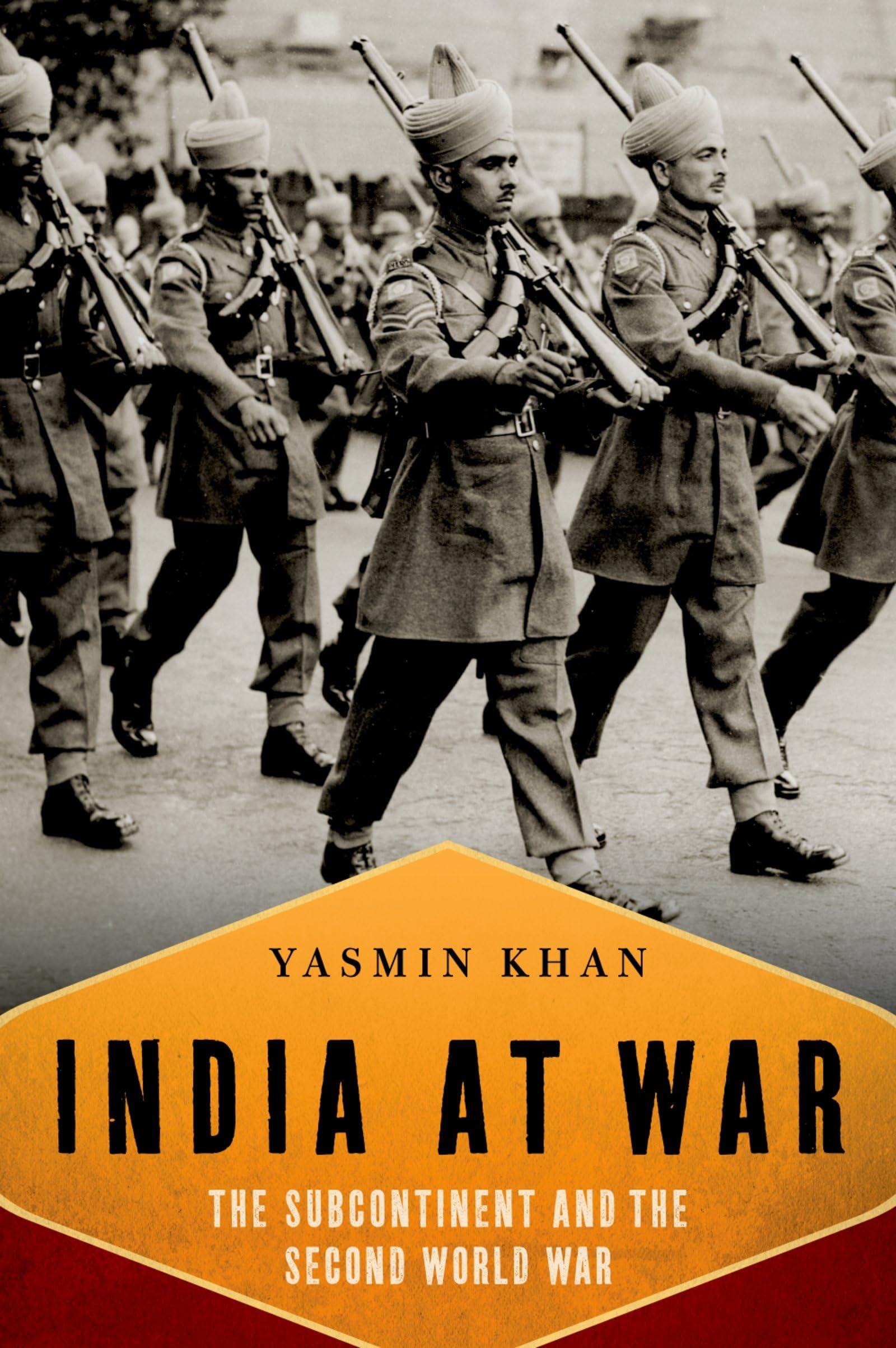
World War II was a global catastrophe. Far broader than just the critical struggle between Allies and Axis, its ramifications were felt throughout the world. It was a time of social relocation, reorienting ideas of patriotism and geographical attachment, and forcing the movement of people across oceans and continents. In India at War, Yasmin Khan offers an account of India's role in the conflict, one that takes into consideration the social, economic, and cultural changes that occurred in South Asia between 1939 and 1945and reveals how vital the Commonwealth's contribution was to the war effort.Khan's sweeping work centers on the lives of ordinary Indian people, exploring the ways they were affected by a cataclysmic war with origins far beyond Indian shores. In manpower alone, India's contribution was staggering; it produced the largest volunteer army in world history, with 2.5 million men. Indians were engaged in making the raw materials and food stuffs needed by the Allies, and became involved in the construction of airstrips, barracks, hospitals, internee camps, roads and railways. Their lives were also profoundly affected by the presence of the large Allied army in the region, including not only British but American, African, and Chinese troops. Madras was bombed by the Japanese and the Andaman and Nicobar Islands were occupied, while the Bengal famine of 1943in which perhaps three million Bengalis diedwas a manmade disaster precipitated by the effects of the war.This authoritative account offers a critically important look at the contributions of colonial manpower and resources essential to sustaining the war, and emphasizes the significant ways in which the conflict shaped modern India.
⚠️ WARNING (California Proposition 65):
This product may contain chemicals known to the State of California to cause cancer, birth defects, or other reproductive harm.
For more information, please visit www.P65Warnings.ca.gov.
- Q: How many pages does 'India At War' have? A: The book has four hundred thirty-two pages. This length allows for an in-depth exploration of India's role during World War II.
- Q: What is the binding type of this book? A: The book is hardcover. This type of binding provides durability and a premium look, making it ideal for collectors.
- Q: Who is the author of 'India At War'? A: The author is Yasmin Khan. She is known for her expertise in South Asian history, particularly during the World War II era.
- Q: What are the dimensions of 'India At War'? A: The book measures nine point twenty-one inches in length, six point fourteen inches in width, and nine point twenty-nine inches in height. These dimensions make it a standard-sized hardcover book.
- Q: What themes does 'India At War' cover? A: The book covers themes of social, economic, and cultural changes in India during World War II. It highlights how these factors affected the lives of ordinary Indians.
- Q: How is 'India At War' suitable for educational purposes? A: The book is suitable for high school and college-level studies. It provides comprehensive insights into India's contributions to World War II.
- Q: Is 'India At War' appropriate for younger readers? A: Yes, the book is suitable for older teens and adults. It discusses complex historical themes but is accessible for motivated younger readers.
- Q: How does the book address the Bengal famine of 1943? A: The book discusses the Bengal famine as a man-made disaster linked to the war's effects. It highlights the devastating consequences for millions of Bengalis.
- Q: What kind of contributions does the book highlight about India in WWII? A: It emphasizes India's manpower and resources, detailing the largest volunteer army and contributions in raw materials and construction projects.
- Q: What is the main focus of Yasmin Khan's research in this book? A: The main focus is on ordinary Indian people's lives during the conflict. Khan aims to provide a personal perspective on historical events.
- Q: Does 'India At War' include any illustrations or photographs? A: The book does not specifically mention illustrations or photographs in its description. It primarily focuses on historical narratives and analyses.
- Q: Where was 'India At War' published? A: The book was published by Oxford University Press, USA. This publisher is known for its academic and historically significant publications.
- Q: How can I purchase 'India At War'? A: You can purchase the book through various online retailers and bookstores. It's advisable to check availability at major book-selling platforms.
- Q: Is there a bibliography included in 'India At War'? A: Yes, the book includes a bibliography. This section provides references and sources for further reading on the topics discussed.
- Q: What kind of research methodology did Yasmin Khan use for this book? A: Khan utilized archival research and oral histories. This methodology helps to provide a well-rounded view of the historical context.
- Q: Does the book discuss the role of colonial powers in India during the war? A: Yes, it critically examines the role of colonial powers and their reliance on Indian resources and manpower during World War II.