If you have any questions, you are always welcome to contact us. We'll get back to you as soon as possible, withing 24 hours on weekdays.
Customer service
All questions about your order, return and delivery must be sent to our customer service team by e-mail at yourstore@yourdomain.com
Sale & Press
If you are interested in selling our products, need more information about our brand or wish to make a collaboration, please contact us at press@yourdomain.com
Help
If you have any questions, you are always welcome to contact us. We'll get back to you as soon as possible, withing 24 hours on weekdays.
Customer service
All questions about your order, return and delivery must be sent to our customer service team by e-mail at yourstore@yourdomain.com
Sale & Press
If you are interested in selling our products, need more information about our brand or wish to make a collaboration, please contact us at press@yourdomain.com
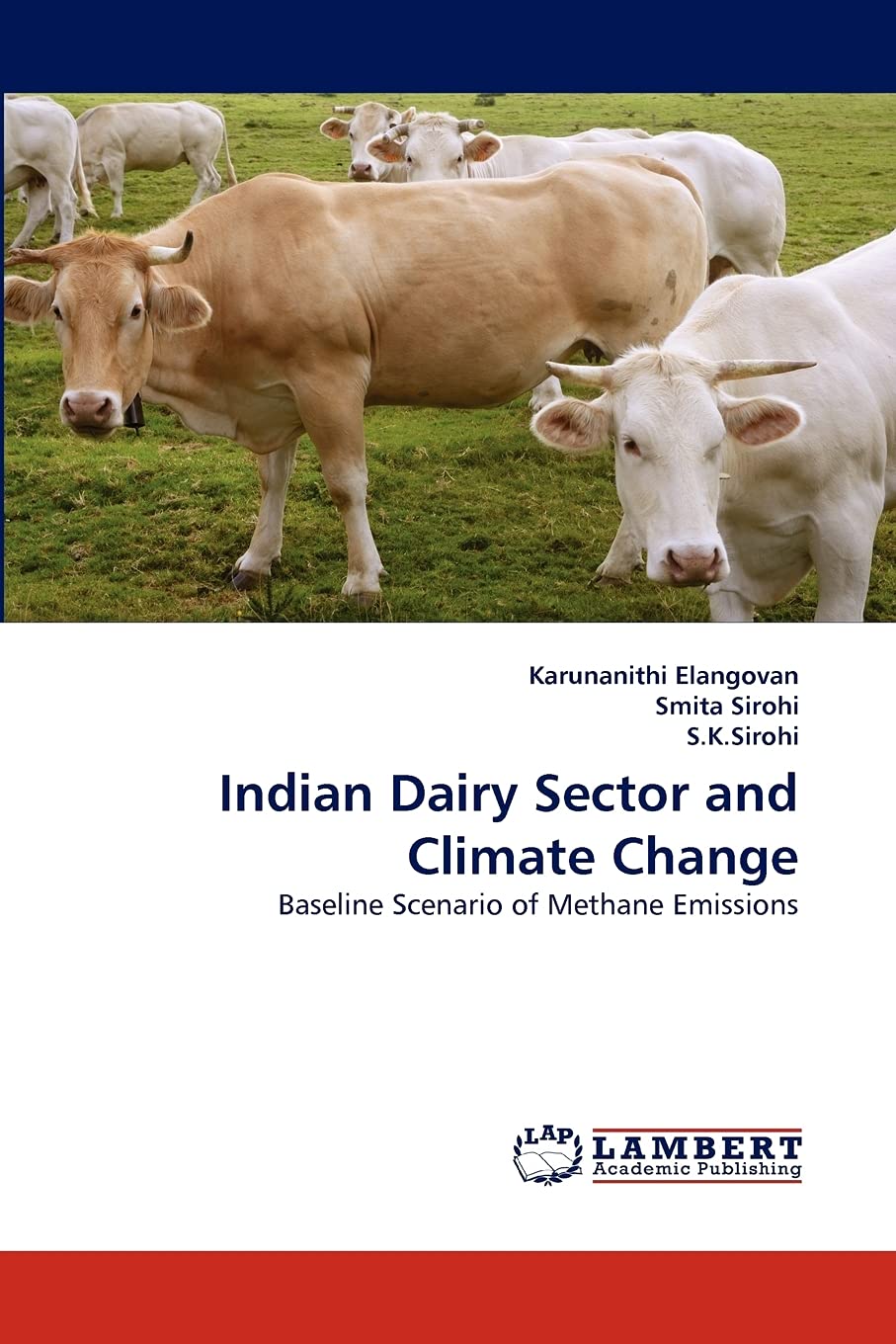
Methane is a potent greenhouse gas emitted from dairy animals. The methane mitigation projects can offer both, environmental and economic benefits as the emissions also imply loss of energy in dairy production. In the recent years, the GHG mitigation activities have intensified under the Kyoto Protocol. Despite of high contribution of dairy animals to the India's GHG budget, the mitigation efforts in this direction have been lacking. Baseline, the quantum of businessasusual emissions, is a prerequisite for formulating a mitigation project. This study, covering 13 Indian states in all the geographical regions, attempts to assess the baseline methane emissions in dairy sector using disaggregated data at agroclimatic zone and district level. IPCC Tier II methodology is used for estimating regional methane emissions factors for various types of dairy animals. The study delineates the hotspots, high carbon credit low mitigation cost regions, for focusing mitigation activities. The information provided herein can be of use for researchers, policy makers and project proponents for targeting R&D initiatives, planning and designing appropriate mitigation actions for dairy sector.
⚠️ WARNING (California Proposition 65):
This product may contain chemicals known to the State of California to cause cancer,
birth defects, or other reproductive harm.
For MAP (Minimum Advertised Price) violations and Intellectual Property (IP) or Trademark concerns, please contact:
support@ergodebooks.com
⚠️ California Proposition 65 Warning: Some products sold on this website may expose you to chemicals known to the State of California to cause cancer, birth defects, or other reproductive harm. For more information, visit www.P65Warnings.ca.gov.