
Title
Indian Oratory: Famous Speeches by Noted Indian Chiefs (Volume 110) (The Civilization of the American Indian Series),New
Sold by Ergodebooks, an authorized reseller.
Returns accepted within 30 days | support@ergodebooks.com
Shipping Information
- Free Standard Shipping — United States only
- Processing Time: 3–5 business days
- Estimated Delivery: 6–10 business days after dispatch
- Double-boxed, fully insured & discreetly packaged
- Tracking number sent via email once dispatched
Returns & Refund
Returns accepted within 30 days of delivery.
Damaged or Defective Item
Free return shipping + replacement or full refund
Wrong Item Received
Free return shipping + replacement or full refund
Change of Mind
Return shipping at customer's expense · 25% restocking fee applies
Payment Option

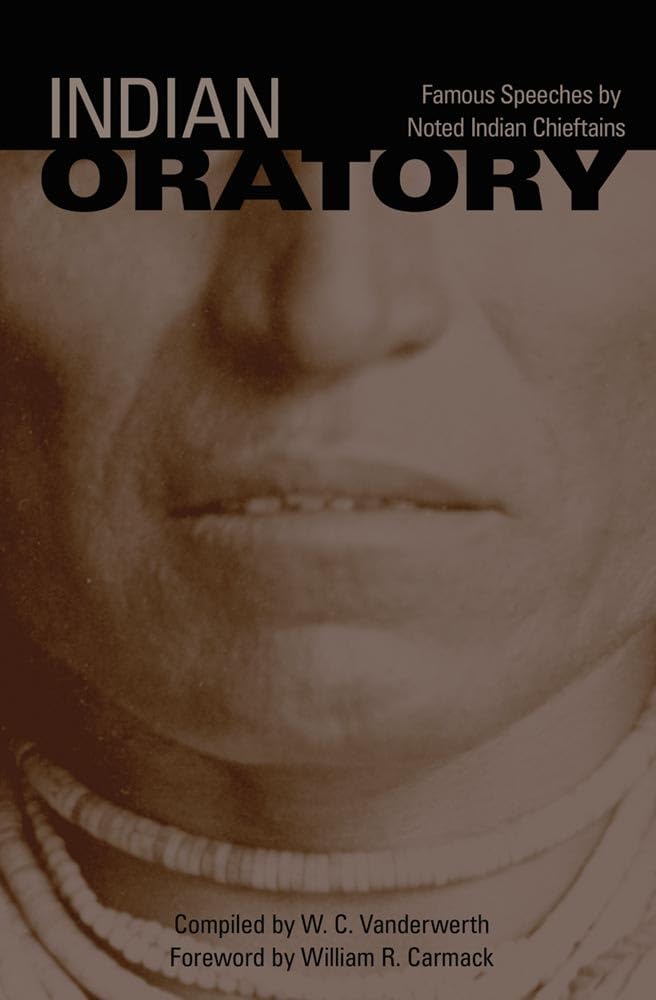
This collection of notable speeches by earlyday leaders of twentytwo Indian tribes adds a new dimension to our knowledge of the original Americans and their own view of the tide of history engulfing them.Little written record of their oratory exists, although Indians made much use of publics address. Around the council fires tribal affairs were settled without benefit of the written word, and young men attended to hear the speeches, observe their delivery, and consider the weight of reasoned argument.Some of the early white men who traveled and lived among the Indians left transcriptions of tribal council meetings and speeches, and other orations were translated at treaty council meetings with delegates of the United States government. From these scattered reports and the few other existing sources this book presents a reconstruction of contemporary thought of the leading men of many tribes.Chronologically, the selections range from the days of early contact with the whites in the 1750s to a speech by Quanah Parker in 1910. Several of the orations were delivered at the famous Medicine Lodge Council in 1867.A short biography of each orator states the conditions under which the speeches were made, locates the place of the council or meeting, and includes a photograph or copy of a painting of the speaker.Speakers chosen to represent the tribes at treaty council were all orators of great natural ability, well trained in the Indian oral traditions. Acutely conscious that they were the selected representatives of their people, these men delivered eloquent, moving speeches, often using wit and sarcasm to good effect. They were well aware of all the issues involved, and they bargained with great statesmanship for survival of their traditional way of life.
⚠️ WARNING (California Proposition 65):
This product may contain chemicals known to the State of California to cause cancer, birth defects, or other reproductive harm.
For more information, please visit www.P65Warnings.ca.gov.