If you have any questions, you are always welcome to contact us. We'll get back to you as soon as possible, withing 24 hours on weekdays.
Customer service
All questions about your order, return and delivery must be sent to our customer service team by e-mail at yourstore@yourdomain.com
Sale & Press
If you are interested in selling our products, need more information about our brand or wish to make a collaboration, please contact us at press@yourdomain.com
Help
If you have any questions, you are always welcome to contact us. We'll get back to you as soon as possible, withing 24 hours on weekdays.
Customer service
All questions about your order, return and delivery must be sent to our customer service team by e-mail at yourstore@yourdomain.com
Sale & Press
If you are interested in selling our products, need more information about our brand or wish to make a collaboration, please contact us at press@yourdomain.com
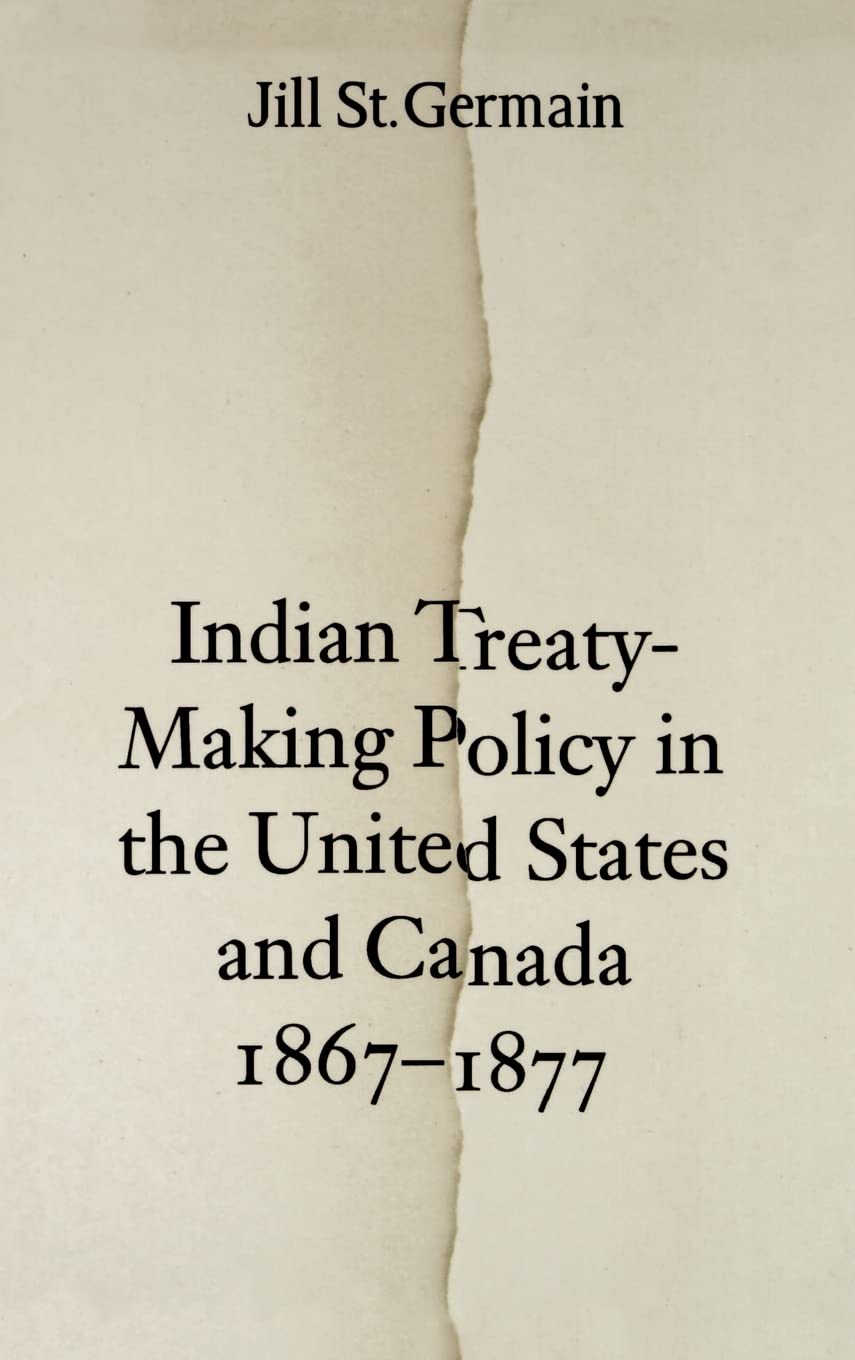
Indian TreatyMaking Policy in the United States and Canada, 18671877 is a comparison of United States and Canadian Indian policies with emphasis on the reasons these governments embarked on treatymaking ventures in the 1860s and 1870s, how they conducted those negotiations, and their results. Jill St. Germain challenges assertions made by the Canadian government in 1877 of the superiority and distinctiveness of Canadas Indian policy compared to that of the United States.Indian treaties were the primary instruments of Indian relations in both British North America and the United States starting in the eighteenth century. At Medicine Lodge Creek in 1867 and at Fort Laramie in 1868, the United States concluded a series of important treaties with the Sioux, Cheyennes, Kiowas, and Comanches, while Canada negotiated the seven Numbered Treaties between 1871 and 1877 with the Crees, Ojibwas, and Blackfoot.St. Germain explores the common roots of Indian policy in the two nations and charts the divergences in the application of the reserve and civilization policies that both governments embedded in treaties as a way to address the Indian problem in the West. Though Canadian Indian policies are often cited as a model that the United States should have followed, St. Germain shows that these policies have sometimes been as dismal and fraught with misunderstanding as those enacted by the United States.
⚠️ WARNING (California Proposition 65):
This product may contain chemicals known to the State of California to cause cancer,
birth defects, or other reproductive harm.
For MAP (Minimum Advertised Price) violations and Intellectual Property (IP) or Trademark concerns, please contact:
support@ergodebooks.com
⚠️ California Proposition 65 Warning: Some products sold on this website may expose you to chemicals known to the State of California to cause cancer, birth defects, or other reproductive harm. For more information, visit www.P65Warnings.ca.gov.