

Title
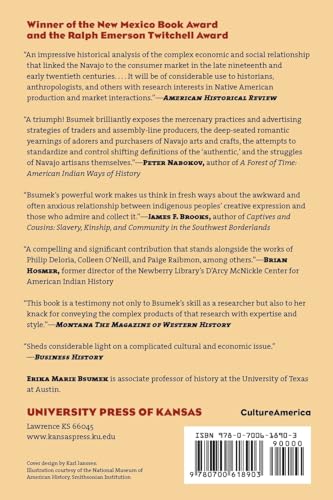

IndianMade: Navajo Culture in the Marketplace, 18681940 (Culture America (Paperback)),Used
Sold by Ergodebooks, an authorized reseller.
Returns accepted within 30 days | support@ergodebooks.com
Shipping Information
- Free Standard Shipping — United States only
- Processing Time: 3–5 business days
- Estimated Delivery: 6–10 business days after dispatch
- Double-boxed, fully insured & discreetly packaged
- Tracking number sent via email once dispatched
Returns & Refund
Returns accepted within 30 days of delivery.
Damaged or Defective Item
Free return shipping + replacement or full refund
Wrong Item Received
Free return shipping + replacement or full refund
Change of Mind
Return shipping at customer's expense · 25% restocking fee applies
Payment Option

In works of silver and wool, the Navajos have established a unique brand of American craft. And when their artisans were integrated into the American economy during the late nineteenth century, they became part of a complex cultural and economic framework in which their handmade crafts conveyed meanings beyond simple adornment.As Anglo tourists discovered these crafts, the Navajo weavings and jewelry gained appeal from the romanticized notion that their producers were part of a primitive group whose traditions were destined to vanish. Erika Bsumek now explores the complex links between Indian identity and the emergence of tourism in the Southwest to reveal how production, distribution, and consumption became interdependent concepts shaped by the forces of consumerism, race relations, and federal policy.Bsumek unravels the layers of meaning that surround the branding of "Indian made." When Navajo artisans produced their goods, collaborating traders, tourist industry personnel, and even ethnologists created a vision of Navajo culture that had little to do with Navajos themselves. And as Anglos consumed Navajo crafts, they also consumed the romantic notion of Navajos as "primitives" perpetuated by the marketplace. These processes of production and consumption reinforced each other, creating a symbiotic relationship and influencing both mutual AngloNavajo perceptions and the ways in which Navajos participated in the modern marketplace.Examining varied sites of productionartisans' workshops, museums, trading posts, Bsumek shows how the market economy perpetuated "Navaho" stereotypes and cultural assumptions. She takes readers into the hogans where men worked silver and women wove rugs and into the outlets where middlemen dictated what buyers wanted and where Navajos influenced inventory. Exploring this process over seven decades, she describes how artisans' increasing use of modern tools created controversy about authenticity and how the meaning of the "Indian made" label was even challenged in court.Ultimately, Bsumek shows that the sale of Indianmade goods cannot be explained solely through supply and demand. It must also reckon with the multiple images and narratives that grew up around the goods themselves, integrating consumer culture, tourism, and history to open new perspectives on our understanding of American Indian material culture.
⚠️ WARNING (California Proposition 65):
This product may contain chemicals known to the State of California to cause cancer, birth defects, or other reproductive harm.
For more information, please visit www.P65Warnings.ca.gov.