
Title
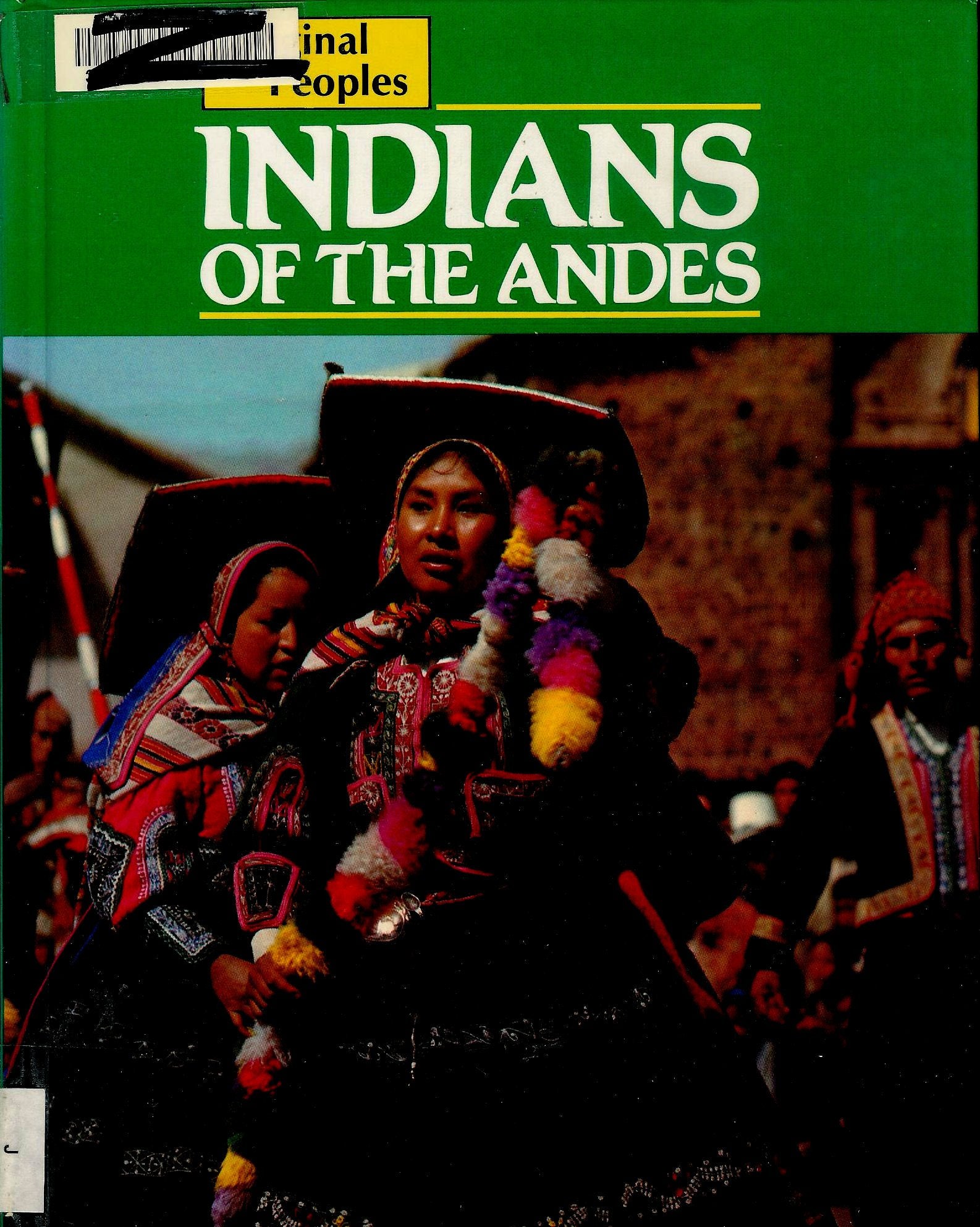
Indians of the Andes (Original People),Used
Sold by Ergodebooks, an authorized reseller.
Returns accepted within 30 days | support@ergodebooks.com
Shipping Information
- Free Standard Shipping — United States only
- Processing Time: 3–5 business days
- Estimated Delivery: 6–10 business days after dispatch
- Double-boxed, fully insured & discreetly packaged
- Tracking number sent via email once dispatched
Returns & Refund
Returns accepted within 30 days of delivery.
Damaged or Defective Item
Free return shipping + replacement or full refund
Wrong Item Received
Free return shipping + replacement or full refund
Change of Mind
Return shipping at customer's expense · 25% restocking fee applies
Payment Option

Product Description Introduces the history, culture, and daily life of the Indians who live in the highlands of South America's Andes Mountains From School Library Journal ea. vol: 48p. illus. maps. photogs. reprods. bibliog. glossary. index. (Original Peoples Series). CIP. Rourke. 1987. PLB $9.50. Grade 36 Bright color photographs and drawings illustrate the people from var ious cultures, their environments, and their lifestyles. Unfortunately, the texts range in quality from good to inaccu rate. While Plains Indians attempts to present a fair view of cultural conflict, it is the weakest of the three texts. Fo cusing primarily on the Sioux, May re inforces the idea that they were the only group to live on the Plains. Ar chaeological and ethnohistorical evi dence of Manda, Hidatsa, and Arikara groups could have dispelled the mys terious'' life on the Plains before the horse. There is some oversimplification of events at a protest at Wounded Knee in 1973 which leads to misinterpreta tion. Indians of the Andes is weakened by the statement that these people are without a history. Perhaps their history is not written, but their legends form an oral history. The best of the three is Eskimos. Smith distinguishes between the Inuit of the past and the modern Inuits and realistically presents the problems they face because of cultural pressures from other groups. It is one of the few books which admits that the work of wellmeaning missionaries had both good and bad results by often up setting traditional life. It seems that these books are trying to cover too much ground by focusing on regions rather than specific cultural groups. Karen P. Zimmerman, I. D. Weeks Li brary, University of South Dakota, VermillionCopyright 1988 Reed Business Information, Inc.
⚠️ WARNING (California Proposition 65):
This product may contain chemicals known to the State of California to cause cancer, birth defects, or other reproductive harm.
For more information, please visit www.P65Warnings.ca.gov.