If you have any questions, you are always welcome to contact us. We'll get back to you as soon as possible, withing 24 hours on weekdays.
Customer service
All questions about your order, return and delivery must be sent to our customer service team by e-mail at yourstore@yourdomain.com
Sale & Press
If you are interested in selling our products, need more information about our brand or wish to make a collaboration, please contact us at press@yourdomain.com
Help
If you have any questions, you are always welcome to contact us. We'll get back to you as soon as possible, withing 24 hours on weekdays.
Customer service
All questions about your order, return and delivery must be sent to our customer service team by e-mail at yourstore@yourdomain.com
Sale & Press
If you are interested in selling our products, need more information about our brand or wish to make a collaboration, please contact us at press@yourdomain.com
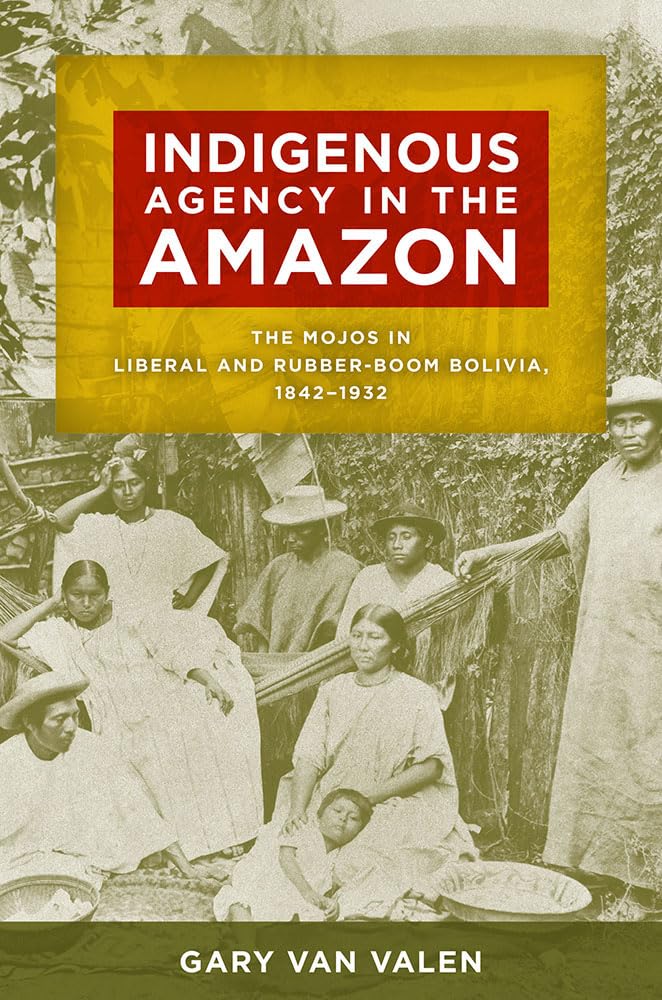
The largest group of indigenous people in the Bolivian Amazon, the Mojos, has coexisted with nonNatives since the late 1600s, when they accepted Jesuit missionaries into their homeland, converted to Catholicism, and adapted their traditional lifestyle to the conventions of mission life. Nearly two hundred years later they faced two new challenges: liberalism and the rubber boom. White authorities promoted liberalism as a way of modernizing the region and ordered the dismantling of much of the social structure of the missions. The rubber boom created a demand for labor, which took the Mojos away from their savanna towns and into the northern rain forests.Gary Van Valen postulates that as exmission Indians who lived on a frontier, the Mojos had an expanded capacity to adapt that helped them meet these challenges. Their frontier life provided them with the space and mindset to move their agricultural plots and cattle herds, join independent indigenous groups, or move to Brazil. Their mission history gave them the experience they needed to participate in the rubber export economy and the politics of white society. Van Valen argues that the indigenous Mojos also learned how to manipulate liberal discourse to their advantage. He demonstrates that the Mojos were able to survive the rubber boom, claim the right of equality promised by the liberal state, and preserve important elements of the culture they inherited from the missions.
⚠️ WARNING (California Proposition 65):
This product may contain chemicals known to the State of California to cause cancer,
birth defects, or other reproductive harm.
For MAP (Minimum Advertised Price) violations and Intellectual Property (IP) or Trademark concerns, please contact:
support@ergodebooks.com
⚠️ California Proposition 65 Warning: Some products sold on this website may expose you to chemicals known to the State of California to cause cancer, birth defects, or other reproductive harm. For more information, visit www.P65Warnings.ca.gov.