
Title
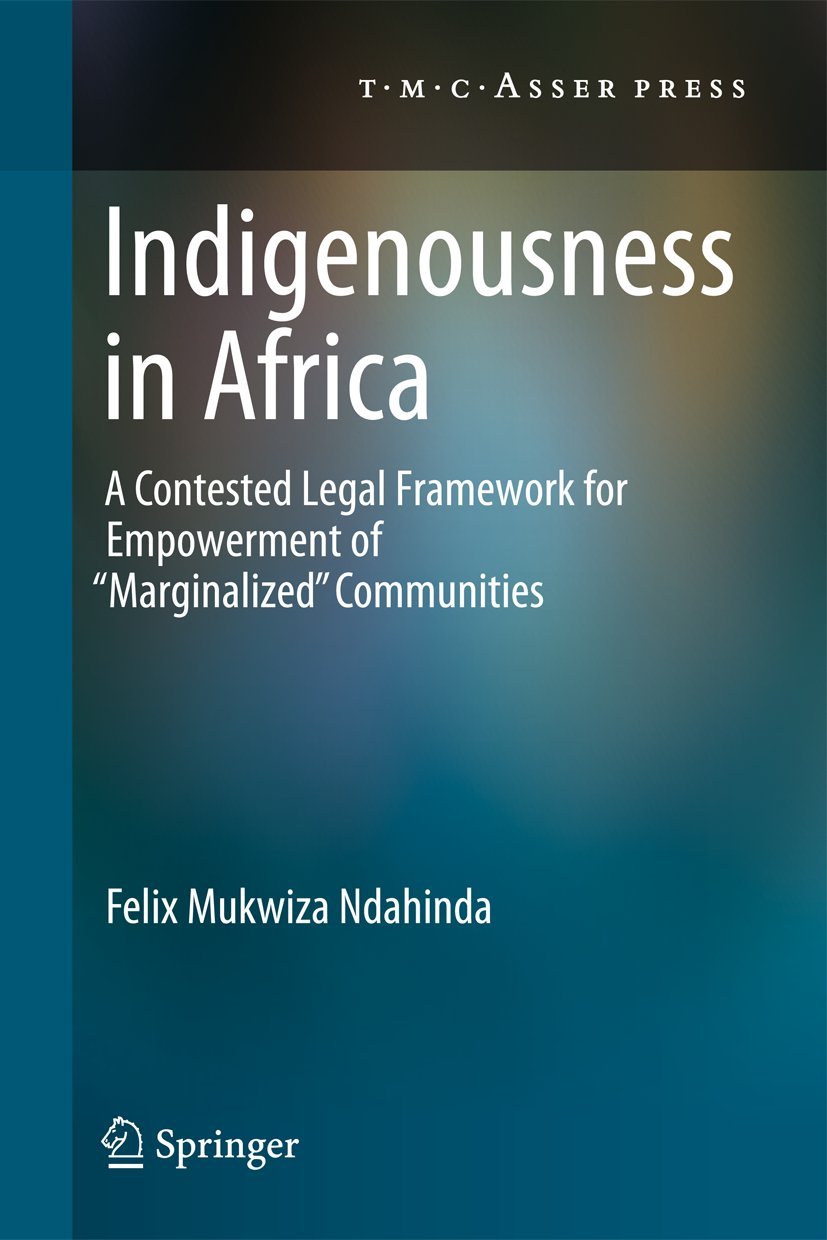
Indigenousness in Africa: A Contested Legal Framework for Empowerment of 'Marginalized' Communities,Used
Sold by Ergodebooks, an authorized reseller.
Returns accepted within 30 days | support@ergodebooks.com
Shipping Information
- Free Standard Shipping — United States only
- Processing Time: 3–5 business days
- Estimated Delivery: 6–10 business days after dispatch
- Double-boxed, fully insured & discreetly packaged
- Tracking number sent via email once dispatched
Returns & Refund
Returns accepted within 30 days of delivery.
Damaged or Defective Item
Free return shipping + replacement or full refund
Wrong Item Received
Free return shipping + replacement or full refund
Change of Mind
Return shipping at customer's expense · 25% restocking fee applies
Payment Option

With a Foreword by Prof. Asbjrn Eide, a former Chairman of the UN Working Group on Indigenous Populations, Chairman of the UN Working Group on Minorities, President of the Advisory Committee on National Minorities of the Council of EuropeFollowing the internationalization of the indigenous rights movement, a growing number of African huntergatherers, pastoralists and other communities have channelled their claims for special legal protection through the global indigenous rights movement. Their claims as the indigenous peoples of Africa are backed by many (international) actors such as indigenous rights activists, donors and some academia. However, indigenous identification is contested by many African governments, some members of nonclaimant communities and a number of anthropologists who have extensively interacted with claimant indigenous groups.This book explores the sources as well as the legal and political implications of indigenous identification in Africa. By highlighting the quasiinexistence of systematic and discursive rather than activist studies on the subjectmatter, the analysis questions the appropriateness of this framework in efforts aimed at empowering claimant communities in inherently multiethnic African countries. The book navigates between various disciplines in trying to better capture the phenomenon of indigenous rights advocacy in Africa.The book is valuable reading for academics in law and all (other) social sciences such as anthropology, sociology, history, political science, as well as for economists. It is also a useful tool for policymakers, legal practitioners, indigenous rights activists, and a wide range of NGOs.Dr. Felix Mukwiza Ndahinda is Associate Professor at the International Victimology Institute Tilburg (INTERVICT), Tilburg University, The Netherlands.
⚠️ WARNING (California Proposition 65):
This product may contain chemicals known to the State of California to cause cancer, birth defects, or other reproductive harm.
For more information, please visit www.P65Warnings.ca.gov.