
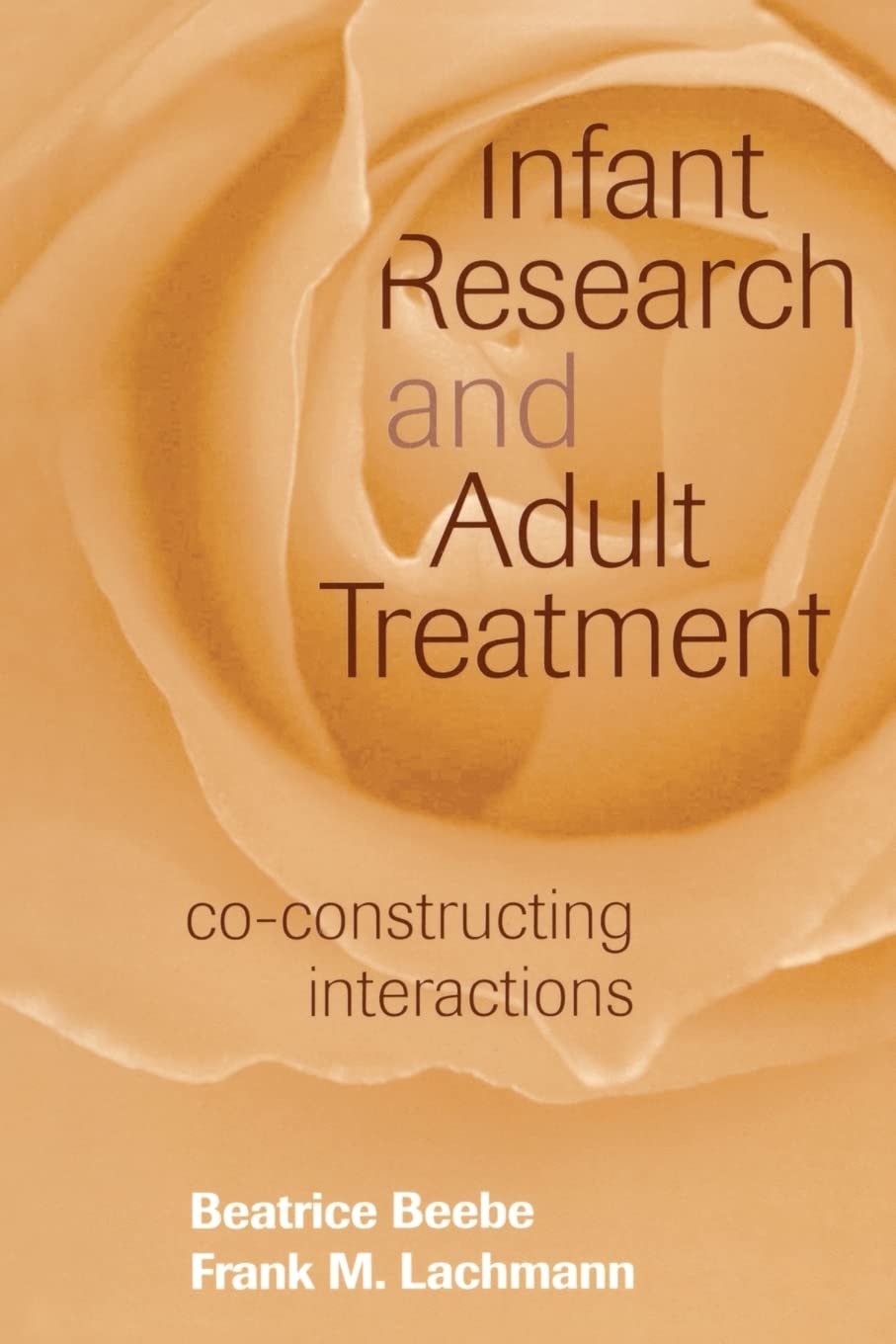
Title
Infant Research And Adult Treatment
Sold by Ergodebooks, an authorized reseller.
Returns accepted within 30 days | support@ergodebooks.com
Shipping Information
- Free Standard Shipping — United States only
- Processing Time: 3–5 business days
- Estimated Delivery: 6–10 business days after dispatch
- Double-boxed, fully insured & discreetly packaged
- Tracking number sent via email once dispatched
Returns & Refund
Returns accepted within 30 days of delivery.
Damaged or Defective Item
Free return shipping + replacement or full refund
Wrong Item Received
Free return shipping + replacement or full refund
Change of Mind
Return shipping at customer's expense · 25% restocking fee applies
Payment Option

Infant Research And Adult Treatment Is The First Synoptic Rendering Of Beatrice Beebes And Frank Lachmanns Impressive Body Of Work. Therapists Unfamiliar With Current Research Findings Will Find Here A Comprehensive And Uptodate Overview Of Infant Competencies. These Competencies Give Rise To Presymbolic Representations That Are Best Understood From The Standpoint Of A Systems View Of Interaction. It Is Through This Conceptual Window That The Underpinnings Of The Psychoanalytic Situation, Especially The Ways In Which Both Patient And Therapist Find And Use Strategies For Preserving And Transforming Selforganization In A Dialogic Context, Emerge With New Clarity.They Not Only Show How Their Understanding Of Treatment Has Evolved, But Illustrate This Process Through Detailed Descriptions Of Clinical Work With Longterm Patients. Throughout, They Demonstrate How Participation In The Dyadic Interaction Reorganizes Intrapsychic And Relational Processes In Analyst And Patient Alike, And In Ways Both Consonant With, And Different From, What Is Observed In Adultinfant Interactions. Of Special Note Is Their Creative Formulation Of The Principles Of Ongoing Regulation; Disruption And Repair; And Heightened Affective Moments. These Principles, Which Describe Crucial Facets Of The Basic Patterning Of Selforganization And Its Transformation In Early Life, Provide Clinical Leverage For Initiating And Sustaining A Therapeutic Process With Difficult To Reach Patients.This Book Provides A Bridge From The Phenomenology Of Self Psychological, Relational, And Intersubjective Approaches To A Systems Theoretical Understanding That Is Consistent With Recent Developments In Psychoanalytic Therapy And Amenable To Further Clinical Investigation. Both As Reference Work And Teaching Tool, As Researchgrounded Theorizing And Clinically Relevant Synthesis, Infant Research And Adult Treatment Is Destined To Be A Permanent Addition To Every Thoughtful Clinician'S Bookshelf.
⚠️ WARNING (California Proposition 65):
This product may contain chemicals known to the State of California to cause cancer, birth defects, or other reproductive harm.
For more information, please visit www.P65Warnings.ca.gov.
- Q: How many pages does the book have? A: The book has two hundred eighty-eight pages. This length provides a comprehensive overview of infant competencies and psychoanalytic therapy.
- Q: What is the binding type of this book? A: This book is paperback bound. The paperback format makes it lightweight and easy to handle for reading.
- Q: What are the dimensions of the book? A: The book measures eight point two six inches in length, zero point six seven inches in width, and eleven point six nine inches in height. These dimensions make it a standard size for books in the mental health category.
- Q: Who is the author of 'Infant Research and Adult Treatment'? A: The author is Beatrice Beebe. She is recognized for her significant contributions to understanding infant psychology and treatment.
- Q: What category does this book fall under? A: This book falls under the Mental Health category. It provides insights into psychoanalytic therapy and infant research.
- Q: How should I use this book for therapy? A: You can use this book as a reference for understanding infant competencies in therapeutic settings. It offers valuable insights for therapists working with both infants and adults.
- Q: Is this book suitable for beginners in mental health? A: Yes, the book is suitable for both beginners and experienced practitioners. It provides a thorough overview that can benefit anyone interested in psychoanalytic therapy.
- Q: How can I apply the concepts from this book in practice? A: You can apply the concepts by integrating the outlined strategies into your therapeutic practices. The book illustrates these strategies through clinical examples.
- Q: What is the recommended audience for this book? A: The recommended audience includes therapists, psychologists, and students in mental health fields. Its detailed descriptions cater to those seeking a deeper understanding of treatment dynamics.
- Q: How do I care for this book to keep it in good condition? A: To keep the book in good condition, store it in a dry place and avoid exposure to direct sunlight. Handle it carefully to prevent wear and tear.
- Q: Is there a specific way to clean this book? A: Yes, gently wipe the cover with a soft, dry cloth. Avoid using liquids or cleaning solutions that may damage the pages or binding.
- Q: What should I do if the book arrives damaged? A: If the book arrives damaged, contact the seller for a return or exchange. Most sellers have policies in place for damaged items.
- Q: Does this book have a warranty? A: No, this book does not come with a warranty. It is a used book in good condition, so check the seller's return policy for any issues.
- Q: Can I return this book if I don't like it? A: Yes, you can typically return the book if it is within the seller's return policy timeframe. Check the specific terms provided by the seller.
- Q: What if I have questions about the content after reading? A: If you have questions after reading, consider joining a discussion group or seeking supervision from a qualified professional. Engaging with others can enhance understanding.
- Q: Is this book applicable for research purposes? A: Yes, the book is applicable for research purposes. It bridges theoretical concepts with clinical practice, making it useful for academic inquiries.