If you have any questions, you are always welcome to contact us. We'll get back to you as soon as possible, withing 24 hours on weekdays.
Customer service
All questions about your order, return and delivery must be sent to our customer service team by e-mail at yourstore@yourdomain.com
Sale & Press
If you are interested in selling our products, need more information about our brand or wish to make a collaboration, please contact us at press@yourdomain.com
Help
If you have any questions, you are always welcome to contact us. We'll get back to you as soon as possible, withing 24 hours on weekdays.
Customer service
All questions about your order, return and delivery must be sent to our customer service team by e-mail at yourstore@yourdomain.com
Sale & Press
If you are interested in selling our products, need more information about our brand or wish to make a collaboration, please contact us at press@yourdomain.com
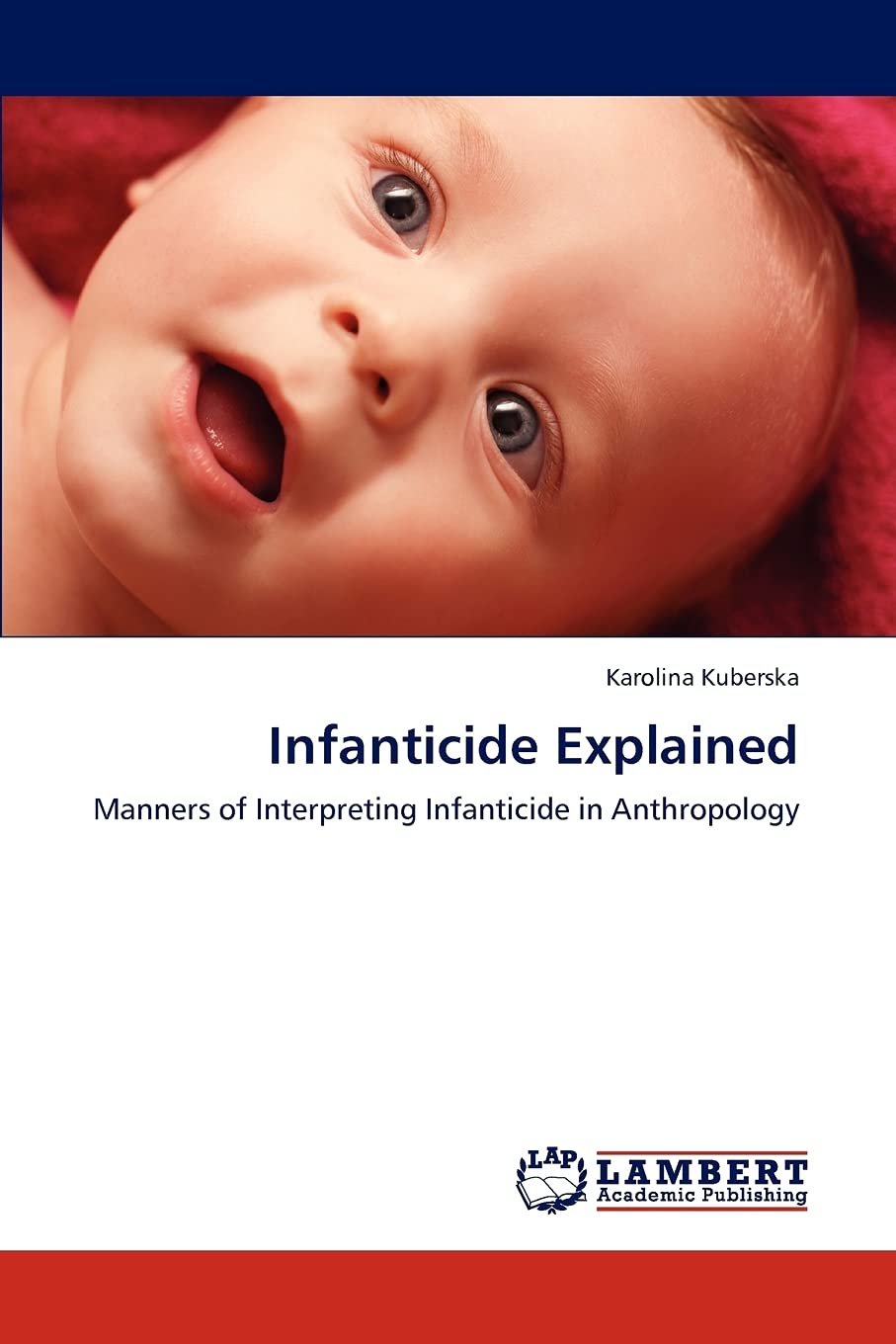
Infanticide, what a dreadful word! Most people from the EuroAmerican culture think about it with a mixture of abhorrence and scorn. Anthropologists, however, have a duty of suspending their preconceptions when studying phenomena from the natives point of view. In most of the explanations analysed, rather than being a social pathology, infanticide appears to make the longterm goals possible, such as reproductive success or the maintenance of harmony within the community. An extensive presentation of various explanations of infanticide collected from anthropological literature is followed by a critical categorisation of these justifications. Most of the them draw from evolutionary biology, demography, economics, as well as psychology. It is curious to find that researchers lean towards naturalist explanations of the phenomenon, discounting the influence of culture as secondary rather than parallel to the mechanisms of nature. What this text offers is, on the one hand, an evaluative reading of descriptions of infanticide found in various cultures, and on the other, a suggestion that infanticide, just as many other phenomena, may not be as evil a behaviour it initially seems.
⚠️ WARNING (California Proposition 65):
This product may contain chemicals known to the State of California to cause cancer,
birth defects, or other reproductive harm.
For MAP (Minimum Advertised Price) violations and Intellectual Property (IP) or Trademark concerns, please contact:
support@ergodebooks.com
⚠️ California Proposition 65 Warning: Some products sold on this website may expose you to chemicals known to the State of California to cause cancer, birth defects, or other reproductive harm. For more information, visit www.P65Warnings.ca.gov.